Walking With Lions Africa: Up-Close Lion Encounters on Foot
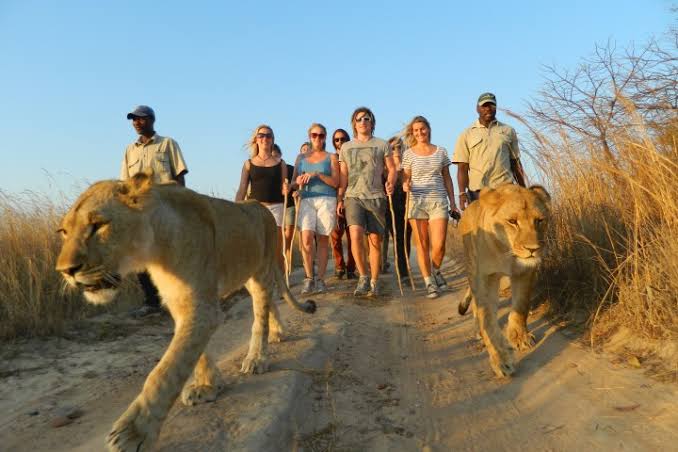
A lion seen from a vehicle at 30 metres is a powerful experience. The same lion encountered on foot at 30 metres operates on a completely different register. The body registers the encounter as real danger in a way that the vehicle’s metal shell prevents. The heart rate rises. Breathing becomes deliberate. Every sensory input sharpens. The lion watches back with the unhurried assessment of a predator that has no reason to fear the observer. The guide reads the lion’s body language — ear position, tail movement, the subtle shift of weight — and makes continuous decisions about distance and direction. This is wildlife observation at its most unmediated.
How Guided Lion Walks Work
Guided lion walking encounters differ fundamentally from interaction-based lion walks offered at some facilities. In East Africa’s conservancy system, the lions are wild and unhabituated to humans on foot. The encounter is a genuine wildlife encounter managed entirely through the ranger’s field skills. The ranger tracks lions from their last known position using fresh spoor. He reads tracks, scent, and the alarm calls of birds and small mammals. He closes the distance carefully, reading the lion’s awareness throughout the approach. The group stops at a distance the ranger judges safe — typically 25 to 50 metres, depending on the specific lion and terrain. From this position, the group observes the lion in its natural behaviour for as long as it tolerates the presence.
Reading Lion Body Language
Understanding lion body language transforms the walking encounter into an active skill exercise. A relaxed lion shows ears facing forward or to the side. Its tail hangs loosely and its body weight distributes evenly. The gaze sweeps the environment without fixing on the group. A lion that has noticed the group shows a shift — ears rotate toward the group and gaze fixes. Body weight shifts subtly toward the front legs. A lion moving toward the group with flattened ears and a low body posture is communicating clearly. The ranger’s response to this last posture is immediate. The group moves away at a calm, steady pace without running. Running triggers pursuit behaviour in lions and is never the correct response on foot.
Kenya Conservancy Lion Walking
Kenya’s Maasai Mara conservancies carry high lion densities in areas where walking safaris operate legally. Ol Kinyei, Naboisho, and Mara North are among the best options. The conservancy system’s private land status allows walking activities that national park regulations prevent. Lion tracking walks operate as a specific activity from conservancy camps. They require a minimum group size of two and a maximum of six. Furthermore, the morning hours immediately after a kill or resting period produce the most accessible lion encounters on foot. Lions that have recently fed are relaxed, stationary, and tolerant of patient observation at moderate distances.
Plan Your Safari
Lion walking encounters are available from walking safari camps within Kenya’s Maasai Mara conservancies and Tanzania’s Selous-Nyerere and Ruaha Game Reserves. The activity requires booking at a camp that specifically operates walking safaris — not all conservancy camps do this. A camp stay of at least three nights allows multiple tracking attempts across different mornings. This increases the probability of a genuine close lion encounter on foot. The experience suits guests who understand that wild animal encounters are never guaranteed regardless of effort.
African Wild Trekkers designs East Africa walking safari itineraries at conservancy camps with strong lion tracking programmes. Contact us to plan a safari that delivers the most direct and powerful wildlife encounters East Africa offers.