Elephant Encounter Walk Africa: Getting Close to Africa’s Largest Land Animal on Foot
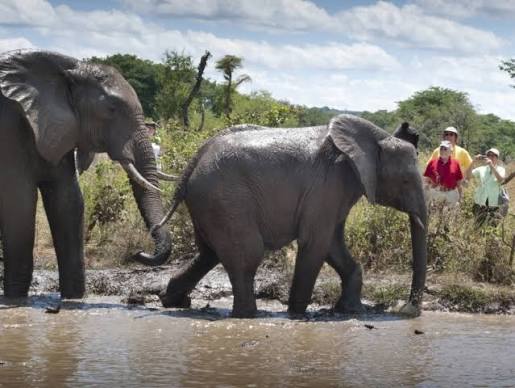
An elephant on foot is a different animal from an elephant in a vehicle’s window frame. Standing 10 metres from a 5,000-kilogram bull elephant, separated from it by nothing but air and the ranger’s quiet authority, compresses all psychological distance. The elephant’s size becomes real the shoulder stands 3.3 metres above ground. The ears are the width of a dining table. The feet are wider than a dinner plate. Every movement the elephant makes carries meaning the ranger reads and translates for the group standing still behind him. This is not a performance. It is a negotiated proximity between two species at the edge of their respective comfort zones.
Elephant Behaviour on Foot Approach
Elephants respond to humans on foot very differently from their response to vehicles. Vehicles are familiar objects in most East Africa wildlife areas elephants habituate to them and largely ignore them. Humans on foot, however, carry the evolutionary signature of a predator. Upright bipedal movement, direct eye contact, and a scent profile distinct from any large herbivore all register with the elephant. A relaxed elephant group that ignores a vehicle may show awareness of a walking group from 100 metres. The trunk rises to sample the air. Ears spread wider the larger the ear spread, the greater the attention. An elephant that turns to face the group directly is fully engaged with the encounter.
Kenya’s Best Elephant Walk Destinations
Kenya’s Laikipia Plateau holds several elephant walk programmes at conservancy camps. Lewa Wildlife Conservancy’s elephant tracking walks follow specific resident bulls and family groups known individually to the ranger teams. The ranger tracks from last evening’s GPS collar location or fresh morning spoor to locate the specific family. Ol Pejeta Conservancy runs similar tracking walks with its resident population. Additionally, Amboseli National Park’s walking activities operate in the community conservation areas surrounding the park. These provide elephant walking encounters against the backdrop of Kilimanjaro’s snow-capped peak one of East Africa’s most striking landscapes for any wildlife activity.
Reading the Approach Distance
Every guided elephant walk operates within a safe distance range determined by the ranger’s reading of the specific animal. For relaxed, non-calving family groups on open ground with clear exit routes, the ranger may approach to 20 to 30 metres. For solitary bulls in musth — a hormonal state marked by temporal gland secretion and heightened aggression — the safe approach distance expands to 60 to 80 metres. The ranger assesses these factors before every approach and adjusts continuously throughout the encounter. Furthermore, the exit route assessment is as important as the approach route. The ranger always knows the fastest safe exit direction before the group enters the elephant’s awareness zone.
Plan Your Safari
Elephant walking encounters are available at Kenya’s Laikipia conservancies, in the community conservation areas around Amboseli, and from walking safari camps in Tanzania’s Tarangire private concessions. The activity requires no special fitness beyond a moderate walking pace. Children above 12 years are generally permitted on guided elephant walks. Younger children create additional management complexity in close elephant encounters and are typically excluded at the ranger’s discretion.
African Wild Trekkers builds elephant walk experiences into Kenya and Tanzania itineraries at conservancies with the best tracking programmes. Contact us to plan a safari that brings you face to face with Africa’s most impressive land animal on foot.