Rhino Tracking on Foot Africa: Finding Black and White Rhino in East Africa
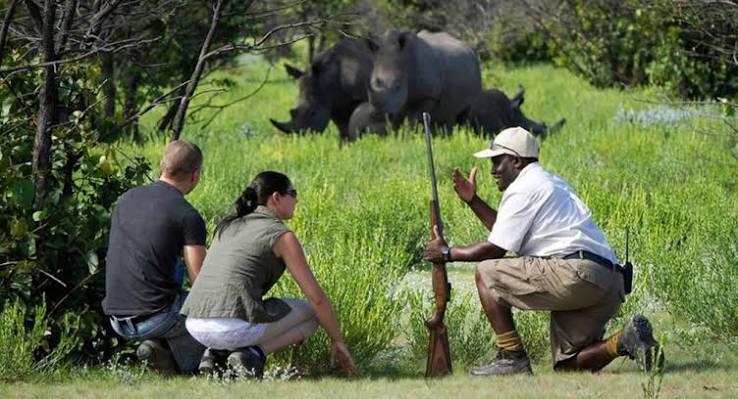
Tracking a rhino on foot is one of the most charged experiences a walking safari delivers. Rhinos are large, fast, and unpredictable at close range. A black rhino that detects a human walker at 20 metres may charge without the preliminary display that most large animals give before a serious attack. The charge is fast — a black rhino covers 20 metres in under 3 seconds. Yet rhino tracking walks continue to operate in Kenya’s best conservancies. The rangers who lead them know their individual animals. They read behaviour accurately. They manage encounters within a safe operational framework built over years of daily contact. The result is one of East Africa’s most intense wildlife encounters.
Black Rhino vs White Rhino Tracking
Black and white rhinos require different tracking approaches. White rhinos are grazers — they spend most of their time on open grassland. This makes them visible at 200 to 300 metres and approachable from downwind on open ground. They are also generally calmer on foot approach than black rhinos. As a result, white rhino walking encounters suit first-time rhino walking guests well. Black rhinos are browsers — they feed in dense bush and thicket. This makes them harder to locate and reduces the approach distance before the encounter becomes very close. Black rhinos are more reactive on foot and require a higher-standard ranger escort. The intensity of a black rhino tracking walk reflects this difference throughout.
Kenya’s Best Rhino Tracking Conservancies
Ol Pejeta Conservancy in Kenya’s Laikipia carries the largest black rhino population in East Africa — over 130 individuals. Rhino walking encounters at Ol Pejeta operate with trackers who know every rhino individually. They monitor daily positions through GPS data and daily ranger observation records. Lewa Wildlife Conservancy carries both black and white rhino on the plateau. Rangers at Lewa conduct daily rhino monitoring on foot as part of the standard management programme. Guests join these monitoring walks to access the rhinos in their normal morning behavioural routine. Additionally, Borana Conservancy, adjacent to Lewa, provides a third rhino walking option with its own resident population.
The Tracking Process
Rhino tracking begins before dawn with a GPS collar or last-known-position check. The tracker leads the group toward the rhino’s location using GPS device data, fresh spoor reading, and knowledge of the individual animal’s preferred routes. The approach into the rhino’s proximity is the most technically demanding part of the encounter. Wind direction is paramount — rhinos have poor eyesight but an acute sense of smell. The approach always comes from downwind. The group moves quietly, in single file, at the tracker’s pace. Furthermore, the final approach uses available cover — bush margins, rock outcrops, and low ground. This reduces encounter distance while maintaining concealment from the rhino.
Plan Your Safari
Rhino tracking walks operate year-round at Ol Pejeta, Lewa, and Borana conservancies in Kenya’s Laikipia. Booking a minimum of two nights at any of these conservancies provides enough time for both a vehicle game drive approach and a dedicated walking tracking session. Morning starts are standard — rhinos are most active and trackable in the cool morning hours before retreating to shade at midday. Tanzania’s Ngorongoro Crater and Mkomazi National Park carry smaller rhino populations accessible by vehicle but without the same walking tracking infrastructure.
African Wild Trekkers places guests at Kenya’s finest rhino conservancies with dedicated foot-tracking programmes. Contact us to plan a Kenya safari that includes this extraordinary close encounter with Africa’s most endangered large mammal.