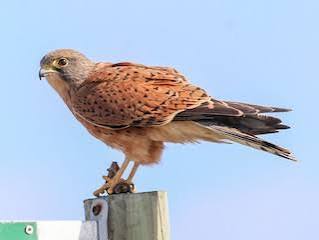
Rock Kestrel Africa: The Cliff Hunter of East Africa’s Highland Escarpments
The rock kestrel is East Africa’s most commonly encountered kestrel in highland escarpment and cliff environments. It inhabits rocky gorges, cliff faces, mountain slopes, and the escarpment zones of the Rift Valley where exposed rock surfaces provide both nesting sites and elevated hunting perches above the open ground below. The species is a specialist of these rocky habitats and is replaced in open flat country by the greater and lesser kestrel species that require different terrain for their nesting and hunting needs.
Like all kestrels, the rock kestrel is an accomplished hoverer. It uses the updrafts along cliff faces and escarpment edges to maintain stationary positions above the ground while scanning for prey below. The hovering flight against a backdrop of rocky escarpment is one of the defining wildlife images of East Africa’s highland Rift Valley landscape.
Identification
The rock kestrel is a medium-sized falcon measuring 29 to 33 centimetres. The male shows a grey head, a rufous back spotted with black, and pale pinkish-buff underparts with fine dark streaking. The tail is grey with a dark terminal bar. The female is similar but shows a browner head and more heavily barred upperparts. Both sexes show a faint moustachial stripe below the eye and a clear pale supercilium.
The rock kestrel is most easily confused with the greater kestrel in areas where both species occur. The greater kestrel is larger and shows white underparts more extensively spotted with black. The male rock kestrel’s grey head is absent in the greater kestrel, which shows a streaked rufous-brown head in both sexes. These head colour differences provide the most reliable separation between the two species at close range.
In flight, the rock kestrel shows a pointed wing shape typical of all kestrels. The hovering position with wings spread and tail fanned while the head remains stationary above the ground is the characteristic kestrel hunting posture visible along any Rift Valley escarpment road in East Africa.
Nesting and Behaviour
Rock kestrels nest on cliff ledges, in crevices in rock faces, and occasionally in the old nests of other raptors positioned on cliff faces. The nest site is used repeatedly across multiple breeding seasons. The same rock face may carry a nesting pair year after year as long as the site remains undisturbed and the food resources in the surrounding hunting area remain adequate.
Both parents attend the nest during incubation and chick rearing. The male delivers food to the female and later to the chicks throughout the nesting period. The female broods the chicks during their early development before gradually transitioning to a role of delivering food from hunting sorties as the chicks develop thermoregulatory capability.
The species is non-migratory throughout its East African range. Resident pairs maintain the same territories year-round and the same cliff face is occupied by the resident pair continuously except for brief periods immediately after the breeding season when the young have dispersed.
Where to See Rock Kestrels in East Africa
Rock kestrels are present along the Rift Valley escarpments of Kenya and Tanzania and throughout the highland cliff zones of Ethiopia, Uganda, and Rwanda. Any road along a Rift Valley escarpment in Kenya will produce rock kestrel sightings hovering above the valley edge or perched on exposed cliff outcrops at regular intervals.
Kenya’s Hell’s Gate National Park provides rock kestrel sightings in abundance in the dramatic gorge and cliff landscape of the park’s interior. The Hell’s Gate gorge carries several nesting pairs accessible on a walking or cycling circuit through the park without requiring a vehicle. This on-foot access provides particularly close views of hunting and perched birds.
Ethiopia’s Rift Valley escarpments and the Semien Mountains cliffs carry rock kestrel populations at high density. Any drive along Ethiopia’s Rift Valley escarpment road produces rock kestrel encounters from the car window throughout the length of the journey.
Plan Your Birding Safari
Rock kestrel sightings require highland escarpment and cliff destinations. Kenya’s Hell’s Gate National Park provides the most accessible and immersive rock kestrel experience within the established Kenya Rift Valley circuit, combining kestrel watching with walking access to one of Kenya’s most dramatic landscape environments.
Hell’s Gate is a half-day detour from Lake Naivasha on the Kenya Rift Valley circuit and combines naturally with a Naivasha waterbird morning and an afternoon in the park’s gorge environment.
African Wild Trekkers includes Kenya’s Hell’s Gate and Rift Valley escarpment destinations in birding safari itineraries targeting East Africa’s full kestrel and falcon diversity. Contact us to plan a safari that explores East Africa’s dramatic highland raptor habitats.