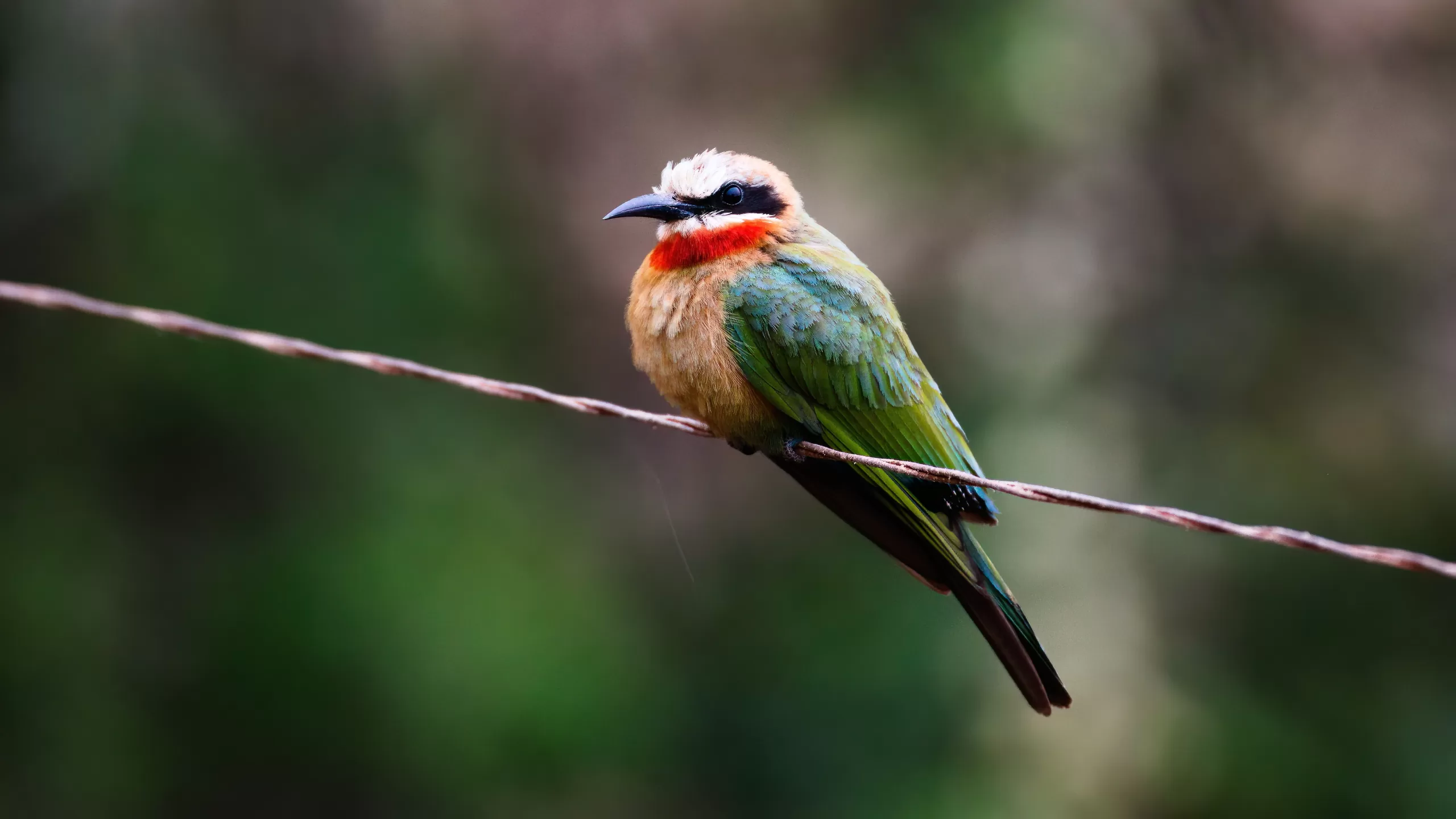
White-fronted Bee-eater: East Africa’s Most Socially Complex Bee-eater
The white-fronted bee-eater is one of East Africa’s most fascinating and widely studied bird species. Researchers have spent decades studying its complex cooperative breeding system and social behavior. Family groups can contain up to 16 individuals that share nesting duties, incubation, and chick-feeding responsibilities. This unusual social structure makes the species one of Africa’s most remarkable birds from a behavioral perspective. Its bright colors and close association with rivers also make it one of the most rewarding birds to photograph.
The white-fronted bee-eater depends strongly on riverbanks, lakeshores, and exposed-earth cliffs, where it creates nesting tunnels. Unlike migratory bee-eater species, it remains throughout the year at suitable colony locations. This makes it one of the most reliable bee-eaters to observe during an East African safari. Visitors do not need to plan around a short seasonal window to enjoy sightings of this colorful river specialist.
White-Fronted Bee-Eater Identification
The white-fronted bee-eater displays a remarkable combination of colors across its small body. The white forehead gives the species its common name and creates the most obvious identification feature. The throat shows a bright red patch, while the breast and upperparts display different shades of green. The belly carries an olive-buff tone, and the wings include blue coloring on the outer flight feathers.
The combination of white, red, green, blue, and olive makes the white-fronted bee-eater one of East Africa’s most attractive birds. At approximately 23 centimeters long, it packs an extraordinary amount of color into a relatively small body. When sunlight reaches the feathers, the contrast between the bright throat, white forehead, and green plumage becomes especially striking.
The species also has a distinctive vocal signature. Its nasal “kweer” call is frequently heard when birds fly between feeding areas and colony sites. Learning this call helps birders locate individuals hidden within vegetation or resting near nesting cliffs. In active colonies, the constant calling creates a lively atmosphere as family groups communicate throughout the day.
The White-Fronted Bee-Eater Cooperative Breeding System
White-fronted bee-eaters live in extended family groups known as clans. These groups usually contain several related adults, breeding pairs, and younger birds from previous nesting seasons. Every member of the clan contributes to raising chicks, creating one of the most advanced examples of cooperative breeding among African birds.
Young birds that do not breed immediately often become helpers within the family group. These helpers bring food to chicks and support the breeding adults during the nesting period. Their contribution can significantly increase the survival chances of young birds because larger groups provide more frequent feeding and protection from predators.
The helper system also involves important decisions for individual birds. Supporting another breeding pair requires energy and time, which can reduce opportunities for personal reproduction. Scientists studying white-fronted bee-eaters continue to examine how young birds balance helping their family group with their own future breeding opportunities.
Where to See White-Fronted Bee-Eaters in East Africa
White-fronted bee-eaters occur widely across East Africa wherever suitable nesting cliffs and feeding areas exist. They prefer riverbanks, lakeshores, and sandy cliffs where they can excavate deep nesting tunnels. Established colonies often remain active for many years, creating reliable birding locations for safari visitors.
Lake Baringo in Kenya is one of the best places to observe white-fronted bee-eaters. The cliffs surrounding the lake support active colonies, and birds regularly fly across the water searching for insects. Boat trips on Lake Baringo provide excellent viewing opportunities because they approach the nesting areas quietly while allowing photographers to capture birds at close range.
Other productive locations include Lake Naivasha and the Ewaso Nyiro River in Kenya’s Samburu region. In Uganda, boat cruises on the Nile River in Murchison Falls National Park often pass active bee-eater colonies. Tanzania’s Rufiji River in Nyerere National Park also provides excellent opportunities to observe these birds during river safaris.
White-Fronted Bee-Eaters on Safari
White-fronted bee-eaters are among the most rewarding birds to watch because they combine beauty with fascinating behavior. A few minutes beside an active colony can reveal courtship displays, social interactions, feeding exchanges, and communication between family members. Early mornings and late afternoons are the most productive times because feeding activity increases during these cooler periods.
Visitors interested in bird photography should spend time observing colony behavior rather than simply searching for individual birds. The interaction between helpers, parents, and chicks provides much more memorable sightings than a single perched bird. Patient observation often reveals the complex social world that makes this species scientifically important.
Plan Your Birding Safari
White-fronted bee-eaters can be observed throughout the year at established colony sites across East Africa. No specific migration period is required, making them an excellent addition to general wildlife safaris and specialist birding tours. Locations such as Lake Baringo, Murchison Falls National Park, and Nyerere National Park offer some of the best opportunities to experience their nesting behavior.
African Wild Trekkers includes river, lake, and wetland habitats in East Africa birding safari itineraries for travelers interested in unique bird encounters. We design journeys that combine iconic wildlife viewing with specialist birding experiences, including opportunities to observe East Africa’s colorful bee-eater species.
Contact African Wild Trekkers to plan a birding safari that explores East Africa’s incredible avian diversity. We respond within 24 hours and create personalised itineraries that combine wildlife, landscapes, and unforgettable bird encounters