Wild Dogs in Tanzania: Where to Find Africa’s Most Endangered Canid
The African wild dog ranks among Africa’s most endangered large carnivores. Scientists estimate fewer than 7,000 individuals remain across the continent. Habitat loss, disease, and human conflict have fragmented their range severely. Wild dog sightings on any Tanzania safari are never guaranteed — but Tanzania holds some of Africa’s strongest remaining populations, particularly in the southern parks. Understanding where wild dogs live in Tanzania, how to maximize viewing probability, and what makes an encounter unique is essential preparation for any safari traveler who places wild dogs at the top of their list.
Tanzania’s Wild Dog Population
Where Dogs Live and Why Numbers Are Low
Wild Dog Distribution Across Tanzania’s Parks
Tanzania holds one of Africa’s most significant wild dog populations. The Selous-Nyerere ecosystem supports the largest wild dog population of any single protected area on the continent—scientists estimate several hundred individuals range across that reserve’s vast territory. Ruaha National Park in central Tanzania also holds a meaningful pack population. The park’s size and relatively low visitor pressure allow dogs to persist in good numbers.
The Serengeti supports a smaller, more dispersed wild dog population. Occasional sightings occur in the eastern section near Lobo and in the transition zone between the Serengeti and the Ngorongoro Conservation Area. Tanzania’s total wild dog population, across all protected areas, numbers between 1,000 and 1,500 individuals—one of Africa’s largest single-country counts.
Wild dogs need enormous territory. A single pack ranges across 200 to 600 square kilometers. Small parks and fragmented reserves cannot sustain stable wild dog populations regardless of their ecological suitability. Tanzania’s large southern parks—particularly the Selous-Nyerere ecosystem at 50,000 square kilometers, including the broader game-managed areas—provide enough contiguous habitat for multiple non-overlapping pack territories to coexist.
The Selous has faced less tourism pressure and agricultural encroachment than most East African reserves. That protection has preserved the ecological conditions that sustain wild dog populations, making it the most important wild dog stronghold in East Africa and one of the most significant in the world.
Why Wild Dogs Are Difficult to See
Wild dogs in habituated packs do not shy from vehicles. They are difficult to find because they cover enormous distances each day. Their route between den sites, resting areas, and hunting zones passes through varying vegetation types. Dense bushes can obscure even a full pack completely. The pack’s position on any given morning depends on prey availability, inter-pack competition, and den site location—factors that even experienced guides cannot always predict.
A pack visible at a specific kopje in the morning may be twenty kilometers away by midday. The challenge is not finding dogs that are present. It is being in the right location within a vast park when the pack happens to pass through it.
Guides who know specific pack territories improve wild dog viewing probability significantly. In Ruaha and the Selous, experienced guides accumulate this knowledge over years of daily contact with the same packs. They focus morning drives on areas where the pack last appeared, read landscape clues that signal dog activity—impala alarm calls, jackal behavior near a carcass, and baboon vocalizations—and share sighting information across the camp radio network.
African Wild Trekkers selects guides in Ruaha and the Selous who carry wild dog territory knowledge. The difference between a guide with this knowledge and one without it is the difference between a good sighting probability and a very low one on any given day.
Best Tanzania Parks for Wild Dog Sightings
Ruaha and Selous for Serious Dog Viewing
Ruaha National Park: Reliable Wild Dog Territory
Itoffers Tanzania’s most reliable wild dog viewing within the broader context of a full safari experience. Multiple packs hold overlapping territories in the northern and central sections near the Great Ruaha River. The open miombo woodland gives excellent visibility—guides can follow a wild dog hunt for several kilometers.
Morning drives targeting wild dog activity begin with a check of the location the previous afternoon’s monitoring reported. Guides approach the area slowly before the pack starts moving and position the vehicle for the dawn hunt. The packs run between 0600 and 0900.
Wild dogs in Ruaha prey on impalas, gazelles, and occasionally larger animals, including young kudu and bushbuck fawns. The pack’s coordinated hunting strategy—flanking members surrounding the target while one or two individuals lead the chase—plays out in Ruaha’s open terrain with exceptional clarity. Watching an entire coordinated hunt unfold from a stationary vehicle while the pack sprints past within ten meters is an experience that professional wildlife photographers travel to Ruaha specifically to capture.
The dry season reduces vegetation cover and raises the hunt success rate on impala to among the highest of any wild dog population in East Africa. African Wild Trekkers recommends Ruaha for clients whose primary wildlife target is wild dogs.
Selous-Nyerere: Africa’s Largest Wild Dog Population
The Selous-Nyerere ecosystem holds Africa’s largest wild dog population by total numbers. The reserve’s sheer size distributes those dogs across a vast area, and viewing probability from any single camp depends heavily on which pack’s territory overlaps the camp’s game drive zone. Camps in the northern Selous photographic safari zone offer the best viewing probability because pack territories here tend to be smaller and denser than in the reserve’s southern reaches. Guides with multiple seasons of experience in specific camp areas locate pack positions using radio contact with other camps and years of accumulated territory knowledge. Selous-Nyerere’s wild dog viewing pairs well with the reserve’s other strengths—the Rufiji River boat safari, exceptional elephant density, and large lion pride sizes. Even on days when dogs are not immediately visible from camp, the Selous delivers a full safari experience.
A three-night stay builds enough time for at least one high-probability wild dog morning. African Wild Trekkers advises on which specific Selous camp positions clients most effectively within active pack territory for their travel dates. Camp selection within the Selous matters more for wild dog viewing than in almost any other Tanzania park because of the reserve’s vast size.
What to Expect from a Wild Dog Encounter
The Sighting Experience
How Wild Dogs Behave Around Vehicles
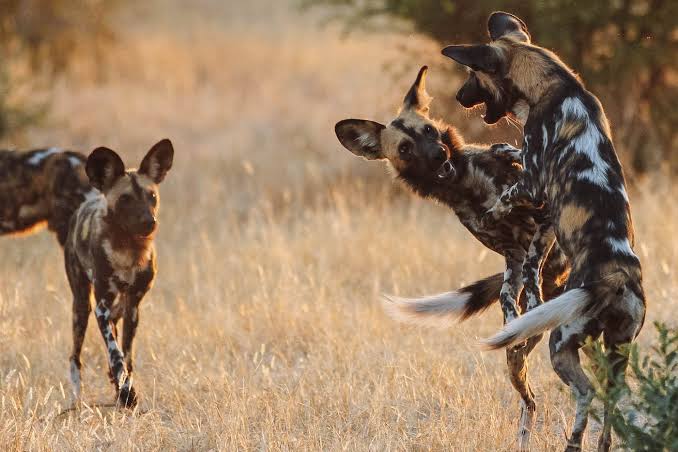
Wild dogs in habituated packs respond to safari vehicles with a mixture of curiosity and indifference, unlike any other large African predator. A lion ignores vehicles as irrelevant. A leopard stays wary until fully habituated. A wild dog investigates—it approaches the vehicle with ears forward, sniffs the tires, and looks directly at the passengers with the alert gaze of an animal that genuinely registers your presence and chooses not to find it threatening.
The large rounded ears, the distinctive mottled black, yellow, and white coat pattern unique to each individual, and the twittering vocalizations that pass information between pack members make a close encounter with a habituated pack one of the most intimate wildlife interactions available anywhere in Africa.
Wild dogs express their social bonds constantly and visibly. Greeting ceremonies with high-pitched calls and physical contact happen before every hunt departure and after every successful return. Submissive individuals solicit food from dominant pack members, creating constant interaction within the group. Adults caring for pups at a den site display genuine tenderness that contrasts powerfully with the explosive violence of the same animals’ cooperative kill.
This social complexity is what wild dog enthusiasts travel to see—not just the hunting but the entire social system operating in real time. African Wild Trekkers briefs clients on wild dog social behavior before the first game drive so every moment of the sighting carries full meaning.
Plan Your Safari
Wild dogs in Tanzania mean the southern circuit — Ruaha and the Selous — and specifically the camps that position clients within active pack territories. African Wild Trekkers carries specific camp knowledge for wild dog viewing in both parks and advises on current pack activity based on guide reports from the ground. The team builds southern circuit itineraries specifically for clients who name wild dogs as a priority, selecting camps and guiding teams with the strongest track record of dog sightings in the current season.
Every Southern Circuit booking from African Wild Trekkers includes the Msembe or Selous flight connections, camp accommodation with all activities and full board, and guide selection based on wild dog territory knowledge. The team confirms all reservations in writing before any deposit is requested and advises on the optimal season for wild dog viewing based on the specific park’s pack denning calendar. Late dry season, when dens are active and pups are visible at the den site, delivers the most complete wild dog experience of any Tanzanian season.
Contact African Wild Trekkers at africanwildtrekkers.com/contact with your Tanzania travel dates and wild dog viewing priority, and we will build a personalized southern circuit itinerary within 24 hours.