Mara River Crossing Wildebeest: How to Witness Kenya’s Greatest Wildlife Event
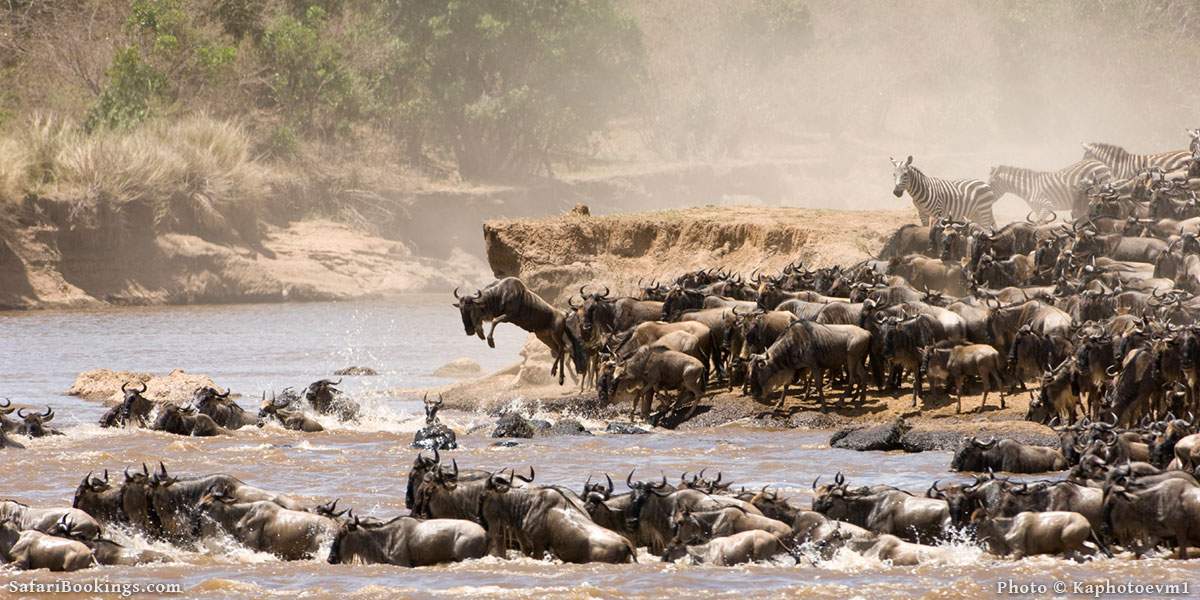
Mara River crossing wildebeest events define the Great Migration’s most intense and unpredictable moments, as thousands of animals simultaneously plunge into crocodile-filled water in a collective panic response that can either end in successful crossing or mass stampede and drowning within minutes. The crossing ranks as the most emotionally overwhelming wildlife experience most Maasai Mara visitors ever witness — its combination of movement, sound, predation, and sheer animal numbers produces a sensory overload that no preparation fully manages. The unpredictable timing of crossings makes them simultaneously the most anticipated and the most frustrating aspect of a Mara migration safari, and understanding how crossings work and where they happen most reliably transforms the waiting and watching from passive hope into informed strategic positioning. African Wild Trekkers guides clients to the right crossing points at the right times based on daily ranger intelligence that most self-organized visitors never access.
Understanding Why and How Crossings Happen
What Drives Wildebeest to Cross
Wildebeest cross the Mara River not from determination to reach a specific destination but from the collective behavioral response to the presence of fresh grass on the far bank combined with the herd’s growing hunger pressure on the depleted bank where they currently stand. The crossing decision does not come from an individual leader — there is no wildebeest scout who assesses the crossing and leads the herd. Instead, an individual at the water’s edge eventually reaches a threshold of hunger or social pressure that overcomes fear, steps into the water, and triggers a cascade response where thousands of animals follow within seconds because fleeing in the direction of any moving animal is deeply hardwired into wildebeest survival behavior. This leaderless, threshold-triggered collective behavior makes crossing timing genuinely unpredictable — a herd can wait at the bank for three days and then cross in the middle of a rainy afternoon with no observers present, or it can cross at 7 AM on the first morning after arrival with everyone watching.
The Role of Crocodiles
Nile crocodiles in the Mara River grow to extraordinary sizes because the annual migration provides a protein bonanza that supports individuals far larger than those found in rivers without seasonal prey concentrations. Crocodiles position themselves near established crossing points throughout the migration season, and experienced individuals learn the crossing locations and arrival patterns over decades of successful ambush hunting. A large Mara River crocodile may grow to five meters in length and weigh 500 kilograms, and these ancient predators catch wildebeest in the river current with strikes of explosive speed that resolve in seconds. Observers on the crossing bank see crocodile attacks directly — the surface disturbance, the brief struggle, and the disappearance of an animal — and this predation happens in the midst of the crossing event rather than separately, adding a predator-prey dimension to the spectacle that intensifies the emotional response of every human observer regardless of their experience with wildlife.
Best Crossing Points and How to Position
Established Mara River Crossing Locations
Game guides in the Maasai Mara track wildebeest herd positions daily and share intelligence through guide networks that allow operators to anticipate which river sections herds are approaching before they arrive at the bank. The Mara Serena crossing area in the southeastern reserve sector sees early-season activity from July as the first herds enter Kenya. The Fig Tree crossing north of the main Mara River bridge activates during mid-season when herds push deeper north and gather in the open grasslands above this section of the river. The Paradise Plain crossings in the northern Mara and Mara North Conservancy activate primarily from late August through September when herds reach maximum northern penetration before turning south. Each crossing location requires different approach routes, and camps positioned close to specific crossing sections can reach them within 15 to 30 minutes of receiving radio intelligence — a significant advantage over camps positioned in the southern Mara whose drives to northern crossing points take 45 to 90 minutes each way.
Spending Multiple Days at the River
The most reliable way to witness a crossing is to spend multiple consecutive mornings and afternoons positioned at river crossing banks where congregated herds have gathered, because each day the herd waits increases the statistical probability that crossing threshold will be reached during your observation window. Camps in the Mara North Conservancy and Olare Motorogi offer the ability to drive directly to specific river sections each morning and spend three to four hours watching herd behavior before returning to camp for midday rest and then returning for a second afternoon session. Observers who position at the river for two consecutive full days with active congregated herds have a dramatically higher crossing sighting rate than those who spend one morning checking river banks on a wider circuit that also covers other reserve areas. African Wild Trekkers advises clients to structure their Mara schedule around dedicated crossing observation days rather than trying to combine crossing watching with general game drives on the same day.
Patience and Behavioral Reading
Experienced guides read wildebeest behavioral signals that indicate a crossing is approaching — increased agitation in the herd’s leading animals at the bank, movement compression as animals at the rear push forward, unusual vocalizations, and the repeated approach-and-retreat behavior that precedes the threshold moment. These signals can begin hours before a crossing actually occurs and indicate a higher-than-baseline probability of imminent action, which allows observers to position and prepare camera equipment without the rushed response that crossing events triggered by sudden, unpredictable action often demands. Holding your position at an active bank even through periods of apparent calm builds a more complete understanding of herd behavior and delivers the satisfaction of having genuinely observed the decision-making process when the crossing finally erupts. Guides who leave river banks prematurely miss crossings that begin minutes after departure, and the frustration of this outcome reinforces the lesson that patience at an active bank is the single most important behavioral skill a crossing observer can practice.
Photography at Mara River Crossings
Camera Settings and Lens Choice
Photographing Mara River crossings requires a telephoto lens between 300mm and 600mm to achieve compelling individual animal frame fills from the minimum distance that guide vehicle positioning from the bank allows. Continuous autofocus tracking mode handles the erratic movement patterns of crossing animals better than single-shot focus modes, and a minimum shutter speed of 1/1000 second freezes the water spray and animal motion in the most dynamic moments of the crossing. Memory cards with fast write speeds prevent buffer filling that blocks further captures at the most intense moments of a crossing, and carrying a spare charged battery ensures you do not run out of power during an extended crossing event. The camera performs equally well in overcast Mara cloud conditions as in direct sun, and many experienced Mara photographers prefer the soft light of overcast July mornings over harsh midday sun for crossing photography because the diffused light prevents the blown highlights on white water spray that direct sun creates.
Plan Your Safari
Position Yourself for a Mara River Crossing
African Wild Trekkers places clients in Mara camps with direct access to active crossing points and uses daily ranger intelligence to position your game drives at the right river sections during your visit. Contact us at africanwildtrekkers.com/contact to book your crossing safari.
What Your Package Covers
Your Mara River crossing package includes daily crossing intelligence briefings, conservancy or reserve camp access, full game drive days at active crossing banks, full-board accommodation, and transfers from Nairobi.
Request Your Migration Crossing Quote
Tell us your travel dates in 2026 and we will position you in the best available Mara camp for maximum crossing probability. We respond within 24 hours at africanwildtrekkers.com/contact.