Amboseli National Park Kenya: Africa’s Best Elephant Viewing Against Kilimanjaro
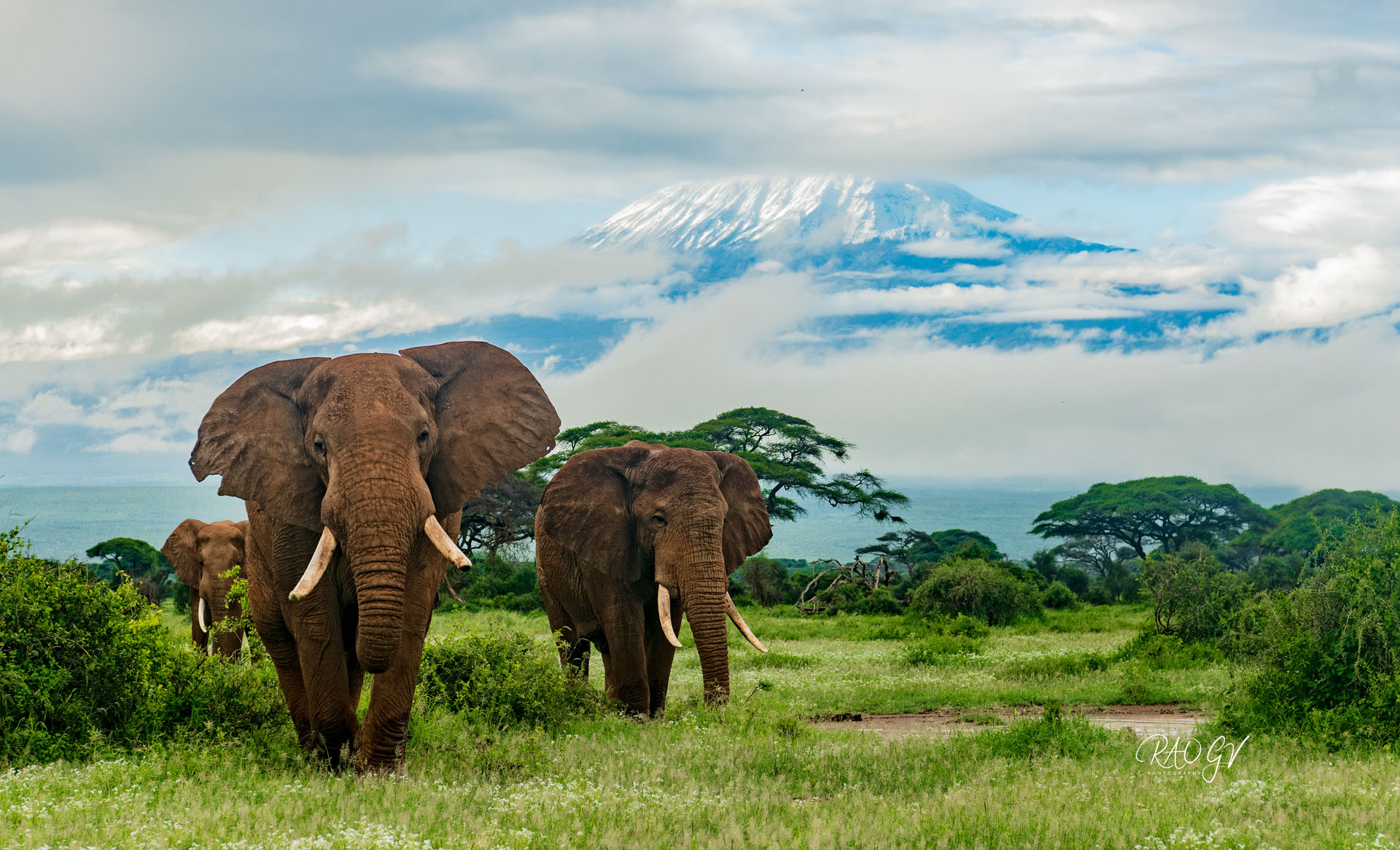
Amboseli National Park Kenya delivers one of Africa’s most iconic safari images — large elephant bulls moving freely across open swamp with the snow-capped summit of Mount Kilimanjaro rising 5,895 meters behind them across the Tanzania border. The park’s 392 square kilometers protect a critical elephant population that researchers at the Amboseli Elephant Research Project have documented continuously since 1972, creating the world’s longest running elephant behavioral study and the most individually known large mammal population on earth. Beyond elephants, Amboseli provides reliable big five viewing except rhino, exceptional waterbird populations in its open swamp systems, and Maasai cultural encounters in the community conservancy areas surrounding the park boundary. African Wild Trekkers includes Amboseli in Kenya safari itineraries as a destination that delivers world-class elephant encounters at a scale and intimacy that no other African park matches.
Elephants of Amboseli
Population Size and Behavioral Characteristics
Amboseli’s elephant population numbers approximately 1,600 individuals and represents one of the best-studied large mammal populations in the world through the 50-year continuous research program that Cynthia Moss established in 1972 and the Amboseli Trust for Elephants maintains today. Every individual elephant in the park has a name, a known family history, and a behavioral profile documented across multiple generations — a depth of knowledge that allows researchers and guides to explain specific behaviors observed during game drives with a biographical accuracy impossible in parks where elephants are anonymous. The matriarch-led family structure produces observable social complexity during daily Amboseli game drives, and watching a matriarch lead her family through morning swamp feeding while a bull tests for female reproductive status nearby delivers behavioral understanding that no nature documentary conveys as immediately as direct observation. Family groups of 20 to 50 individuals moving together through the swamp edge in early morning light create consistently breathtaking visual compositions that make Amboseli the most photographed elephant location in Africa.
The Amboseli Swamp System
Amboseli’s open swamp system forms from underground water filtering through the volcanic soils at the base of Kilimanjaro, and this permanent water source supports the elephant population and large waterbird concentrations throughout the year regardless of surface rainfall. The swamp edges at Enkong Narok and Enkiama provide the most productive elephant viewing areas because family groups spend morning and evening hours feeding on the swamp vegetation and drinking at the water channels that thread through the papyrus. Buffalo herds share the swamp feeding grounds with elephants, and the coexistence of these two massive species at close range in open, easily viewed terrain creates a wildlife density per observation period that many larger Kenyan parks cannot match. Hippo pods occupy the deeper swamp channels year-round, and their vocalizations and surface displays add constant auditory and visual texture to game drives that spend time along the swamp perimeter.
Kilimanjaro as Backdrop: When to See the Summit
The famous photograph of Amboseli elephants beneath Kilimanjaro requires clear conditions on the mountain, which appears most reliably in the early morning between 6 and 9 AM before cloud builds around the summit from mid-morning heat convection. The best months for clear Kilimanjaro visibility are January and February when the dry season produces consistently clear mornings, and October through early November before the short rains arrive. During the March to May long rains and the July to August period when cloud builds predictably, Kilimanjaro may be visible for only 20 to 30 minutes per morning or completely obscured for several consecutive days. Planning your Amboseli visit during the clear-sky months and scheduling your game drive departure for dawn dramatically increases your probability of capturing the iconic elephant-and-mountain composition. African Wild Trekkers advises on optimal timing for Kilimanjaro visibility based on current seasonal conditions when clients book.
Other Wildlife in Amboseli
Lions, Cheetahs, and Predators
Amboseli’s lion prides benefit from the park’s open terrain, which allows game drive vehicles to observe hunting behavior and family dynamics without the vegetation obstruction that complicates lion viewing in thicker bush systems. The prides occupy territories around the swamp edge and open plains where wildebeest, zebra, and buffalo provide prey throughout the year, and the territorial stability of resident prides means specific prides can be reliably located around known territory centers with guidance from the research team’s current tracking data. Cheetahs use the open Amboseli plains for hunting because the unobstructed sight lines allow the cats to select prey and execute high-speed chases without brush interference, and the flat terrain lets game drives parallel a hunting cheetah from start to kill in the way that the Maasai Mara also enables. The combination of flat terrain and resident cheetah population makes Amboseli one of Kenya’s best parks for extended cheetah behavioral observation.
Birdlife in the Swamp and Plains
Amboseli records over 400 bird species, and the swamp habitat produces exceptional waterbird concentrations including large yellow-billed stork colonies, African spoonbill foraging parties, and dozens of wader species working the swamp edges during morning feeding activity. Grey crowned cranes feed alongside buffalo and elephants at the swamp margin, and their distinctive calls and formal upright posture make them visually conspicuous against the papyrus background. Superb starlings and Fischer’s lovebirds represent the savanna grassland bird community around lodge grounds, and the contrast between these small colorful species and the massive gray swamp mammals just meters away encapsulates Amboseli’s characteristic mixing of scale and spectacle. Dedicated birders who request dawn bird drives specifically along the swamp channels access species unavailable on standard game drive routes, and the 400+ species total rewards even moderately interested birders with consistent new additions on each morning drive.
Planning Your Amboseli Visit
Getting to Amboseli from Nairobi
Amboseli National Park sits approximately 240 kilometers south of Nairobi near the Tanzanian border, and the drive from the capital takes four to five hours via the Emali road depending on traffic through the Nairobi outskirts. Wilson Airport in Nairobi operates daily scheduled flights to Amboseli’s Ol Tukai airstrip with Safarilink and Air Kenya, and the 45-minute flight eliminates road travel entirely for travelers with limited time or preferences against long drives on variable-quality Kenyan roads. Flying to Amboseli and driving back to Nairobi on departure day, or vice versa, provides a practical middle option that combines the time efficiency of a flight with the landscape orientation that a road journey through Maasai country provides. African Wild Trekkers arranges both flight and road connections for Amboseli packages and advises on the optimal combination based on your overall Kenya itinerary structure and time constraints.
Best Lodges and Camps in Amboseli
Amboseli Serena Safari Lodge occupies a prime swamp-edge position with direct elephant views from the dining area and pool terrace, and its central location within the park provides early gate access for morning game drives without long transit from the park boundary. Tortilis Camp in the Kitirua Conservancy outside the park boundary offers smaller, more intimate tented camp accommodation with all-inclusive rates that include night drives and walking safaris unavailable inside the national park. Ol Tukai Lodge delivers reliable quality at mid-range pricing with excellent swamp views from the central areas and the convenience of being adjacent to the main Ol Tukai airstrip for fly-in guests. Budget travelers find Amboseli Sopa Lodge and Kibo Safari Camp offer acceptable facilities at lower price points, though their positioning requires longer game drive transits to reach the prime swamp viewing areas. African Wild Trekkers matches clients to the Amboseli property that best suits their budget and wildlife priorities rather than defaulting to the most expensive or the cheapest available option.
Plan Your Safari
Book Your Amboseli Elephant Safari
African Wild Trekkers designs Amboseli packages that maximize elephant encounters and Kilimanjaro photography opportunities with the right camp positioning and timing advice for your specific travel dates. Contact us at africanwildtrekkers.com/contact to plan your Kenya safari.
What Your Package Covers
Your Amboseli package includes park entry fees, full-board lodge accommodation, all game drives, Nairobi transfer or fly-in arrangements, and an experienced Kenya guide throughout your stay at the park.
Request Your Amboseli Safari Quote
Tell us your Kenya travel dates and Kilimanjaro photograph priorities and we will design the right Amboseli itinerary within 24 hours. Reach us at africanwildtrekkers.com/contact.