Samburu National Reserve Kenya: East Africa’s Most Distinctive Wildlife Destination
Samburu National Reserve Kenya occupies a semi-arid riverine habitat in the northern frontier district where the Ewaso Ng’iro River sustains a concentration of wildlife species found nowhere else in Kenya’s better-known southern parks. The reserve covers 165 square kilometers of arid scrubland, doum palm riverine forest, and rocky lugga channels that create an ecosystem completely different in character from the Maasai Mara or Amboseli, and the wildlife community it supports reflects this ecological distinctiveness — five species endemic to the northern arid zone, known collectively as the Samburu Five, occur here in concentrations available nowhere further south. Samburu rewards travelers who seek a counterpoint to the Mara’s wildebeest spectacle with a quieter, more intimate game drive environment where a morning circuit on the Ewaso Ng’iro banks might produce reticulated giraffe, Grevy’s zebra, and gerenuk in the same 90-minute stretch without another vehicle in sight. African Wild Trekkers combines Samburu with the Maasai Mara or Laikipia for Kenya safari clients who want the full range of the country’s wildlife zones rather than repeating the same ecosystem twice.
The Samburu Five
Gerenuk: The Giraffe-Necked Antelope
The gerenuk ranks as Samburu’s most immediately recognizable endemic species because it feeds standing fully upright on its hind legs, using its disproportionately long neck to browse acacia foliage four feet above the reach of any other antelope its size. This bipedal feeding posture is unique among African antelopes and gives the gerenuk a comically elegant appearance that simultaneously looks improbable and perfectly adapted to the thorny scrubland where every centimeter of feeding height represents access to foliage competing species cannot reach. Gerenuks occur in small groups of two to six individuals spread across Samburu’s drier areas away from the river, and their stillness when first approached — they freeze and stare directly at the vehicle with large liquid eyes before deciding whether to continue feeding or move off — creates outstanding photography opportunities in the early morning golden light of the acacia scrubland. The species name derives from the Somali word for giraffe-necked, and watching a gerenuk stretch to its full height against a Samburu sunset silhouette is one of Kenya’s most photographically distinctive wildlife moments.
Gerenuks obtain all their water requirements from the foliage they consume and never drink standing water, which means they range far from the Ewaso Ng’iro River into the most arid sections of the reserve where other species cannot survive the dry season. This water independence gives gerenuks an ecological niche that insulates them from the dry-season competition that concentrates other species at the river, and they remain distributed across the reserve interior throughout the year in a pattern that requires deliberate searching rather than the passive riverside observation that works for water-dependent species. Your Samburu guide knows the lugga channels and acacia thickets where gerenuks habitually feed in the early morning, and targeted drives into these areas away from the main river circuit produce reliable sightings in conditions where the animals are engaged in feeding behavior rather than alert flight mode.
Grevy’s Zebra: The Largest Wild Equid
Grevy’s zebra is the world’s largest wild equid and looks immediately distinct from the common plains zebra even at a distance — its stripes are much narrower and more numerous, its ears are large and rounded like a mule’s, and its belly is pure white without the stripe extension that plains zebras show on the underside. The Grevy’s zebra population in northern Kenya represents one of the last significant concentrations of this critically endangered species, with fewer than 3,000 individuals remaining globally, and Samburu National Reserve holds a meaningful proportion of this world population within its boundaries. The species’ social structure differs fundamentally from plains zebras — males are solitary territory holders rather than herd stallions, and females move independently between male territories based on resource distribution, which means Grevy’s groups encountered in Samburu are typically small, fluid associations rather than the large cohesive herds that plains zebras form. Seeing Grevy’s and plains zebra in the same game drive frame highlights the differences dramatically, and the visual comparison reinforces how distinct these two species are despite both being called zebras.
Grevy’s zebra populations have declined by 80 percent since the 1970s due to hunting for their striking pelts, competition with livestock for water and grazing, and habitat degradation from increased human settlement in northern Kenya. Conservation programs including community conservancy partnerships around Samburu and the Grevy’s Zebra Trust’s monitoring and vaccination programs have stabilized the population, but the species remains genuinely threatened and every individual sighting in Samburu represents an encounter with an animal whose species faces an uncertain future. Understanding this context before your game drive transforms the Grevy’s zebra encounter from an aesthetic wildlife observation into a conservation encounter with genuine stakes — the animals you photograph in Samburu are part of a global population small enough that each individual matters to the species’ long-term genetic viability.
Reticulated Giraffe, Beisa Oryx, and Somali Ostrich
The reticulated giraffe displays the most geometrically precise coat pattern of all giraffe subspecies — large polygonal chestnut patches with brilliant white borders that create a mosaic pattern clearly distinct from the irregular blotching of southern Africa’s giraffe subspecies. Reticulated giraffes occur in small groups throughout Samburu’s acacia woodland, and their height advantage in a semi-arid landscape where trees rarely exceed eight meters makes them visible at distances where other species blend into the scrub, providing a reliable navigational landmark that guides use to locate concentrations of mixed-species groups. The Beisa oryx brings a different visual character to the Samburu landscape — a large antelope with long straight horns, a bold black-and-white face pattern, and a pale fawn body built for arid zone endurance. Oryx herds of 10 to 30 animals graze the open grassland patches between acacia stands and demonstrate the feeding efficiency of an animal evolved to extract nutrition from dry-season grasses that most browsers and grazers cannot sustain themselves on. The Somali ostrich male displays the blue neck and leg coloration that distinguishes it from the pink-necked common ostrich of southern Kenya, and its preference for the most arid, open terrain in Samburu means sightings occur most reliably on the reserve’s drier western circuits away from the river.
Encountering all five Samburu Five species in a single two-day visit is achievable with a knowledgeable guide who routes the game drives to cover the specific habitat types each species requires rather than staying exclusively on the riverbank circuit that most casual visitors default to. The river circuit produces excellent lion, leopard, and elephant viewing alongside crocodiles and hippos, but the endemic species require deliberate drives into the drier interior zones that first-time Samburu visitors often skip in favor of the high-density riverside action. African Wild Trekkers briefs Samburu clients before arrival on the specific habitat requirements of each Samburu Five species and asks drivers to prioritize interior circuits during the first morning before returning to the river for the dense general wildlife viewing that the afternoon game drive delivers.
Wildlife Beyond the Samburu Five
Lions and Leopards on the Ewaso Ng’iro River
The Ewaso Ng’iro River that forms Samburu’s southern boundary sustains a concentration of predators relative to prey density that produces daily lion and leopard sightings in conditions of exceptional intimacy because the riverine forest along the banks creates a narrow, accessible wildlife corridor where vehicles can position at close range. Lion prides in Samburu have developed leopard-like habits of tree resting during midday heat because the doum palms and fig trees along the riverbank provide shade that the open scrubland cannot, and drives along the river track frequently produce lions draped across low branches in the positions normally associated with leopards. Leopards are genuinely abundant in Samburu compared to most East African reserves, and the reserve’s guides know specific individuals and their territory ranges well enough to target specific crossing points and resting trees when morning tracking data indicates a leopard’s overnight position. The combination of predictable leopard territory knowledge and the reserve’s low vehicle numbers at sightings means Samburu consistently delivers more intimate leopard encounters than the Maasai Mara at equivalent search effort.
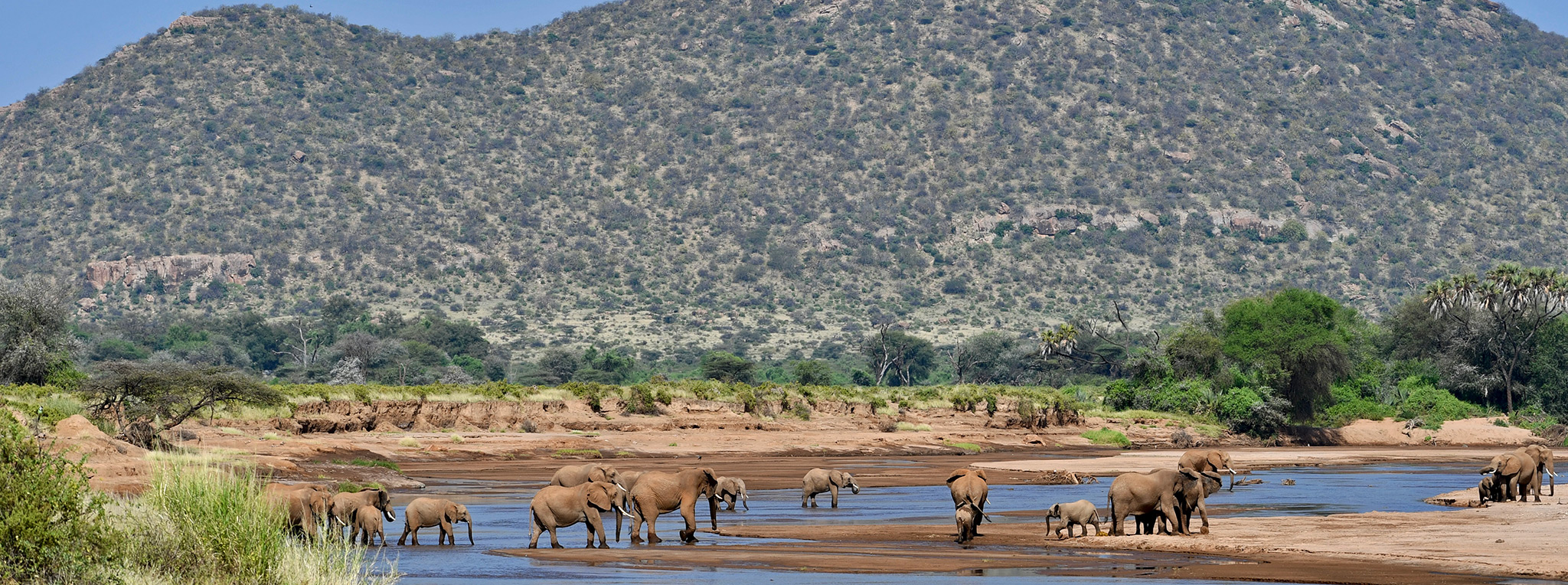
Elephants cross the Ewaso Ng’iro River at established fording points throughout the day, and watching a matriarch lead her family through the waist-deep crossing — calves swimming with trunks raised, the adults’ confident stride through the current, the emergence dripping onto the far bank — represents one of the most intimate large mammal encounters available anywhere in northern Kenya. The Samburu elephant population has been studied by Save the Elephants since 1997, and the research program’s GPS tracking data has transformed the scientific understanding of elephant long-distance movement and social connectivity across the northern Kenya landscape. Crocodiles in the river reach impressive sizes because the permanent water sustains populations year-round rather than seasonally, and the crossing points where elephants ford attract crocodiles who occasionally attempt attacks on calves — a genuine predation risk that the matriarch manages by positioning herself between calves and the deep channel during crossings.
Birdlife in the Riverine Forest and Scrubland
Samburu records over 350 bird species including several northern specials that reach the southern limit of their Somali-Maasai biome distribution in this reserve. The Vulturine Guineafowl — the most ornate of Africa’s guineafowl species, with a cobalt-blue breast, long blue hackles, and a red-and-white striped neck — forages in large flocks across Samburu’s open areas and represents one of the reserve’s most photographed non-mammal species. The Golden-breasted Starling brings a metallic golden-yellow underside and iridescent blue-green upperparts to the acacia scrubland in small groups that draw every wildlife photographer’s attention regardless of their primary species interest. Von der Decken’s Hornbill uses the riverine forest throughout the year, and its large curved bill and red-and-white facial patterning makes it one of Samburu’s most recognizable resident species. Dedicated birding drives along the river’s doum palm forest produce Somali Bee-eater, Pygmy Batis, and Dodson’s Bulbul in addition to the widespread waterbirds that use the river edge throughout the year.
The diversity of bird habitats within Samburu’s small area makes it possible to observe savanna species, riparian forest specialists, and arid-zone endemics within a single morning drive that transitions between the open scrubland interior and the densely vegetated river corridor. Birders who request a dawn specialist bird drive before the standard game drive begins add a species list dimension to Samburu that non-birding travel partners also enjoy because the visual quality of northern Kenya’s endemic birds matches anything the mammal list produces. African Wild Trekkers pairs Samburu with Laikipia Plateau for clients who want a complete northern Kenya circuit combining the Samburu Five endemics with rhino and wild dog viewing at Ol Pejeta and Lewa that the reserve itself does not offer.
Accommodation and Getting to Samburu
Best Lodges and Camps in Samburu
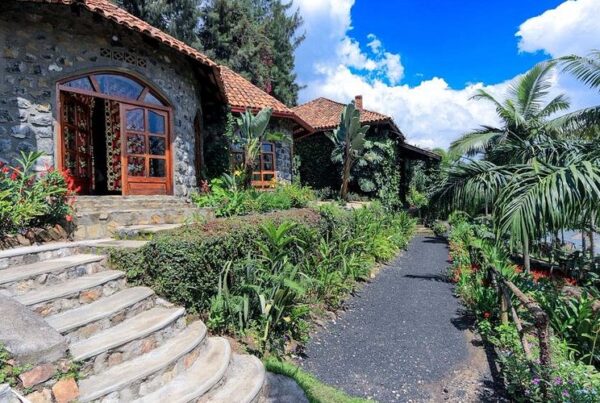
Samburu Game Reserve — adjacent to Samburu National Reserve and sharing the same wildlife population — hosts the best concentration of luxury camps along the Ewaso Ng’iro River, where properties like Saruni Samburu, Elephant Pepper Camp, and Sasaab offer private access to specific river sections with correspondingly fewer vehicles at key wildlife viewing areas. The riverfront camps position guests at breakfast and dinner within visual range of elephants crossing and coming to drink, and the integration of wildlife into the lodge atmosphere creates a 24-hour immersion in the Samburu experience rather than compartmentalizing wildlife to game drive windows only. Mid-range camps including Samburu Intrepids and Ashnil Samburu deliver reliable quality at lower price points with the same river access and Ewaso Ng’iro views that define the Samburu atmosphere. African Wild Trekkers matches clients to the property that fits their budget and group size without defaulting to the most expensive or the most generic option, and we know which camps deliver consistently excellent guiding regardless of their price tier.
Getting to Samburu from Nairobi takes approximately five to six hours by road through Nanyuki and Isiolo — a scenic drive through the Mount Kenya highlands that provides landscape value alongside transit time. Scheduled flights from Wilson Airport in Nairobi operate daily with Safarilink and Air Kenya to Samburu’s multiple airstrips, covering the same distance in approximately 90 minutes and eliminating road travel entirely for clients who prioritize time efficiency. The fly-in option suits travelers combining Samburu with the Maasai Mara or Laikipia on a circuit itinerary where internal flights connect the parks more efficiently than road combinations. African Wild Trekkers arranges both road and flight connections based on your overall Kenya itinerary structure and time available in the northern region.
Plan Your Safari
Samburu National Reserve works best as part of a northern Kenya circuit combining two nights in the reserve with a Laikipia conservancy visit for rhino and wild dog, or as a counterpoint to the Maasai Mara in a classic Kenya safari that covers both the southern grasslands and the northern semi-arid ecosystem. African Wild Trekkers books Samburu camps, internal flights, and all game drive logistics as part of complete Kenya safari packages where every transition is handled so you focus on the wildlife rather than the logistics.
Your Samburu package includes park entry fees, full-board accommodation, all game drives with a specialist northern Kenya guide, and transfers from Nairobi or Wilson Airport. We tailor the itinerary to the specific Samburu Five species on your priority list and brief your guide on your target animals before departure so the first morning drive is strategically planned rather than exploratory.
Contact African Wild Trekkers at africanwildtrekkers.com/contact with your Kenya travel dates and we will send a complete northern Kenya safari itinerary within 24 hours.