Ol Pejeta Conservancy Kenya: Where You Meet the Last Two Northern White Rhinos
Ol Pejeta Conservancy Kenya occupies 364 square kilometers on the Laikipia Plateau north of Mount Kenya and holds the singular distinction of housing Najin and Fatu — the last two northern white rhinoceroses on earth, a functionally extinct subspecies whose continued biological presence depends entirely on the conservancy’s daily management and the scientific programs attempting to use assisted reproduction technology to prevent total extinction. Beyond this extraordinary conservation story, Ol Pejeta protects Kenya’s largest black rhino population, supports over 10,000 large mammals including lions, elephants, cheetahs, and African wild dogs, and operates an education center that has become the most visited conservation learning facility in East Africa. The conservancy’s commercial model — combining premium lodge tourism, wildlife research partnerships, and community employment programs — is studied internationally as a template for sustainable large-scale conservation finance. African Wild Trekkers includes Ol Pejeta in Kenya safari circuits both for its species diversity and for the conservation significance of the northern white rhino encounter that no other place on earth can offer.
The Northern White Rhinos: A Species at the Edge
Who Are Najin and Fatu
Najin and Fatu are a mother and daughter — the last surviving members of the northern white rhinoceros subspecies that once ranged across central and eastern Africa in populations of thousands before poaching for horn reduced the continental population to zero in the wild by 2008. Sudan, Najin’s father and the subspecies’ last male, lived at Ol Pejeta under 24-hour armed guard for the final years of his life before dying of age-related complications in March 2018, and his death left the subspecies with no possibility of natural reproduction because no breeding males remain anywhere in the world. Najin and Fatu are both unable to carry a pregnancy to term — Najin because of age-related health conditions and Fatu because of a uterine condition — which means the subspecies’ only theoretical path to biological continuation runs through assisted reproduction using frozen genetic material from deceased northern white rhinos combined with surrogate southern white rhino females. The international scientific consortium working on this program, BioRescue, extracted viable egg cells from Fatu and successfully created northern white rhino embryos using frozen sperm — embryos that currently exist in cryopreservation and await the technical capability to implant them in surrogate southern white rhino females.
Meeting Najin and Fatu at Ol Pejeta is an encounter unlike any other available in wildlife travel because you know with certainty as you stand before them that you are looking at the last representatives of a subspecies whose existence on earth is measured in years, not decades. The emotional weight of this knowledge transforms what would otherwise be a rhino sighting into a profound meditation on extinction, conservation failure, and the extraordinary effort that Ol Pejeta’s keepers, scientists, and supporters invest daily to keep these two animals alive and potentially create a path back from the biological edge. Ol Pejeta’s ranger staff who care for Najin and Fatu daily treat them with individual attention and affection that goes far beyond standard wildlife management, and the human-animal relationship visible in these interactions communicates something about the cost of extinction — the years of dedicated care that accompanies the loss of an entire subspecies — that statistics and documentary narration never fully convey.
The Science of De-Extinction Efforts
The BioRescue consortium’s northern white rhino program represents the most technically ambitious de-extinction attempt involving a large mammal species currently underway anywhere in the world, combining egg retrieval from living animals, in-vitro fertilization with cryopreserved sperm from deceased males, embryo creation and cryopreservation, and the future challenge of surrogate implantation in southern white rhino females maintained at European facilities. Scientists successfully retrieved oocytes from Fatu in 2019 and created three viable northern white rhino embryos using sperm from deceased males Suni and Sudan — the first time this has been achieved for a functionally extinct large mammal subspecies. The frozen embryos represent a genetic bridge to a potential future population, but the technical barriers to surrogate implantation and carrying a rhino pregnancy to term in a closely related but distinct subspecies remain formidable enough that program timelines extend over decades rather than years. Ol Pejeta operates an education center that explains this science to visitors at an accessible level without minimizing the genuine uncertainty about whether the program will ultimately succeed in restoring a self-sustaining northern white rhino population.
The program also raises philosophical questions about extinction, de-extinction, and the allocation of conservation resources that Ol Pejeta staff discuss openly with visitors who want to engage with them. The enormous financial and scientific investment required to potentially restore a subspecies that humans destroyed through poaching could alternatively fund protection programs for dozens of currently threatened species before they reach the same crisis point — and program supporters and skeptics at Ol Pejeta engage honestly with this trade-off rather than presenting the northern white rhino program as an unambiguous conservation good. This intellectual honesty in conservation communication is itself a model for how protected areas can engage visitor education beyond the conventional message of species celebration without acknowledgment of the failures and trade-offs that define real-world conservation practice.
Black Rhinos and General Wildlife at Ol Pejeta
Kenya’s Largest Black Rhino Population
Ol Pejeta hosts over 120 black rhinos — the largest concentration of this critically endangered subspecies in Kenya — within a conservancy that provides both the fenced security from poaching and the diverse habitat of acacia grassland, riverine forest, and open plains that black rhinos require for nutritional diversity across their browsing ranges. The conservancy’s rhino monitoring program tracks every individual through GPS collars and RFID microchips, maintaining a real-time population map that game drive guides access before departures to maximize sighting probability for clients who specifically request rhino encounters. Black rhino encounters at Ol Pejeta frequently occur at close range because the animals have become accustomed to monitoring vehicle presence over decades of daily research contact and tolerate approach distances that free-ranging black rhinos in larger, less monitored parks do not permit. The conservancy also holds southern white rhinos that were relocated from South Africa as part of habitat expansion programs, and seeing both black and white rhino species within the same morning game drive circuit creates a species comparison that reinforces how differently these two animals are built for different ecological roles.
The rhino sanctuary model at Ol Pejeta demonstrates what conservation investment at scale can achieve — the conservancy established its current rhino population from a founding group of fewer than 30 animals relocated from Solio Game Reserve in 2004, and careful management of habitat, predator-prey balance, and veterinary health has tripled the population in two decades. This growth rate provides a template for the recovery trajectory available to other rhino conservation programs with sufficient land, funding, and management capacity, and Ol Pejeta shares its methodology actively with conservation partners across Africa working on equivalent programs. Visiting the conservancy generates revenue that directly funds the veterinary team, ranger force, and fence maintenance that make this population security possible — a tangible conservation impact that distinguishes your Ol Pejeta safari spending from the more diffuse conservation contribution of visiting a national park.
Lions, Cheetahs, and Wild Dogs
Ol Pejeta’s large mammal community supports three of Africa’s big predators in conditions of exceptional viewing quality because the conservancy’s relatively small fenced area concentrates predators and prey in a density that produces more frequent hunting encounters per game drive hour than most unfenced national parks. Lion prides have established territories across the conservancy’s grassland and acacia zones, and the monitoring program’s GPS tracking data allows guides to locate specific prides before departure with a precision that makes morning drive planning more targeted than exploratory. Cheetah coalitions and single females with cubs use the Ol Pejeta plains for their high-speed hunts, and the open terrain combined with lower vehicle numbers than the Maasai Mara creates photography conditions that allow longer, less crowded observation of hunting sequences from start to kill. African wild dogs pass through Ol Pejeta as part of their ranging movements between the conservancy and surrounding Laikipia properties, and when a pack is present the conservancy’s monitoring network identifies their location within hours for interested guests.
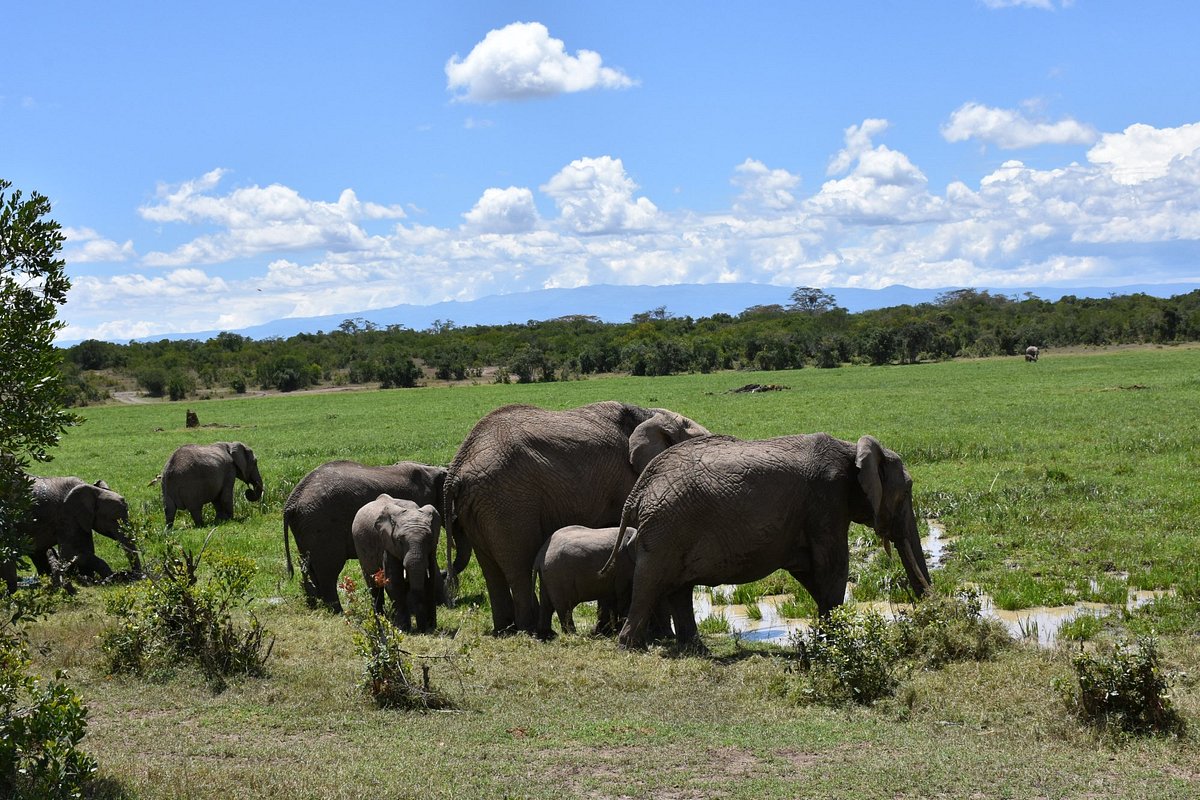
Elephants cross Ol Pejeta’s boundaries via designated wildlife corridors that connect the conservancy to the wider Laikipia landscape, and the resident family groups that use the conservancy regularly have been studied by the conservancy’s research team in collaboration with Save the Elephants’ long-running Laikipia elephant monitoring program. The plateau-wide elephant research connects Ol Pejeta’s resident families to the broader population movements that Iain Douglas-Hamilton’s team has tracked across northern Kenya for decades, and guides who understand this research context can explain individual elephant behavior during your game drive in terms of long-term life history rather than isolated behavioral observations. This depth of ecological connectivity between Ol Pejeta’s individual animals and the wider Laikipia landscape is what distinguishes conservancy safari experiences from national park visiting — the animals are not just resident in a park but participants in a connected ecosystem managed across a much larger canvas than any single conservancy boundary encloses.
Plan Your Safari
Ol Pejeta Conservancy visits require advance booking because the conservancy’s limited accommodation capacity — primarily Sweetwaters Serena Camp, Ol Pejeta Bush Camp, and Ol Pejeta Tented Camp — fills months ahead during peak season. African Wild Trekkers confirms availability immediately and builds Ol Pejeta into Laikipia circuits combining it with Lewa or Borana for a multi-conservancy northern Kenya experience that covers black rhino, northern white rhino, wild dog, and the full Laikipia predator community across three to four days on the plateau.
Your Ol Pejeta package includes conservancy access fees, game drives with specialist guides, northern white rhino visit, full-board accommodation, and transfers from Nanyuki airstrip or road from Nairobi. We brief every client on the northern white rhino program before their visit so the encounter carries its full conservation significance rather than being processed as a standard wildlife sighting.
Contact African Wild Trekkers at africanwildtrekkers.com/contact with your Kenya travel dates and we will confirm Ol Pejeta availability and design your complete Laikipia circuit within 24 hours.