Laikipia Plateau Kenya: The Insider’s Alternative to Kenya’s Crowded Safari Parks
Laikipia Plateau Kenya occupies a vast highland plateau north of Mount Kenya at elevations between 1,600 and 2,000 meters and delivers some of East Africa’s most exclusive, diverse, and intimate safari experiences across a network of private conservancies that collectively cover over 3,500 square kilometers of community and privately owned land. The plateau hosts the second-largest black rhino population in Kenya outside Tsavo, one of Africa’s largest African wild dog populations, a significant elephant population that researchers have tracked continuously for over two decades, and the full complement of savanna mammals found in the national parks — all viewable without the vehicle numbers that define peak-season Mara safaris. Laikipia conservancies like Ol Pejeta, Lewa, Borana, Segera, and Mugie operate under land use models that combine wildlife conservation with pastoralist community partnerships, and the fees travelers pay directly fund both conservation management and community development programs that determine whether the plateau retains its wildlife-compatible land use into the next generation. African Wild Trekkers includes Laikipia in Kenya safari circuits for clients who want conservancy exclusivity, specific wildlife species like wild dog and rhino, and an authentic bush experience without the Mara’s crowds.
Wildlife That Makes Laikipia Unmissable
African Wild Dog: Kenya’s Most Endangered Large Predator
Laikipia Plateau supports Kenya’s largest African wild dog population and one of the most significant populations anywhere in East Africa, providing reliable sighting opportunities for a species whose continent-wide population of fewer than 6,000 individuals makes every encounter an encounter with a genuinely rare animal. Wild dogs live in packs of 6 to 30 individuals that hunt cooperatively across large territories, and the coordinated high-speed chases they execute through Laikipia’s open scrubland create some of the most athletically spectacular predator hunts observable from a game drive vehicle anywhere in Africa. The pack’s daily movement covers enormous distances — 25 to 50 kilometers on hunting days — and following a pack requires a guide with both current radio-tracking data from conservation monitoring teams and the driving skill to keep pace with animals moving at 60 kilometers per hour across rough terrain. African Wild Trekkers uses guides with active Laikipia wild dog monitoring relationships who receive pack location data from the research teams before each game drive, dramatically improving sighting probability over uninformed searching across the plateau.
Wild dog pack behavior around the den site during pup-rearing season between April and July represents the most intimate and behaviorally rich wild dog encounter available, because the pack returns to the den multiple times daily to regurgitate food for pups, and the greeting ceremonies on each return involve the entire pack in a cascade of vocalizations, tail wagging, and physical contact that communicates the emotional bonds within the group with extraordinary clarity. Watching an alpha female greet returning hunters, assess the food regurgitated for her pups, and direct the pack’s behavior around the den site provides behavioral insight into wild dog social intelligence that no hunting chase can match in depth of meaning. Conservation teams monitor Laikipia’s wild dog packs year-round, and the monitoring program’s detailed records of pack composition changes, birth rates, mortality causes, and territory shifts represent one of Africa’s most comprehensive carnivore behavioral datasets outside of the Serengeti lion research programs.
Black Rhino on Foot: Walking with Rhinos in Laikipia
Several Laikipia conservancies offer white-glove walking safaris that specifically target black rhino encounters on foot — an experience available nowhere in national park Kenya and uncommon across the continent because black rhinos’ notoriously unpredictable temperament makes foot approaches inherently demanding. Specially trained rangers lead small groups of three to four guests on foot through the conservancy terrain, using radio-tracking data from rhino monitoring programs to approach individual rhinos with a precision that reduces stress on the animal while delivering viewing distances of 20 to 40 meters that vehicle-based encounters rarely achieve. The experience of standing on foot in open terrain as a black rhino acknowledges your presence and decides whether to move away or hold its ground is a wildlife encounter of raw visceral intensity that no vehicle window can mediate or diminish. Laikipia’s walking rhino programs operate at a standard of guide training and safety management that gives them genuinely excellent incident records, and the conservancy staffs who manage these programs treat the walking rhino experience as the flagship offering of their entire hospitality operation.
The walking rhino program also provides context for the conservation work that keeps individual animals alive within the plateau’s rhino sanctuary network. Rangers who lead the walks typically know the specific rhino you are tracking by name, life history, and behavioral characteristics developed through years of daily monitoring contact, and their ability to read the animal’s body language in real time — adjusting the group’s position as the rhino’s ear movements and breathing rate signal its level of awareness — demonstrates a human-wildlife relationship of extraordinary depth. This ranger knowledge, combined with the physical experience of tracking a critically endangered animal across African terrain on foot, creates a conservation encounter that generates the kind of personal commitment to rhino protection that no documentary, lecture, or vehicle-based sighting produces with equivalent reliability.
Conservancy Models and Exclusivity
How Private Conservancies Differ from National Parks
Private and community conservancies on the Laikipia Plateau operate under land use models that restrict vehicle numbers per sighting, permit off-road driving, allow night drives, and enable walking safaris — four activities unavailable in Kenya’s national parks that collectively transform the quality of every wildlife encounter beyond what the species list alone communicates. A single vehicle at a wild dog kill creates a completely different experience from 20 vehicles converging on the same event, and the conservancy system’s vehicle limitation policies protect this quality as a deliberate product feature rather than a fortunate accident of low visitor numbers. Night drives on the plateau reveal nocturnal species invisible during daylight hours — aardvark, porcupine, genet, civet, and occasionally serval and caracal appear regularly on guided night circuits operated by camps with appropriate vehicle lighting equipment. Walking safaris convert the landscape from a backdrop into a sensory environment where you hear, smell, and physically inhabit the bush rather than viewing it from inside a moving box, and this physicality produces a relationship with African wilderness that many travelers describe as the single most meaningful activity of their entire safari history.
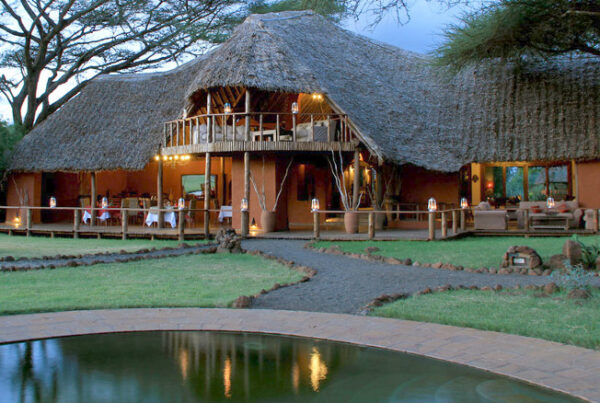
The conservancy model also means that accommodation in Laikipia tends toward small, intimate camps of 6 to 16 guests rather than the larger lodges common in national parks, and this scale creates a different social atmosphere where the entire guest community shares game drive experiences, comparisons, and meal conversations that reinforce the day’s wildlife encounters. Camp managers and guides at the best Laikipia properties know each guest by name from the first dinner, understand their specific wildlife interests and fitness levels by the second morning, and tailor subsequent drives to what has worked and what specific animals or behaviors the guest most wants to pursue. African Wild Trekkers works with the conservancy operators whose guides deliver this personalized depth of service rather than the more transactional experience that larger, volume-oriented Kenya safari operators provide.
Key Conservancies: Ol Pejeta, Lewa, Borana, and Beyond
Ol Pejeta Conservancy covers 364 square kilometers and hosts Kenya’s largest black rhino population alongside the world’s only two remaining northern white rhinos — Sudan the last male died in 2018, leaving Najin and Fatu as the last representatives of a subspecies that cannot reproduce naturally. Visiting Ol Pejeta to see Najin and Fatu alongside Ol Pejeta’s thriving black rhino population creates a conservation experience of profound juxtaposition — extinction in real time beside successful recovery — that no other location on earth delivers. Lewa Wildlife Conservancy to the north also holds significant black rhino numbers and offers the added experience of horse riding and camel safaris as alternative game drive modes that change the human-wildlife relationship by approaching animals at a pace and height that triggers less of the alert response that motorized vehicles produce. Borana Conservancy focuses on the intimate walking safari experience with extraordinary guide quality, and Segera Retreat combines conservation research, contemporary African art, and exceptional cuisine with a wildlife experience that suits travelers who want cultural and aesthetic depth alongside the bush experience.
Moving between two or three Laikipia conservancies within a single visit creates a cumulative plateau experience that no single property can deliver alone, because each conservancy holds different species concentrations, landscape characters, and activity specializations that complement rather than duplicate each other. African Wild Trekkers designs Laikipia circuits that connect two properties in a four- to five-day visit using light aircraft transfers between conservancy airstrips, eliminating the long road transfers that would otherwise consume half a day between properties across the plateau’s rough tracks. The aerial transfers between conservancies also deliver some of northern Kenya’s finest landscape perspectives — the plateau’s geometric green patchwork against the ochre semi-arid land beyond its fenced boundaries makes the conservation achievement visible from the air in a way that ground-level travel cannot convey.
Plan Your Safari
Laikipia Plateau safari bookings require advance planning because the best conservancy camps operate at very small capacities and peak dates fill six to nine months ahead. African Wild Trekkers confirms conservancy availability immediately on enquiry and builds Laikipia circuits connecting two properties for maximum species diversity, booking light aircraft transfers between conservancies so no day is lost to driving. We pair Laikipia with Samburu or the Maasai Mara to create complete Kenya safaris covering northern specialist wildlife and the southern grassland ecosystem in a single trip.
Your Laikipia package includes conservancy access fees, all activities — game drives, walking safaris, night drives — full-board accommodation at your chosen camp, and light aircraft transfers from Nairobi Wilson Airport to the plateau. Every element is managed from a single booking so arrival to departure runs seamlessly regardless of how many conservancy properties you visit.
Contact African Wild Trekkers at africanwildtrekkers.com/contact with your Kenya travel dates and we will confirm Laikipia availability and send a personalized northern Kenya itinerary within 24 hours.