The Named Lion Prides of the Maasai Mara
Why the Mara’s Lions Are Famous Worldwide
Decades of Research and the Named Pride System
The Maasai Mara’s lion prides have been individually named and studied since the 1970s, when researchers began a long-term field study that identifies individual lions by whisker spot patterns — the unique arrangement of spots at the base of a lion’s whiskers that serves as a fingerprint distinguishing each individual from every other. This decades-long identification system has produced life history records for hundreds of individual lions, documenting births, deaths, territorial changes, coalition formations, and inter-pride relationships across multiple generations within the Mara ecosystem. The resulting database makes the Mara’s lion population the best-documented large carnivore population in the world and gives the guides who access this research a depth of knowledge that transforms encounters from anonymous wildlife sightings into meetings with known personalities.
The BBC’s long-running Big Cat Diary and Big Cat Week series, filmed primarily in the Maasai Mara over more than two decades, introduced the Mara’s named lion prides to a global television audience of millions and made the Mara’s lions among the most recognised wildlife subjects on earth. Guides who know the named prides offer narrative context to each sighting that anonymous lion encounters cannot provide. The familiarity that guests bring from watching documentary coverage creates a personal investment in each encounter that cold wildlife viewing does not generate. Seeing a specific individual whose history, offspring, and territorial conflicts you know from documentary research transforms a lion sighting from spectacle into reunion.
The Marsh Pride: The Mara’s Most Famous Lions
The Marsh Pride, centred on the Musiara Marsh in the northern Maasai Mara National Reserve, served as the primary subject of the Big Cat Diary series and became the most internationally recognised lion pride in Africa through thirty years of televised following. The pride’s territory centred on the permanent water and reed beds of the Musiara Marsh, producing rich prey concentrations — buffalo herds, warthog families, zebra and wildebeest during migration — that sustained a large pride through multiple generations without the territorial expansions that leaner habitats force on less fortunate prides. Iconic females like Bibi, Kali, and Sienna carried the Marsh Pride’s matrilineal identity through decades of territorial challenge, coalition changes, and successive generations of cubs that maintained the pride’s continuity despite the mortality pressures that Mara lion research has documented in granular detail.
The Marsh Pride has experienced significant change since the height of its Big Cat Diary fame — territorial encroachment by rival prides, loss of key individuals to lion-human conflict incidents outside the reserve boundary, and the natural turnover of generations that any three-decade study will document. The pride that occupies the Musiara Marsh today descends from those original individuals but differs in composition, territory extent, and individual personality in ways that experienced guides who have followed both eras can articulate. A guide at Governors’ Camp, whose position adjacent to the Musiara Marsh provides unmatched Marsh Pride access, carries a living knowledge of this pride’s current state that any pre-trip research from documentary sources cannot update beyond the date of the last broadcast.
Other Famous Mara Prides and Their Territories
The Ridge Pride, Paradise Pride and Offbeat Pride
The Ridge Pride occupies the elevated ground east of the Mara River in the central reserve, using the rocky ridgeline’s elevated positions as daytime resting sites. These positions provide visibility across their territory and the thermal comfort that any shaded elevation above the open plains delivers during midday heat. Ridge Pride females have raised successive generations of cubs in the broken terrain around the ridge kopjes, where the rocks provide cover for cubs whose vulnerability requires protection from hyena and leopard predation that the open plains cannot offer. Guides who know the Ridge Pride’s territory drive the ridge circuit in the morning and late afternoon, checking the specific kopjes that individual females favour for resting and cub-denning at different stages of the reproductive cycle.
The Paradise Pride in the Mara’s southern sector near the Sekenani Gate maintains a territory adjacent to the reserve boundary that brings them into periodic contact with community land to the east. Encounters with livestock have historically produced both human-lion conflict incidents and the prey-switching behaviour that researchers study to understand how lion populations respond to habitat edge effects. The Paradise Pride’s territory provides strong lion sightings for guests who enter the reserve through Sekenani Gate rather than through the more northerly access points that most migration-season visitors use. In non-migration months, the Paradise Pride’s territory produces consistent lion sightings in terrain that receives fewer vehicles than the northern Mara and Mara Triangle, creating a more intimate viewing atmosphere that guests who prioritise solitude specifically seek.
Conservancy Prides Outside the Reserve
Private conservancies surrounding the Maasai Mara National Reserve support their own resident lion prides whose territories overlap with the reserve boundary. Their daily ranges extend across conservancy land where lodge guests access them with off-road driving that the reserve prohibits. Guides and researchers name these conservancy prides within each conservancy’s operating territory — the Ol Kinyei Pride in Ol Kinyei Conservancy, the Naboisho Pride in Naboisho Conservancy, and various individuals in Mara North whose movements between the conservancy and the reserve require years of daily observation to track effectively.
Conservancy lion prides provide a qualitatively different viewing experience from reserve prides precisely because off-road access allows positioning at ground level rather than on tracks that may sit 30 or 50 metres from the action. Approaching a pride at feeding after a kill, or positioning at eye level beside a mother with cubs resting in short grass, requires driving off the track — something national reserve rules prohibit and conservancy guides execute as standard practice on every drive where the subject’s position calls for it. This positional freedom transforms the visual and photographic quality of conservancy lion encounters in ways that guests who have experienced both environments consistently confirm distinguishes conservancy drives from equivalent reserve encounters regardless of the individual lion’s fame or documented history.
Lion Biology and Behaviour in the Mara
Understanding What You Are Watching
Pride Structure and Social Dynamics
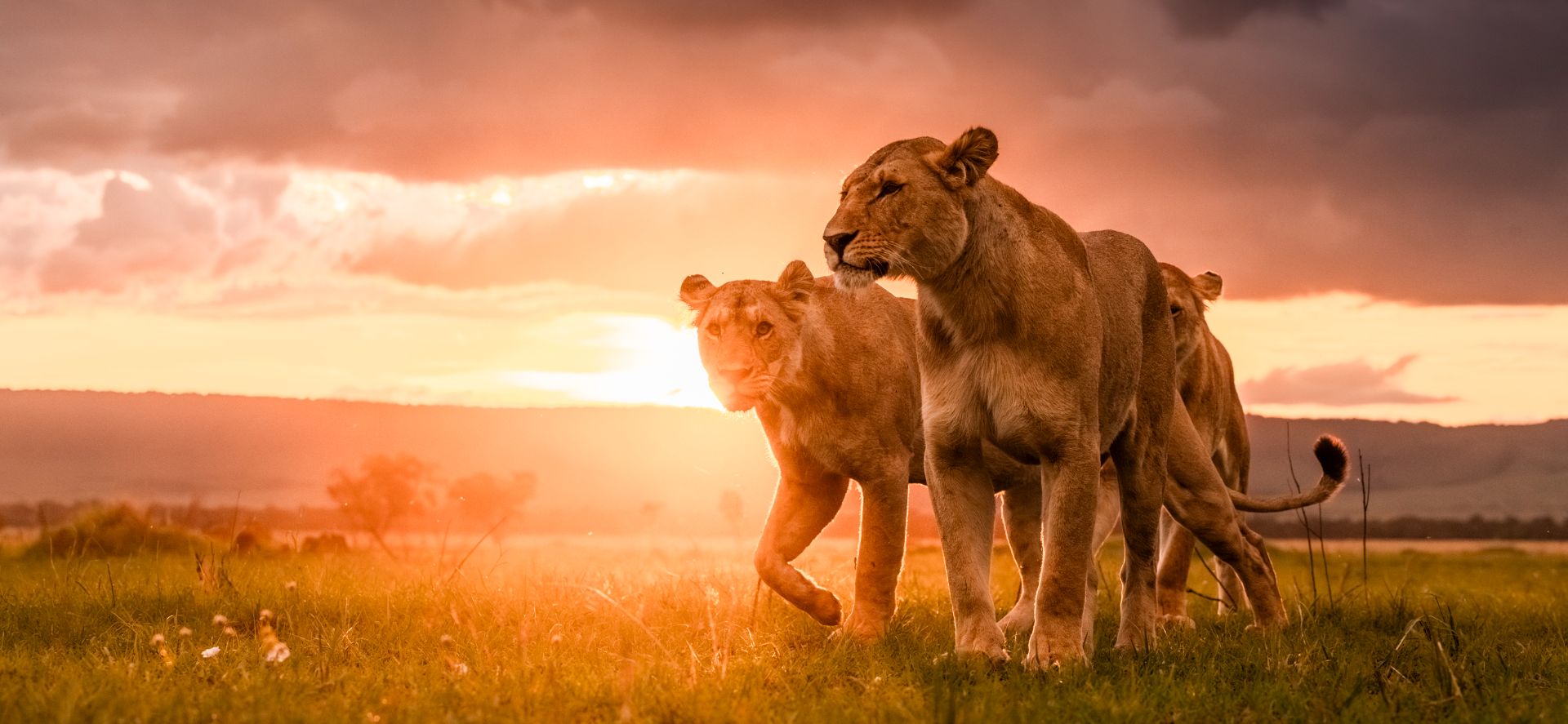
A Mara lion pride’s social structure centres on a core group of related females — sisters, daughters, and maternal cousins who have lived together their entire lives and maintain cooperatives for cub-rearing, hunting, and territorial defence that persist across individual deaths and births. Male lions associate with prides as coalitions of two to four individuals — typically brothers or pride-mates who dispersed together from their birth pride — and maintain their breeding tenure for periods of two to five years before rival coalitions replace them. This replacement event — new coalition males who kill existing cubs to bring females into oestrus quickly — represents the pride’s most dramatic social disruption and produces the cub mortality that makes lion population dynamics in research areas the most carefully monitored of any Mara carnivore.
Understanding this social structure transforms the interpretation of what a guide shows you at any given lion sighting. Watching two females cooperate to bring down a zebra makes evolutionary sense when you know they are sisters whose shared genetic interest makes cooperation directly beneficial to each one’s reproductive fitness. A male lying apart from the pride females while cubs play in the foreground reflects the different roles of males — territorial defence and breeding rather than the hunting and cub care that females handle. Guides with knowledge of the pride’s current coalition membership can explain this in terms of specific individuals rather than generic species behaviour. The named pride system that Mara research enables makes every such explanation personal rather than theoretical, grounding abstract biology in the specific history of animals you are watching.
Plan Your Safari
Lion pride viewing in the Maasai Mara at its most rewarding requires a guide who knows the named individuals in the territory they drive daily — their current location, reproductive status, territorial boundaries, and the ongoing dramas of coalition tenure and cub development that make each visit different from the last. African Wild Trekkers matches lion-focused guests with camps and guides whose territory covers the prides most relevant to each guest’s specific interests.
The package covers accommodation in camps positioned within the territories of named prides, specialist guide briefings on current pride status before each drive, park and conservancy fees, internal flights, and the extended sighting time that understanding complex pride dynamics requires. Pre-trip briefings on the current pride compositions and territorial situations come from the most recent guide reports available before departure.
Contact African Wild Trekkers at africanwildtrekkers.com/contact with your travel dates and lion viewing priorities and we will design your Maasai Mara safari within 24 hours.