Wildebeest Migration 2026: Month-by-Month Location Guide
Where the Migration Is and When
January and February 2026: Southern Serengeti Calving
The wildebeest migration occupies the short-grass plains of Tanzania’s southern Serengeti, concentrated around the Ndutu basin, the Gol Kopjes area, and the Ngorongoro Conservation Area’s western sector, where grass is at its shortest, most nutritious, and most digestible for both adult wildebeest and the hundreds of thousands of calves born during this period. The calving event itself represents the most ecologically significant moment in the migration’s annual cycle—the birth of approximately 500,000 calves over six to eight weeks in a synchronized event that floods the predator population with more prey than it can consume, giving individual calves survival odds that spread-birth would not allow. The southern Serengeti in January and February is the migration’s epicenter in terms of biological productivity even though the dramatic river crossings of the northern section attract greater mainstream attention.
Camps best positioned for January and February 2026 calving viewing include the seasonal camps in the Ndutu area — andBeyond’s Ndutu Under Canvas, Ndutu Safari Lodge, and Ubuntu Migration Camp — all of which place guests within the calving grounds rather than requiring long transfers from the main park tracks to reach the concentrations. The Ndutu area’s short-grass plains allow direct approach to calving herds by vehicle without the dense vegetation that other Serengeti zones interpose between vehicles and wildlife at ground level, producing the open-field calving photography that award-winning nature photographers specifically target. Booking these camps for January and February requires advance reservation of nine to twelve months from most qualified operators, with the most sought-after camp positions filling first from returning guests who experienced calving season in previous years.
March and April 2026: Northwestward Movement
March 2026 sees the wildebeest herd beginning its northwestward movement as the long rains arrive and the southern Serengeti’s grass—now grazed down after two months of intensive use—drives the herd toward the fresher growth of the central and western sections. The movement in March is not a single directed migration but a broad-front dispersal that concentrates gradually into the western corridor’s narrower passage between the Grumeti Reserve’s western boundary and the central Serengeti’s riverine system. Rain during March and April makes the southern tracks challenging but not impassable for four-wheel-drive vehicles, and the transition period offers excellent predator viewing in the Seronera Valley as the valley’s permanent residents—particularly its leopard population—remain unaffected by the seasonal movement dynamics playing out across the wider park.
April 2026 in the western Serengeti delivers the migration’s advance guard entering the Grumeti Reserve area, with scattered herds building toward the western corridor concentrations that May and June intensify. April accommodation rates across most Serengeti zones are among the year’s lowest, reflecting the logistical challenges the long rains create rather than any fundamental reduction in wildlife quality for travelers who plan appropriately. Central Serengeti camps in the Seronera area that maintain year-round operations offer excellent value in April for travelers whose priorities are predator viewing, Seronera’s leopards, and the Serengeti’s permanent ecosystem rather than the migration’s specific location within the park.
May Through October 2026: The Main Migration Circuit
May and June 2026: Grumeti River and Western Corridor
May 2026 delivers the wildebeest migration into the western corridor at increasing density as the herd moves through the corridor toward the Grumeti River in numbers that build through the month toward June’s crossing peak. The Grumeti crossings—smaller in scale than the Mara River events that peak season visitors target but genuine river predation encounters with the Grumeti’s resident hippo population and abundant crocodiles—occur across several crossing points between late May and early June in most years. The western corridor’s accommodation options at Singita Grumeti, Serengeti Migration Camp, and the consortium of smaller camps in the Ikorongo and Grumeti reserves place guests within direct access of crossing point observation positions that require no long transfer drives from camp to river.
June 2026 advances the migration northward through the western corridor and into the northern Serengeti, with the herd’s vanguard reaching the Mara River’s Tanzanian bank in late June in most years and with building pressure from the rear of the population that will eventually produce the first Kenya crossings of the 2026 season. The timing of this northern arrival shifts annually with rainfall patterns in the southern Serengeti — a late wet season delays the northward push, while an early dry season in the south accelerates it. June accommodation rates in northern Serengeti camps begin rising toward peak season levels as the herd’s proximity to the Mara River attracts crossing-focused bookings, though June rates remain significantly below the July-September peak across most northern camps.
July, August and September 2026: Mara River Crossings
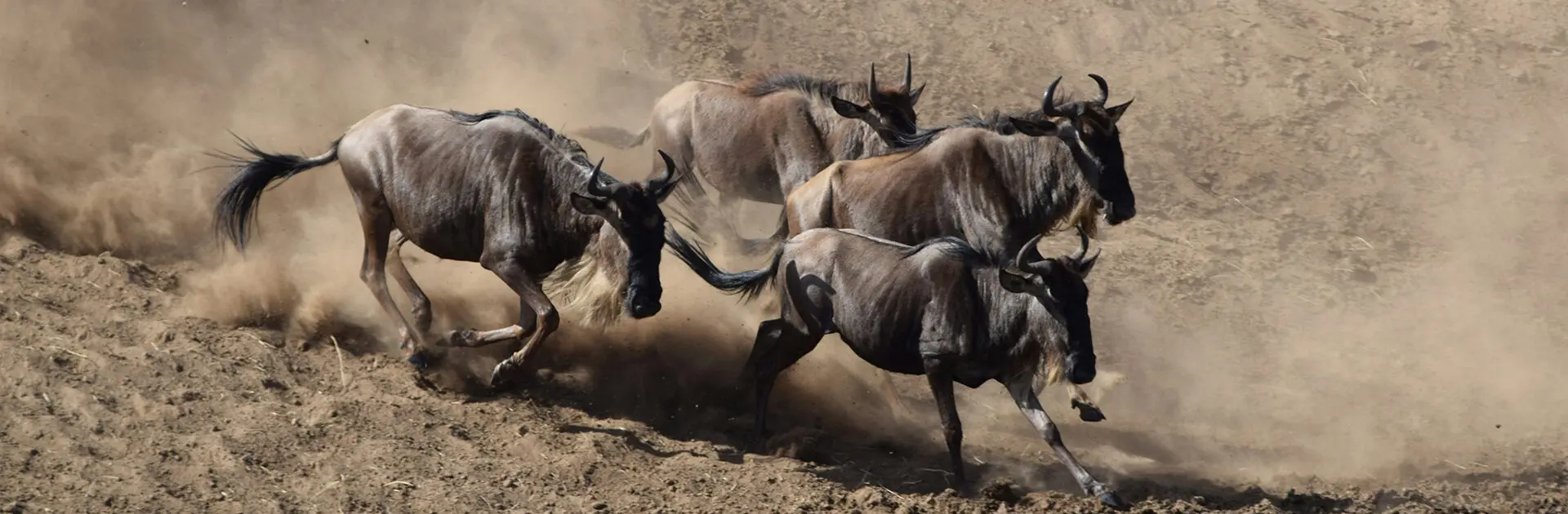
July 2026 delivers the wildebeest migration into Kenya’s Maasai Mara and the northern Serengeti simultaneously, with first crossings of the Mara River expected in mid-to-late July depending on 2026’s specific rainfall patterns in the southern Serengeti. The July crossing season represents the beginning of the most intensively visited window in the migration’s annual calendar—camps in both the northern Serengeti and Kenya’s Mara conservancies reach peak occupancy, river crossing points attract the largest vehicle concentrations of the year, and the combination of wildebeest crossings, predator activity around the herds, and the full complement of resident wildlife creates the density of wildlife encounters per game drive that migration season’s premium pricing reflects.
August 2026 represents the Serengeti-Mara system’s statistical peak for river crossing frequency and herd density in the northern section, with the Mara River crossings from both the Tanzanian and Kenyan sides producing the most intense and frequent events of the season in most years. September continues the peak season conditions as the herd prepares for its southward return, with crossing frequency slightly declining from August’s peak but still sufficient to produce multiple crossing observations per week from well-positioned camps. The Serengeti’s northern section in September—particularly the Lamai Wedge and Kogatende areas—hosts the Tanzanian-side viewing of crossings that occur simultaneously at points visible from Kenya’s Mara Triangle, with the Tanzanian camps typically accessing slightly fewer vehicles per sighting than their Kenyan equivalents in peak season.
October Through December 2026: Southward Return
October 2026 brings the short rains to the Serengeti-Mara ecosystem and triggers the wildebeest’s southward return as greening grass in the south pulls the herd away from the now-grazed northern section. The southward Mara River crossings in October move in the same downstream direction as the river’s increased flow during the rains and produce crossing events of a different character from the northward push—the herds’ urgency to move south overcomes hesitation faster, producing crossings that complete more quickly and with less prolonged bank build-up than the northward direction’s extended standoffs. October vehicle concentrations at crossing points decrease from September’s peak as the first wave of migration-season visitors departs and replacement bookings for the southward season are lighter, producing a noticeably more spacious experience than August and September delivered at the same locations.
November and December 2026 see the migration dispersing south through the central and western Serengeti as the rains develop and the herd follows fresher growth that rainfall progression delivers progressively further south toward the calving grounds that the cycle will reach again in January 2027. December accommodation rates spike briefly around Christmas and New Year before returning to the lower levels that characterize the transition into the new calving season, and the central Serengeti’s resident wildlife—excellent year-round in the Seronera Valley regardless of the herd’s position elsewhere in the ecosystem—provides strong game viewing for December visitors without the peak-season vehicle concentrations that August and September deliver around crossing points.
Planning Your 2026 Migration Safari
Booking Timelines and What to Know
Current 2026 Availability and Booking Advice
By June 2026, peak migration season camps for July through October have been significantly committed for the most sought-after properties in both the northern Serengeti and Kenya’s Mara conservancies, reflecting the twelve- to eighteen-month booking cycle that top-tier camps operate. Travellers planning 2026 migration visits who have not yet confirmed accommodation should contact operators immediately to assess available inventory across the full range of camp options before the remaining positions in the most popular windows fill. The availability that remains at this point in the booking cycle tends toward specific date windows—early or late July before the peak concentrates or late September after the main crossing intensity wanes—that offer genuine value for flexible travelers whose dates can shift to match what is actually available rather than what is theoretically ideal.
For travellers planning 2027 migration visits, the booking window is now open for the most sought-after camps and the most popular dates. August 2027 positions at northern Serengeti camps like Singita Lamai, andBeyond Klein’s Camp, and the equivalent top-tier Kenyan conservancy camps will begin filling from July 2026 onward as operators confirm their contracted allocations and begin releasing positions to clients. Contacting an operator now for a 2027 migration visit provides access to the full range of inventory before the first round of committed bookings reduces the available options to the secondary tier that later inquiries encounter.
Plan Your Safari
The 2026 migration calendar’s specific timing in the Serengeti and Maasai Mara will be updated as rainfall patterns and herd movement data accumulate through the first half of the year. African Wild Trekkers monitors migration progress throughout the annual cycle and updates guests with current herd position information before and during their trips so that any deviation from the historical calendar pattern can be incorporated into itinerary adjustments before or during the visit.
The package covers camp accommodation in the zone appropriate to your 2026 migration window, Tanzania park fees or Kenya conservancy and park fees depending on the destination, internal flights, and specialist guide briefings on current herd position relative to your camp. Combined Kenya-Tanzania migration itineraries are arranged as single-package logistics with cross-border transfer coordination included.
Contact African Wild Trekkers at africanwildtrekkers.com/contact with your 2026 travel dates and migration priorities, and we will confirm current availability and design your itinerary within 24 hours.