Black Rhino in Tanzania: Ngorongoro’s Last Remaining Population
Tanzania was once home to one of Africa’s largest black rhino populations, with thousands of individuals distributed across the Serengeti, the Selous, Ruaha, and the northern parks. Decades of intensive poaching reduced that population to near-extinction on the Tanzanian mainland, and today the black rhino’s stronghold in Tanzania confines primarily to the Ngorongoro Crater, where a combination of the caldera’s enclosed geography, dedicated anti-poaching management, and the Tanzania National Parks authority’s protection programme has stabilised and slowly grown a population of approximately seventy individuals. Understanding where and how to see these extraordinarily rare animals is one of the most valuable things a Tanzania safari visitor can know.
Tanzania’s Black Rhino Population
Where They Are and How Many Remain
The Ngorongoro Crater Rhino Population
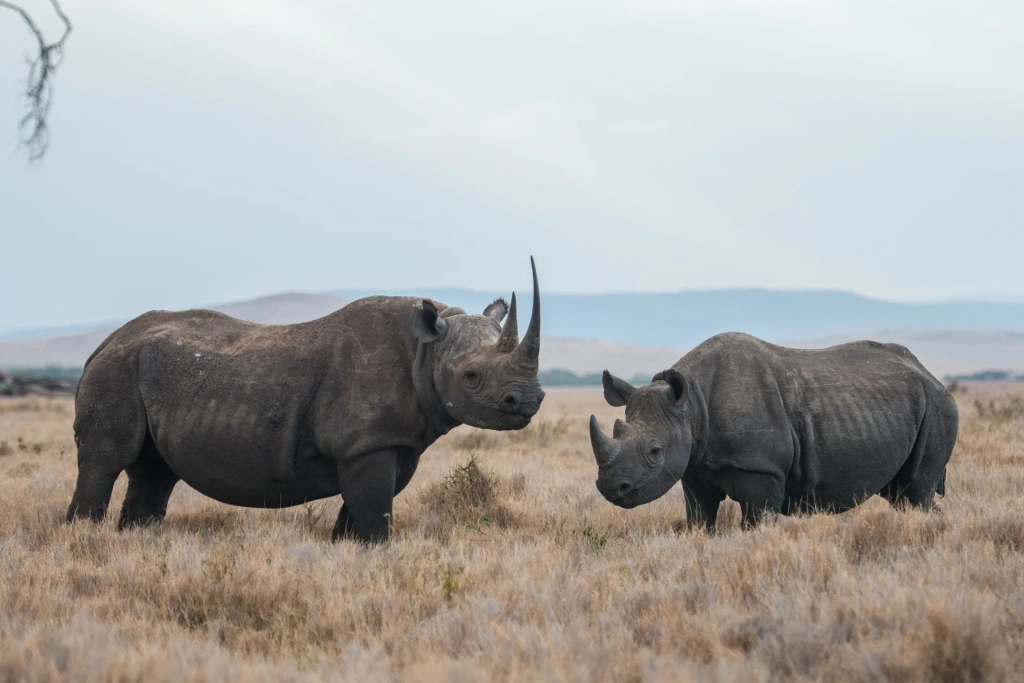
The Ngorongoro Conservation Area holds approximately seventy black rhinos within the crater floor and the surrounding conservation area, making it one of the most significant black rhino populations remaining anywhere in Africa. The crater’s enclosed geography — the caldera rim acts as a natural fence that limits movement and concentrates the population within a manageable area — has allowed the Ngorongoro Conservation Area Authority to monitor every individual rhino by identity, applying ear notch identification marks to each animal and maintaining detailed demographic records. The monitoring programme tracks births, deaths, social structure, territory, and health across the entire population, creating a dataset comparable to the long-term elephant and chimpanzee studies that have generated some of ecology’s most important findings.
The crater’s rhino population has grown slowly but consistently under protection, recovering from a low point in the 1990s when poaching pressure from outside the caldera reduced numbers to near-critical levels. The current population’s reproductive success — multiple calves born within the crater in each of the last several years — reflects the effectiveness of the monitoring programme and the armed ranger patrols that operate within the caldera. Black rhinos are notoriously difficult to breed in disturbed populations, and the Ngorongoro caldera’s stable, managed environment has created conditions where reproductive success rates rank among the highest of any African rhino population not in a fenced sanctuary.
Black Rhinos Beyond Ngorongoro
Beyond Ngorongoro, Tanzania’s black rhino picture is one of near-complete absence on the mainland outside very small remnant populations. The Selous Game Reserve once held the largest rhino population in the world before poaching destroyed it in the 1980s. Current Selous rhino numbers are believed to be extremely low, with reliable sightings rare and the population not yet recovered from the poaching crisis. The northern parks — Serengeti, Tarangire, Lake Manyara — lost their rhino populations to poaching and have not yet seen substantial recovery programmes within the national park system. The Singita Grumeti private concession on the western Serengeti has re-introduced black rhinos under a closely managed programme, creating a small but growing population in the western corridor that represents the first rhino presence in that ecosystem in decades.
Tanzania’s national conservation programme has outlined plans for rhino re-introduction to the Serengeti ecosystem using individuals from Ngorongoro’s breeding population as a source, but the programme has moved slowly and no confirmed re-introduction to the national park itself had occurred as of 2026. The combination of inadequate anti-poaching resources across the Serengeti’s vast area and the long lead times required to establish a viable population before any re-introduction means that Ngorongoro remains the practical focus of black rhino viewing in Tanzania for the foreseeable future. African Wild Trekkers advises all clients who specifically want to see black rhinos that Ngorongoro is the non-negotiable destination in Tanzania.
How to See Black Rhinos at Ngorongoro
Viewing Strategy and What to Expect
Timing the Rhino Viewing at Ngorongoro
The Ngorongoro Crater’s black rhinos are most reliably visible in the early morning hours when they are active before retreating to the forest edge or the acacia scrub during the midday heat. The crater’s morning game drive — entering through the descent track at gate opening and reaching the crater floor by 0730 — positions vehicles in the caldera as the rhinos are making their morning movement across the open grassland. Guides and rangers who have been in contact with the previous day’s monitoring team know which quadrant of the crater the rhinos occupied the previous afternoon, and the morning drive routes toward that area first before covering the predator zones. Dawn light on the Ngorongoro Crater floor, with the mist clearing from the caldera walls and a black rhino emerging from the forest edge into the open grassland, is one of Tanzania’s finest single wildlife moments.
Rhino visibility varies across the seasons. The dry season months of June through October reduce the crater’s vegetation cover, making rhinos visible at greater distances from the open grassland. The wet season’s longer grass and denser bush can make rhinos harder to see even when they are moving through areas where they are known to be present. The calving season (January-March) represents a balance — some visibility reduction from the green-up but the crater’s rhino population is consistent year-round, and the calving season’s predator concentration means that game drives are often more productive overall even if rhino visibility is marginally reduced. African Wild Trekkers advises clients on the rhino viewing probability for their specific travel month based on the current season’s crater conditions.
What to Look For and How Guides Identify Rhinos
Black rhinos are smaller than white rhinos and have a pointed, prehensile upper lip adapted for browsing on woody vegetation rather than grazing on grass. This lip shape — compared to the white rhino’s square, grazing-adapted lip — is the primary identification feature and is clearly visible from a vehicle at fifty metres or less with binoculars. Black rhinos have poor sight but excellent hearing and smell, and they are known for being more temperamental than white rhinos — a black rhino that scents or hears a vehicle is more likely to charge than to flee. Ngorongoro’s crater rhinos are habituated to vehicles at a general level but individual animals have different tolerance levels, and experienced crater guides know which individuals allow close approach and which are more reactive.
A guide’s identification of a distant black rhino versus a buffalo, wildebeest, or large rock at distance requires a trained eye. From 300 metres, a black rhino’s characteristic silhouette — stocky, short legs, rounded rear end, and the distinctive profile of the horns when the animal’s head is raised — is identifiable with practice. Guides who have spent years in the Ngorongoro Crater learn to read the landscape for the slightly wrong shade of dark at the forest edge that resolves through binoculars into a rhino resting under an acacia. This pattern recognition takes years to develop and is one of the skills that separates a genuine Ngorongoro specialist guide from a less experienced driver-guide doing the descent for the first time. African Wild Trekkers uses Ngorongoro crater descent guides with minimum three years of crater-specific experience for all client visits.
Conservation of Black Rhinos in Tanzania
The Programmes That Protect the Population
Anti-Poaching and Monitoring at Ngorongoro
The Ngorongoro Conservation Area Authority operates one of Africa’s most intensive black rhino monitoring programmes within the caldera, with dedicated rhino monitoring rangers who track each individual daily, record location, behaviour, and health status, and relay this information to the anti-poaching team that patrols the caldera perimeter. Armed anti-poaching rangers are present within the crater at all times and the crater’s access control — only permitted vehicles with paying guests or research permits can enter — creates a management boundary that limits the threat vectors compared to open wilderness areas. Tanzania’s black rhino population in Ngorongoro is about as well-protected as a free-ranging wild population can be without physical fencing.
The conservation levy component of Tanzania’s Ngorongoro Crater service fee — currently embedded in the per-vehicle charge for crater descents — contributes to the monitoring and protection programme. Visiting Ngorongoro and paying the crater service fee is therefore a direct financial contribution to the black rhino programme that protects the animals you are descending to see. This conservation alignment between the tourism revenue and the species protection programme is one of the strongest arguments for visiting Tanzania’s most expensive wildlife destination — the crater’s fee structure creates a direct causal link between the visitor’s payment and the survival of the population they are observing. African Wild Trekkers explains this connection to clients visiting Ngorongoro so that the crater service fee is understood as conservation investment rather than simply a park access charge.
Plan Your Safari
Black rhino viewing in Tanzania means Ngorongoro Crater, and Ngorongoro Crater means planning a full-day descent with an early start and an experienced crater guide. African Wild Trekkers includes the Ngorongoro Crater in all northern circuit itineraries and advises specifically on rhino viewing probability, rim camp selection, and the optimal morning timing for the crater descent. The team books crater accommodations, coordinates the conservation area permits, and prepares clients for the rhino viewing with a pre-departure briefing on identification, crater geography, and what to expect from the descent.
Every Ngorongoro Crater booking from African Wild Trekkers includes all conservation area fees, the crater service fee, a crater-specialist guide, and full board accommodation at a rim camp of the appropriate tier. The team confirms all bookings in writing before any deposit is requested. Two crater nights are recommended for clients who specifically want to maximise rhino viewing probability — the second crater descent gives an opportunity to explore areas not covered on the first visit and to benefit from the monitoring team’s updated rhino location information from the first day’s sightings.
Contact African Wild Trekkers at africanwildtrekkers.com/contact with your Tanzania travel dates and we will build a personalised Ngorongoro itinerary optimised for black rhino viewing within 24 hours.