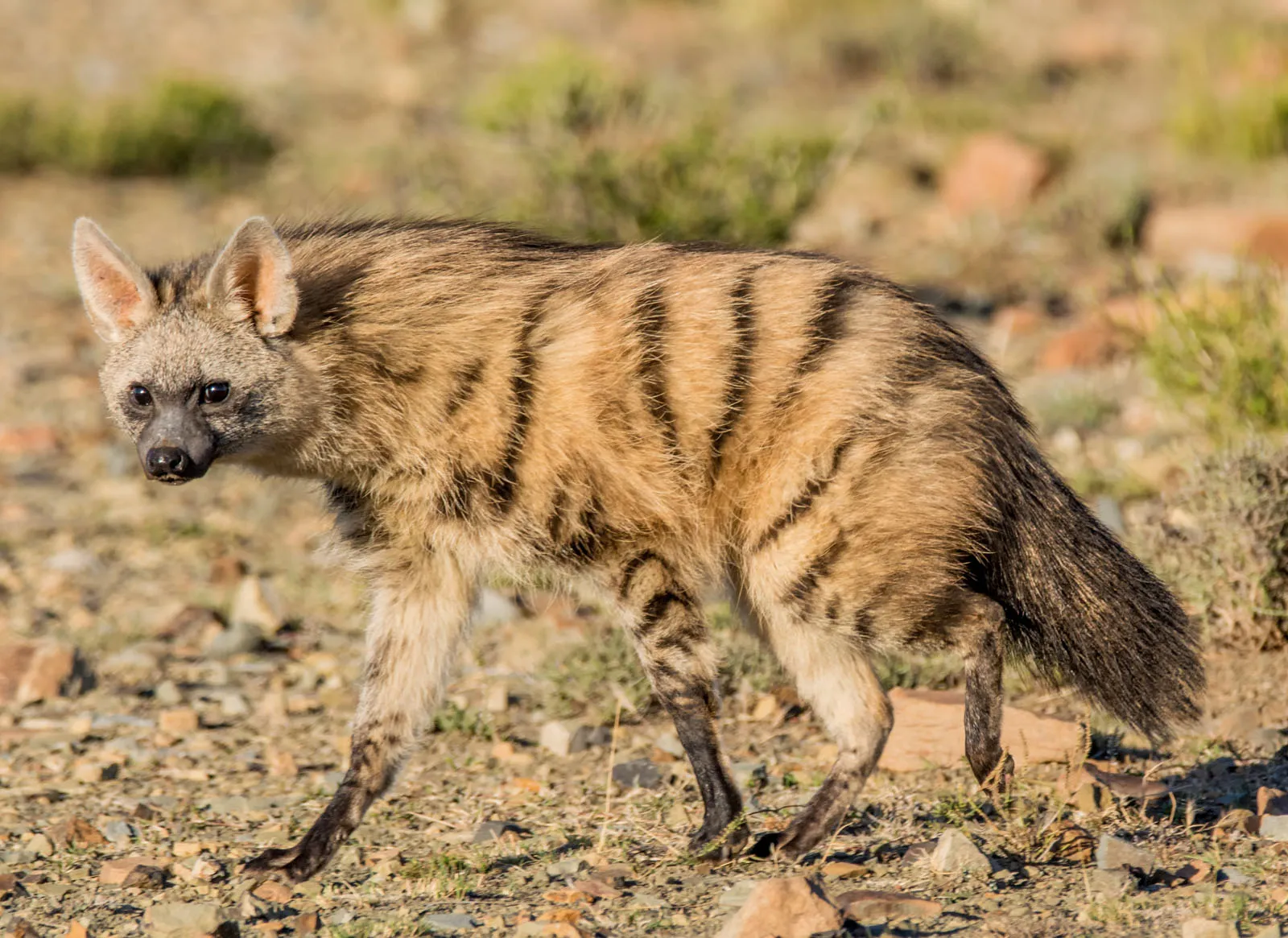
Aardwolf Facts Africa: The Termite-Specialist in the Hyena Family
The aardwolf looks like a small striped hyena. It shares the hyena family. It does not share the hyena’s appetite. While its cousins hunt wildebeest and crack bones, the aardwolf eats only termites. This single food choice makes it one of Africa’s most specialized mammals.
What Is the Aardwolf?
The aardwolf belongs to the family Hyaenidae. It is the smallest member of that family. An adult weighs between 8 and 14 kilograms. It stands about 50 centimeters at the shoulder. The name means “earth wolf” in Afrikaans.
Four species of hyena exist in Africa. The spotted hyena, the striped hyena, the brown hyena, and the aardwolf. The aardwolf separated from its relatives millions of years ago. It evolved an entirely different lifestyle. Its teeth and jaw changed to suit a diet of insects rather than meat.
Physical Features of the Aardwolf
The aardwolf has a yellowish-brown coat with black vertical stripes. A mane of long hair runs along its back. When threatened, it raises this mane to appear larger. The effect doubles its apparent size and often deters attackers.
The teeth are small and peg-like. They work for crunching insects but cannot crush bone or tear meat. The tongue is long, broad, and coated in thick saliva. It sweeps across a termite mound and lifts hundreds of insects per second. The stomach acid is strong enough to digest insect exoskeletons.
The Aardwolf’s Extraordinary Termite Diet
The aardwolf targets one specific termite genus: Trinervitermes. These are harvester termites that forage on the surface of the soil at night. The aardwolf does not dig into mounds the way the aardvark does. It laps up termites directly from the surface as the termites move.
A single aardwolf eats between 200,000 and 300,000 termites in one night. It covers a territory of several square kilometers to find enough food. During winter months in East Africa, termite activity drops. The aardwolf loses significant body weight during this lean season.
Aardwolf Behaviour and Territory
Aardwolves live in monogamous pairs. They share a territory and defend it from rival pairs. Both parents help raise the cubs. Litters typically consist of two to four cubs. The cubs emerge from the burrow at about three months old.
Aardwolves are nocturnal and highly secretive. They spend daylight hours in burrows they often inherit from aardvarks or springhares. They move quietly and avoid confrontation whenever possible. When cornered, they produce a foul-smelling secretion from their anal glands.
Where to Find Aardwolves in East Africa
Aardwolves live across eastern and southern Africa. In East Africa, they favor open dry grassland and scrubby savanna. They concentrate in areas where Trinervitermes termites are abundant. Kenya’s Laikipia Plateau holds a good population. Tanzania’s Serengeti ecosystem also supports them. Uganda’s drier northern regions around Kidepo hold small numbers.
Aardwolves are largely absent from dense woodland and highland forest. They avoid wet areas where surface-foraging termites are scarce. You will not find them in Uganda’s Bwindi or the Rwandan highlands.
The Aardwolf’s Unique Relationship With Termites
The aardwolf’s dependence on Trinervitermes termites creates a tight ecological coupling between the two species. Where these termites are abundant, aardwolves thrive. Where termite populations collapse—through drought, overgrazing, or pesticide use on agricultural land—aardwolves quickly lose condition. Studies in the Serengeti show that aardwolves track Trinervitermes population cycles closely. Their own numbers rise and fall with termite availability across seasons.
This specialization makes the aardwolf unusually sensitive to land-use change. Farmland that replaces termite-rich grassland loses its aardwolves within a season or two. Unlike the aardvark, which switches food sources if one termite species declines, the aardwolf has limited dietary flexibility. It cannot easily substitute other prey for its single specialist food source.
Aardwolf Conservation and Human Attitudes
The aardwolf is classified as Least Concern by the IUCN. Total population numbers are not precisely known because the animal is nocturnal and secretive. Researchers estimate population density from spoor surveys and camera trapping rather than direct counts. Populations appear stable across most of the species’ range.
One persistent threat is persecution by farmers who mistake the aardwolf for a chicken predator or a threat to livestock. The aardwolf does not attack chickens or livestock. It eats only insects. Farmers who identify and kill aardwolves mistakenly remove a harmless and beneficial species. Education programs across the Serengeti and Laikipia areas have improved this situation. Local rangers and community scouts now include aardwolf identification in wildlife awareness training.
Plan Your Safari
The aardwolf is a genuine trophy sighting on any East Africa night drive. Kenya’s Laikipia Plateau offers the most consistent aardwolf encounters in the region. Several conservancy lodges there run dedicated night drives with guides who know the best termite-foraging grounds.
Tanzania’s Serengeti is another strong option, particularly in the short-grass plains around Ndutu. The dry season from June to October gives the best odds. Termites concentrate in predictable locations during dry months, and so do aardwolves.
African Wild Trekkers designs custom night safari itineraries across Kenya, Tanzania, and Uganda. Tell us you want to find an aardwolf, and we will build your itinerary around the lodges and guides that give you the best chance.