Serengeti Photography Guide: Best Camps, Light Conditions and Wildlife Shots
The Serengeti is one of the world’s great photography destinations — not just one of Africa’s great photography destinations, but a location that belongs in the same conversation as Patagonia, the Galápagos, and the Arctic as a place where the natural world reveals itself with extraordinary photographic generosity. The combination of open terrain, habituated wildlife, extraordinary light, and sheer animal density creates conditions where compelling photographs happen throughout the day rather than only in narrow windows. Understanding these conditions and how to work with them — rather than simply pointing a camera at animals — is the difference between a hard drive full of technically adequate images and a portfolio of photographs that genuinely convey the Serengeti experience.
This guide addresses the practical elements of Serengeti photography: the best camps positioned for specific photographic subjects, how to use the light at different times of day, vehicle and positioning techniques that improve your keeper rate, and which seasonal conditions produce which types of photograph. It is written for photographers who know how to use their equipment and want to maximise the photographic return from their Serengeti time, from enthusiastic amateur photographers with mirrorless cameras to working professionals scouting for editorial and commercial commissions.
Light in the Serengeti: The Photographic Foundation
Understanding Golden Hour, Midday, and Storm Light
Golden Hour: The Essential Serengeti Light
The golden hour in the Serengeti — the period of warm, low-angled light in the hour after sunrise and the hour before sunset — is where the most celebrated Serengeti photography happens, and with good reason. The flat grassland terrain means that sunrise and sunset light travels horizontally across the landscape, catching the fur and eyes of animals at direct eye level, bathing the grass in copper tones, and casting long shadows that add depth and drama to compositions impossible to achieve at midday. A lion family caught in morning golden light against the turning grass is a photographic subject of such compelling beauty that even technically imperfect frames have commercial appeal — the light does the heavy lifting that equipment and technique can only support.
Achieving golden hour sightings requires two things: an early departure and advance knowledge of likely wildlife locations. Safari vehicles in most Serengeti lodges and camps depart at dawn — typically 6:00 to 6:30 a.m. — which gets you on the plains as the sun clears the horizon. The first 60 to 90 minutes of each game drive in the Serengeti are often the photographic gold of the entire day, both for light quality and for animal activity. Carnivores are most active around dawn and often still feed from overnight hunts, small cats and nocturnal species are transitioning to daytime rest and occasionally still visible, and the entire grassland landscape has a quality of light that the flat, white midday sun eliminates completely.
Midday Light: Managing the Difficult Hours
Midday light in the Serengeti from roughly 10:00 a.m. to 4:00 p.m. is flat, harsh, and produces the least photogenic conditions. The overhead sun bleaches colour from the grass, creates hard shadows on animal faces, and eliminates the depth and texture that side-lighting provides. Most experienced Serengeti photographers use midday hours for either rest back at camp, reviewing and editing morning images, or seeking specific subjects that work well in flat light — wide landscape shots that can benefit from even exposure across the entire frame, close-up fill-flash portraits of birds and reptiles, or shaded subjects like leopards in trees where the contrast between dappled shade and open sky can produce interesting images even without optimal ambient light.
Overcast midday conditions are the exception — when cloud cover diffuses the overhead sun into soft, even light, midday can actually produce excellent results for animal portraits and wide wildlife landscapes. The Serengeti’s weather is dynamic enough that cloud cover is common in transition seasons between November and December and March through May, and photographers who dismiss midday as a dead period miss the opportunity that overcast conditions regularly provide. Keeping an eye on cloud development during the morning drive allows you to adjust expectations and positioning for midday rather than automatically returning to camp.
Storm Light: The Most Dramatic Serengeti Photography
Thunderstorm Photography Opportunities
Some of the most dramatic Serengeti photographs emerge in the hours surrounding afternoon thunderstorms, which occur frequently from October through May and occasionally even in the dry season. The light immediately before a storm — when dark grey cumulonimbus clouds mass on the horizon and the foreground is still illuminated by oblique late afternoon sun — creates an extraordinary theatrical quality that makes even simple compositions feel cinematic. Animals silhouetted against a darkening sky with golden-lit grass in the foreground is a classic Serengeti storm-light composition that appears repeatedly in wildlife photography awards and is entirely achievable for any photographer in the right place at the right time.
After a storm clears, the freshly washed air of the Serengeti produces exceptional visibility and often dramatic skies of the kind that make landscape-wide wildlife photographs genuinely compelling. The post-storm golden light in the late afternoon, catching animals against clouds still dark on the horizon, has a quality that clear-sky afternoon light rarely matches. Storm photography also brings practical challenges — keeping equipment dry, managing condensation on cold lenses in warm humid air, and working around lightning safety protocols that require returning to the vehicle during electrical activity. Investing in weather sealing for your camera body before the Serengeti is worthwhile if storm-season visits are planned.
Best Camps for Serengeti Photography
Location, Access, and What Each Area Offers
Central Serengeti: Seronera Valley for Predators and Leopards
The Seronera Valley in the central Serengeti is the most reliable location in Tanzania for leopard photography. The valley’s series of rocky outcrops, sausage trees, and fig trees along seasonal drainage lines are the preferred habitat of several habituated leopard individuals. Guides who know the specific trees where these leopards regularly cache kills and rest during the day can position you for extended, close-range photography at sightings that would be impossible to replicate in less habituated areas. Morning visits to known leopard trees, before other vehicles arrive from more distant camps, are the most productive approach for photography specifically.
Camps in the Seronera area — Seronera Lodge, Serengeti Serena Safari Lodge, and several permanent tented camps — provide immediate access to the valley’s game drive circuits and allow very early morning departures before sunrise, which is where the photographic advantage lies. The Seronera area also holds the Serengeti’s highest lion density and produces the most consistent lion photography opportunities across the year, with multiple prides maintaining home ranges in the valley that experienced guides can locate reliably. For photographers whose primary subjects are big cats in close, relaxed conditions, Seronera is the best-positioned area of the entire Serengeti ecosystem.
Northern Serengeti: Migration Crossings and Mara River Drama
The northern Serengeti and its Mara River crossing points between July and October provide the most dramatic wildlife photography available anywhere in Tanzania. Wildebeest crossings deliver a combination of scale, chaos, and predator activity — crocodiles, lions, and hyenas all exploit the crossings — that produces images of extraordinary dynamism and narrative power. The challenge is that crossings are unpredictable in precise timing, and the most productive photographers at the Mara River spend multiple days at crossing points, often waiting several hours for a single event. Camps in the northern Serengeti — Lamai Serengeti, Sayari Camp, and similar properties positioned near the Mara — provide the access needed to be at the river early and stay late.
The northern Serengeti also produces excellent cat photography outside the migration season. Permanent lion prides in the area are large and active, cheetah families use the open plains for hunting throughout the year, and the leopard population along the Mara River corridor is significant. The landscape in the north is more dramatic than the central Serengeti — rolling hills, denser bush corridors, and the river itself — and the photography has a different character from the open-plain compositions of the southern and central areas. Photographers who visit the Serengeti multiple times often prioritise the northern section as the itinerary develops beyond the standard central-area circuits.
Camera Equipment for Serengeti Photography
What to Bring and How to Use It in the Field
Lenses: The Critical Equipment Decision
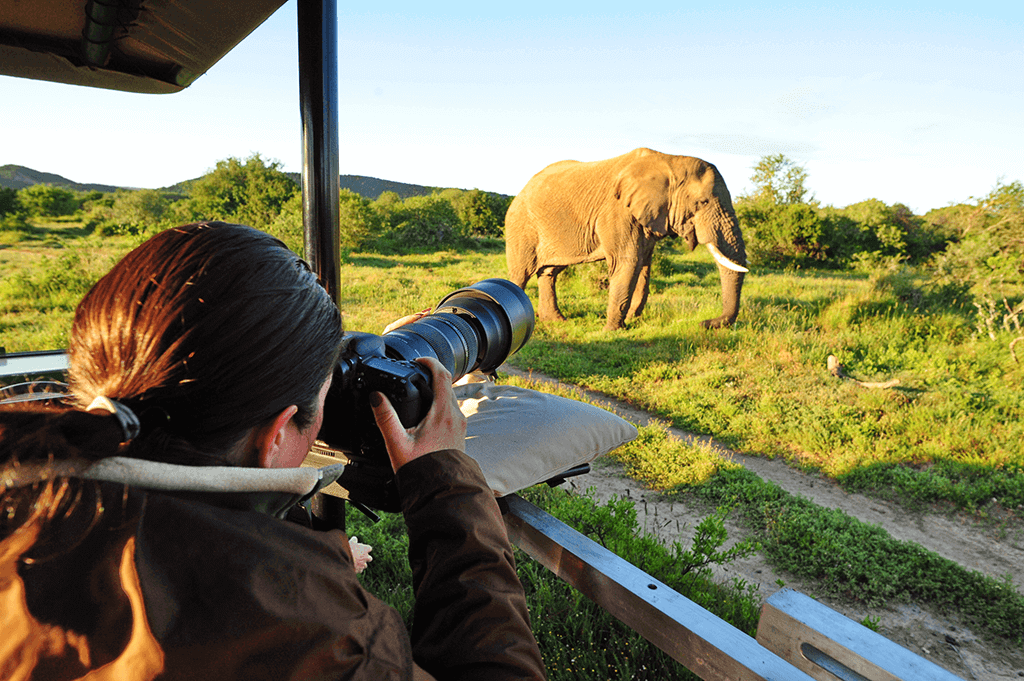
The single most important piece of camera equipment for Serengeti photography is a telephoto lens of sufficient reach to fill the frame with relatively distant subjects. A 100-400mm zoom or a 500mm prime covers the majority of Serengeti wildlife photography situations, and either option mounted on a full-frame or cropped-sensor mirrorless camera gives you the combination of focal length, autofocus speed, and image stabilisation that wildlife photography demands. Longer lenses — 600mm and above — produce cleaner background separation and allow more distant subjects to fill the frame, but their size and weight make them difficult to use from a moving vehicle and impractical for travellers combining the Serengeti with other destinations on a single trip.
A mid-range zoom (24-105mm or similar) is valuable for landscape photography, vehicle interior shots, and close encounters where a long telephoto becomes impractically tight. Many photographers carry two bodies — one with a long telephoto for wildlife and one with a wide-to-medium zoom for landscapes and environmental portraits — to avoid changing lenses in dusty field conditions. Dust is the most significant practical camera risk in the dry-season Serengeti, and keeping lens changes to a minimum, using blower bulbs rather than sensor swabs for cleaning, and storing gear in closed bags between drives significantly reduces sensor dust accumulation across a ten-day safari.
Bean Bags, Window Mounts, and Vehicle Stability
A bean bag draped over the safari vehicle’s open window or roof hatch edge is the most effective stabilisation tool for Serengeti wildlife photography from a vehicle. It conforms to any surface, dampens vibration, and allows you to quickly pivot and reposition your lens as subjects move — something a tripod in a moving vehicle cannot match. Bean bags weigh almost nothing, cost very little, and can be filled with rice or dried beans locally to avoid airline baggage limits. Every serious Serengeti photographer should carry at least one, and ideally two — one for each window if photographing from a vehicle window rather than the roof hatch.
Vehicle vibration during drives causes image blur, and the solution is to ask your guide to turn the engine off during key sightings when the vehicle is stationary. Guides who work with photographers regularly know this automatically and switch off the engine as a matter of course when stopping at sightings. If your guide does not do this spontaneously, request it politely — the difference between engine-on and engine-off images at the same sighting is often the difference between a blurred shot and a sharp one when shooting at long focal lengths in low morning light.
Plan Your Safari
Photography-focused Serengeti itineraries benefit from private vehicle arrangements, longer stays in each area, and strategic camp selection based on current wildlife conditions and your photographic priorities. A photography safari of seven to ten days in the Serengeti, split between the central valley for predators and the northern Mara corridor during migration season, gives enough time to work subjects repeatedly and wait for optimal conditions at key sighting locations.
African Wild Trekkers designs private photography safaris in the Serengeti with vehicle configuration, camp positioning, and daily schedule tailored specifically to photographic objectives. The team works with experienced guide-photographers who understand the technical requirements of wildlife photography and position vehicles for optimal light angles rather than simply locating wildlife. All reservations are confirmed in writing before any deposit is requested.
Contact African Wild Trekkers at africanwildtrekkers.com/contact with your Tanzania travel dates and photographic goals and we will build your Serengeti photography itinerary and confirm availability within 24 hours.