Tanzania Safari in June: Long Dry Season, Peak Wildlife and What to Expect
June in Tanzania: The Start of Peak Season
June marks the beginning of Tanzania’s long dry season and the formal start of peak safari season across the northern circuit. The rains that characterised March through May have ended or are ending, vegetation begins to thin and yellow, rivers contract toward their permanent channels, and the animals that dispersed during the green season start concentrating again at reliable water sources.
For visitors arriving in June, they are entering Tanzania at one of the most productive game viewing periods of the year — conditions improve daily rather than declining, and June combines the fresh green of the receding rains with the dry-season animal concentration that defines East African game viewing at its best.
June is also the month when safari accommodation demand begins its rapid ascent toward the July to August peak, and prices rise accordingly. Visitors who book in June rather than July or August can sometimes access better value rates while experiencing wildlife conditions that are essentially equivalent to peak season.
Understanding what June specifically offers — which animals are where, what migration stage is in progress, what landscape conditions look like — helps you decide whether June is the right month for your Tanzania visit.
Wildlife Conditions in June
Migration, Predators, and Elephant Concentrations
The Wildebeest Migration in June
In June, the wildebeest migration is typically moving northward through the central and western Serengeti, having completed the calving season in the south and the westward movement through the Serengeti’s western corridor that occurs during April and May. The herds typically cluster in the central Serengeti grasslands around the Seronera Valley and begin pushing northward along the migration route.
June is too early for the Mara River crossings in the northern Serengeti, which typically begin in July and peak between July and September. This means that June visitors experience the dramatic moving herds of the migration in the central Serengeti — vast columns of wildebeest and zebra moving through the landscape — rather than the specific river crossing spectacle.
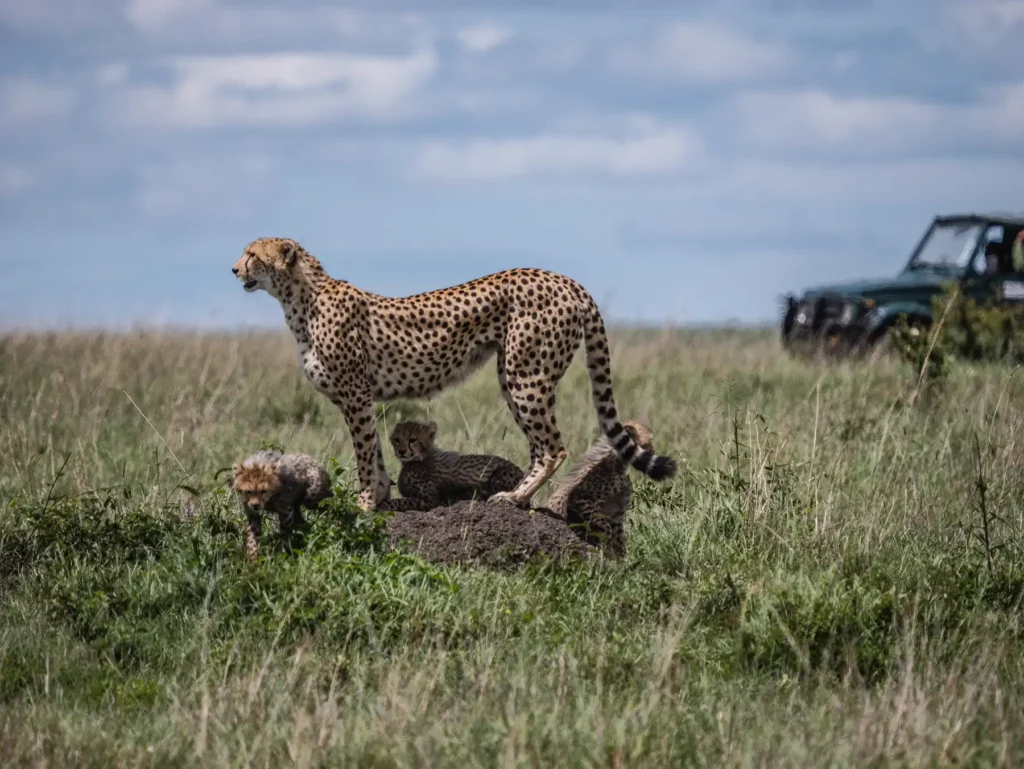
The central and western Serengeti in June hold the most active predator populations following the migration’s movements. Lion, cheetah, and hyena activity in proximity to the wildebeest concentrations is typically excellent. Predation events in June around the main wildebeest columns can be dramatic and frequent. The density of prey attracts coordinated lion pride hunting and cheetah pursuit of separated individuals.
For guests who prioritise predator action over the specific visual drama of the Mara River crossings, June’s central Serengeti offers everything the July to August peak delivers in terms of predator-prey dynamics — often with fewer vehicles at specific sightings than the August peak.
Elephant Concentrations at Tarangire in June
June is the beginning of the Tarangire dry-season elephant concentration and one of the best months to visit the park specifically for elephant viewing. As the seasonal rains end and temporary waterholes throughout the Maasai steppe dry up, elephants begin converging on the permanent Tarangire River in the numbers that make Tarangire’s reputation. By late June, herds of fifty to a hundred elephants visiting the river in a single morning are not unusual, and the concentration continues to intensify through July, August, and September as conditions dry further.
The June visit catches this concentration in its building phase — not yet at peak August intensity but already spectacularly productive compared to any green-season Tarangire visit.
The Tarangire landscape in June has a particularly beautiful character that the deeper dry season sometimes loses. The grass still shows some residual green from the rains, the baobabs carry their post-rain full leaf, and the contrast of the river vegetation against the drying savannah creates a visual environment of rich variety.
Birdlife in June is exceptional — the rainy season resident birds are still present while the dry season patterns begin establishing, giving June’s Tarangire a species diversity that either season alone cannot match. For photographers and naturalists, early dry season Tarangire in June is one of the most rewarding game drive environments in northern Tanzania.
What to Expect: Weather and Conditions in June
Temperature, Rain, and Visibility
June Weather on the Northern Circuit
June weather on Tanzania’s northern circuit features cool mornings and evenings, warm dry days, and essentially zero rainfall across the Serengeti and Tarangire. Morning temperatures on game drives in June can drop as low as 12 to 15 degrees Celsius in the open vehicle before sunrise. A warm fleece or light down jacket is genuinely necessary rather than optional for the first 60 to 90 minutes of the early morning drive.
By mid-morning the temperature rises rapidly to 22 to 27 degrees Celsius, and the game drive vehicle environment is comfortable in a light shirt by 9:00 a.m. This cool morning period is precisely when wildlife activity is highest, making June’s cold starts entirely worthwhile in terms of game drive productivity.
Visibility in June is excellent — the post-rain dust that characterises the deeper dry season has not yet built up, and the clear air of the early dry season allows horizon-to-horizon views across the Serengeti plains that can be hazy in August and September. Photographic conditions in June are outstanding, combining the low-angle golden light of the early morning with subjects in clear, dust-free air that maximises colour saturation and sharpness.
The combination of fresh landscape conditions, building animal concentrations, and excellent light makes June one of the best months in the year specifically for wildlife photography on the northern circuit.
Ngorongoro Crater in June
Ngorongoro Crater in June benefits from the end of the long rains and the stabilisation of crater floor conditions that can be muddy and difficult after heavy March to May rainfall. Tracks on the crater floor are generally firm by June, allowing vehicle access to all areas of the 260-square-kilometre floor without the risk of getting stuck that some wet-season visits encounter. The black rhino population is well-established on the crater floor by June and actively monitored by crater rangers, giving June visitors a reasonable chance of rhino sightings on a full day crater descent.
Lion prides on the crater floor typically concentrate around the Lerai Forest and the western grassland areas in June, and hyena clan activity around the hippo pools provides consistently excellent sighting opportunities throughout the day.
The crater rim accommodation in June is comfortable with fresh post-rain vegetation and clear views across the crater and the surrounding highlands. Early morning rim views in June — before the day’s cloud builds on the crater walls — are exceptional, with the entire floor visible in perfect clarity from the viewpoints on the eastern and southern rim. The combination of crater floor wildlife concentration and the visual drama of a clear June morning on the rim makes Ngorongoro in June a particularly satisfying component of a northern circuit itinerary.
What to Pack for a June Tanzania Safari
Clothing, Equipment, and Practical Essentials
Layering for Cool Mornings and Warm Days
The layering principle is essential for June game drives. The early morning drive starts cold and ends warm, and the most practical clothing system is a thermal base layer — light merino wool or synthetic thermal top and bottom — covered by a mid-weight fleece or light down jacket for the first hour of driving, which you can remove and stow as the temperature rises. Safari-appropriate colours are still relevant in June — neutral khaki, olive green, and tan in lightweight fabrics for the day, with warmer versions of the same for the morning cold. Avoid white and bright colours that reflect heat and are visible to wildlife at longer distances than neutral tones.
Equipment for a June Tanzania safari should include sunscreen rated SPF 50 or higher (the African sun is intense by 10:00 a.m. even in the early dry season), polarised sunglasses, a wide-brimmed hat or baseball cap for vehicle-mounted sun protection, and sufficient camera memory cards and battery capacity for full day drives. June is still early enough in the dry season that some tracks retain residual mud, and dust-proofing your camera equipment is less critical than in August. Dust builds throughout the day regardless of the season, so basic equipment protection is still advisable.
Plan Your Safari
June Tanzania safaris benefit from early booking — six to nine months ahead for peak June dates is advisable for the best accommodation locations in the Serengeti and Tarangire. Demand for early dry-season safari dates has increased significantly in recent years among travellers who prefer to avoid the August peak crowd levels while experiencing equivalent wildlife conditions. Our camps in the central Serengeti and Tarangire fill quickly for June weekends and the last two weeks of the month when school holiday bookings often coincide with the safari peak season start.
African Wild Trekkers designs June northern circuit itineraries around the specific wildlife conditions and park visit sequencing that maximises early dry-season advantages: starting with Tarangire for the building elephant concentration before moving to the Serengeti for predator action and the northward-moving migration herds. All park fees, private vehicle game drives, and accommodation from mid-range to luxury are part of our confirmed June packages.
Contact African Wild Trekkers at africanwildtrekkers.com/contact with your June Tanzania travel dates. We will design your dry season safari itinerary and confirm all availability within 24 hours.