Best East Africa Safari for Wildlife Density: Which Park Wins?
The Wildlife Density Question
Safari travelers frequently ask which East African park offers the highest wildlife density. They want to know the most animals per square kilometer and the most reliable sightings per game drive hour. And the greatest concentration of large mammal species in a single accessible area. The question is genuinely interesting because wildlife density is one of the most practically relevant metrics for time-limited safari visitors. A park with very high wildlife density produces more encounters in a shorter time than a park where animals are dispersed across a larger and more thinly populated landscape. But wildlife density is also more complicated than a simple ranking suggests. Density varies enormously by season; different parks specialize in different species. And the character of the experience adds a quality dimension that raw numbers cannot capture.
This guide ranks East Africa’s most important safari parks for wildlife density across different species categories. Predators, elephants, wildebeest and migratory ungulates, and primates. It identifies which parks consistently produce the most encounter-dense game drive experiences for visitors on limited time. The ranking reflects dry-season conditions when wildlife concentrations are at their peak. Green-season dispersal patterns produce dramatically different density patterns that require separate seasonal assessment.
Predator Density: Which Parks Win on Cats
Lions, Leopards, Cheetahs, and Wild Dogs
Ngorongoro Crater: The Highest Predator Density Per Area
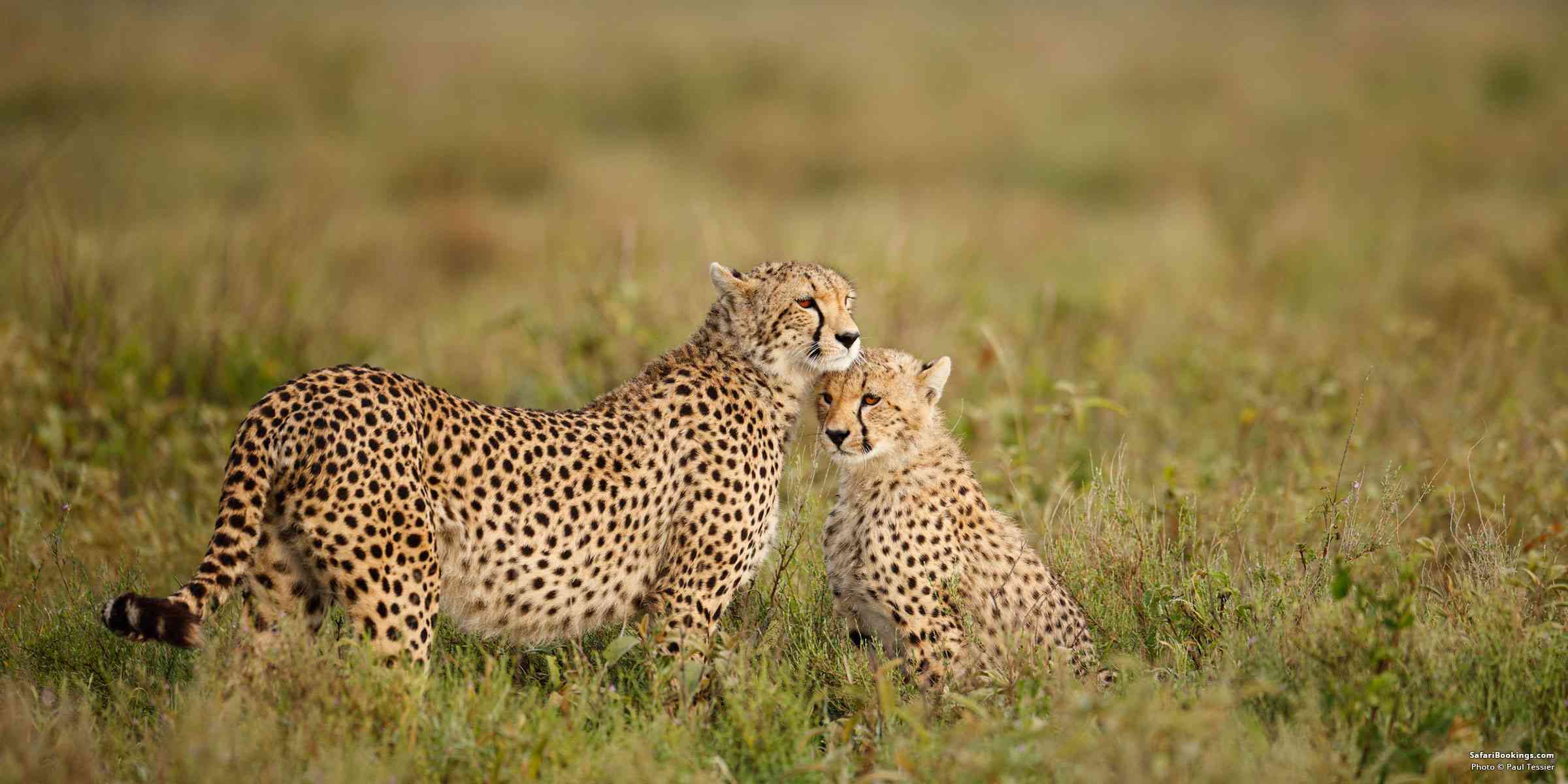
In terms of predator density per unit area, Ngorongoro Crater is almost certainly the highest-density predator environment in East Africa. The crater floor’s 260 square kilometers hold an estimated 70 lions. This is one of the highest per-square-kilometer lion concentrations anywhere in Africa. Significant leopard, cheetah, hyena, and serval populations also inhabit this contained environment. Game drives of three to four hours routinely produce multiple predator sightings. The crater’s natural enclosure means predators cannot disperse beyond its walls. The corresponding high prey density. Buffalo, wildebeest, zebra, and waterbuck all present year-round. Supports this exceptional predator biomass on a sustained basis.
The Serengeti’s lion population is larger in absolute terms. Approximately 3,000 individuals across 14,763 square kilometers versus 70 in the crater. But the per-area density is lower, and finding lions in the open Serengeti requires more searching and guide knowledge than the predictable crater-floor conditions. For visitors specifically prioritizing maximum predator density in minimum time, the Ngorongoro Crater descent outperforms any Serengeti game drive on a per-hour basis. However, the Serengeti’s overall lion encounter quality across a full week exceeds what a single crater day can deliver in breadth and behavioral variety.
Masai Mara During Migration: Peak Predator and Prey
The Masai Mara in Kenya during the July through October migration season represents the highest combined predator-and-prey wildlife density available in East Africa on a seasonal basis. When the migration herds are present in the Mara, there are wildebeest and zebra. And gazelle densities on the open plains reach millions of animals in a relatively compact area. This draws concentrations of lions, cheetahs, leopards, and spotted hyenas that exceed what the same area holds during the non-migration months. The combination of abundant prey and concentrated predators produces predation events. Hunts, kills. And scavenging interactions. At a frequency that few other East African park experiences match.
The Masai Mara’s predator density advantage during migration comes with a visitor density trade-off. The same wildlife concentration that produces extraordinary encounters also draws the maximum number of safari vehicles in Kenya’s safari ecosystem. Major sightings like river crossings or lion kills attract large numbers of vehicles simultaneously. The private conservancy camps bordering the main reserve partially address this by limiting vehicle numbers on conservancy land. But the main reserve game drives during peak August can involve vehicle concentrations at high-profile sightings that reduce the intimacy of individual wildlife encounters. The density trade-off is real but manageable, and for most first-time visitors, the migration season Mara experience is extraordinary regardless of vehicle numbers.
Elephant Density: East Africa’s Best
Where to Find the Most Elephants in Optimal Conditions
Tarangire and Amboseli: The Elephant Specialists
Tanzania’s Tarangire National Park in the dry season from June through October produces the highest elephant density per game drive day of any East Africa park. Single morning drives routinely encounter multiple herds totaling several hundred individuals along the Tarangire River. The convergence of elephants from the surrounding Maasai steppe to the permanent river creates a seasonal concentration mechanism that makes dry-season Tarangire exceptional for elephant wildlife density. Under equivalent peak conditions, it exceeds Chobe National Park in Botswana. Which operators often cite as Africa’s highest elephant-density park. In elephants per square kilometer of visited habitat.
Kenya’s Amboseli National Park offers a different elephant density experience. It is not as numerically concentrated as peak-season Tarangire. But it adds the specific dimension of observing African elephants against the backdrop of Kilimanjaro, Africa’s highest mountain. This combination of wildlife density and scenic drama is unique to Amboseli and unmatched by any other East Africa park. Amboseli’s elephant families are among the most individually documented in Africa through ongoing research. This gives guides extraordinary interpretive depth about specific animals that enhances the game drive experience well beyond a simple counting of animals in view.
Primate Density: Uganda and Tanzania Forests
The Specialist Parks for Primates
Kibale Forest: The Highest Chimpanzee Density
Uganda’s Kibale National Park holds the highest documented chimpanzee density of any forest in East Africa. Approximately 1,500 individuals in a 766-square-kilometer forest. This makes it the unambiguous winner for chimpanzee encounter density relative to park area. The habituated chimpanzee communities in Kibale are among the most studied in the world. Decades of behavioral research inform guide interpretation that adds extraordinary scientific depth to the trekking experience. For travelers whose primary wildlife density metric is primate encounter density rather than savannah mammal density, Kibale outperforms every other East African park.
Rwanda’s Volcanoes National Park wins on gorilla encounter density in the sense that multiple habituated gorilla families ensure permit holders have near-certain gorilla encounters on any given permitted trek day. This reliability approaches 100 percent across thousands of tracked trek days. It is the highest encounter reliability for any wildlife category in East Africa. It results specifically from the intensive habituation and monitoring program that makes gorilla trekking both commercially viable and conservation-compatible. The encounter density is lower in absolute gorilla numbers. Groups of 10 to 30 animals—Thanibale’s chimpanzee groups. But the reliability is higher and the encounter quality is generally deeper.
Overall Wildlife Density Rankings
The Composite East Africa Assessment
What the Overall Rankings Show
Ranking East Africa parks by composite wildlife density. Combining a predator, prey, and an elephant. And primate categories. Produces results that vary by season and specific interest. For overall savannah wildlife density in dry-season conditions, Ngorongoro Crater ranks first for reliability and density per game drive. The Masai Mara during migration season and Tarangire during dry-season elephant concentration follow closely. The Serengeti ranks lower in per-area density but higher in absolute wildlife volume and the scale of encounter. For specialist categories, Kibale dominates primate density, and Tarangire dominates dry-season elephant density. And the northern Serengeti during migration season dominates migration ungulate density. No single park dominates all categories simultaneously. This is the strongest argument for multi-park East Africa itineraries that allocate each park to its specific wildlife density specialty.
Plan Your Safari
Maximizing wildlife density per day of your East Africa safari requires matching park selection to season. This means dry season for Tarangire elephants, migration season for Mara and northern Serengeti crossings, and year-round for Ngorongoro Crater reliability. Choosing parks by name alone rather than by seasonal density peaks can deliver half the wildlife encounters that a seasonally optimized equivalent itinerary produces for the same number of days and similar budget.
African Wild Trekkers designs itineraries around seasonal wildlife density optimization, positioning each park visit to coincide with its specific peak density period rather than defaulting to a fixed northern circuit that may not align with when each park performs at its best. We build the Tarangire dry-season window, Ngorongoro year-round descent, and Serengeti migration positioning into every itinerary as primary structural decisions rather than as afterthoughts.
Contact African Wild Trekkers at africanwildtrekkers.com/contact with your Tanzania travel dates and top wildlife density priorities, and we will design a seasonally optimized itinerary and confirm all park availability within 24 hours.