Goliath Heron Facts: The World’s Largest Heron and East Africa’s Most Impressive Waterbird
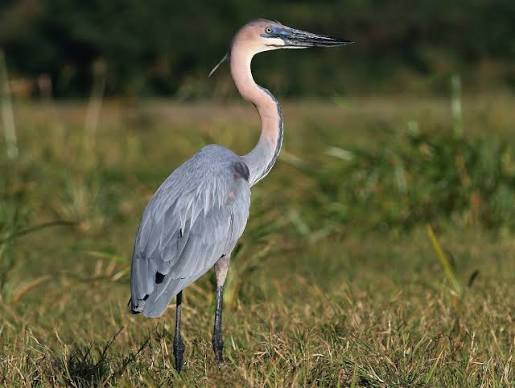
The goliath heron is the world’s largest heron species. It stands up to 1.5 metres tall with a wingspan of up to 2.3 metres. The species is a bird of large rivers, lake shores, and coastal estuaries where its exceptional size allows it to wade in deep water inaccessible to other heron species. The combination of extreme size, slow deliberate hunting posture, and vivid slate-grey and chestnut plumage makes every goliath heron encounter a memorable moment in any East Africa waterway experience.
The goliath heron is distributed across sub-Saharan Africa wherever suitable large water bodies exist with fish populations large enough to sustain this giant predator. In East Africa, it is most reliably encountered along major rivers and the shores of large lakes where the deep water it prefers for hunting is available.
Identification
The adult goliath heron is unmistakable. The head shows a dark chestnut cap and a long crest of dark slate-grey feathers that droop behind the head. The face and neck are chestnut-rufous. The back and wings are dark slate-grey. The underparts are white with dark chestnut streaking on the breast. The legs are dark grey. The bill is extremely large up to 23 centimetres long and capable of handling the large fish that the species targets.
The great size distinguishes the goliath heron from all other heron species in East Africa even at considerable distance. The next largest heron in the region, the grey heron, is noticeably smaller in all dimensions. When a goliath heron and a grey heron are seen together at the same waterside location, the size difference is immediately apparent and requires no other identification feature.
The call is a deep, harsh croak delivered in flight and from the perch. The call’s carrying power is substantial and can be heard across considerable distances over open water.
Hunting Behaviour
Goliath herons hunt primarily by standing motionless in water of 0.5 to 1 metre depth and waiting for large fish to pass within striking range. The bird adopts a characteristic forward-leaning posture with the neck held in an S-curve and the bill aimed at the water surface.
The strike is sudden, fast, and powerful. The long neck straightens explosively as the bill is driven forward and downward into the water. Large catfish, tilapia, and other sizeable river fish are the primary prey. The bird manipulates large fish crossways in the bill, sometimes struggling for several minutes to position the fish correctly before swallowing it head first.
Where to See Goliath Herons in East Africa
Goliath herons are present throughout East Africa wherever major rivers, large lakes, and coastal estuaries provide deep water and large fish populations. Uganda’s Nile River between Murchison Falls and the delta, Kenya’s Tana River, and Tanzania’s Rufiji River all carry accessible goliath heron populations.
Uganda’s Murchison Falls National Park boat trips on the Nile River encounter goliath herons standing in the shallows along the river bank throughout the trip. The birds are visible at close range from the boat and typically tolerate a close approach before walking deliberately into deeper water or flying upstream to a new position.
Kenya’s Lake Naivasha and the larger Rift Valley lakes carry goliath herons on the lake shores. Tanzania’s Lake Manyara, the Selous-Nyerere lakes, and the Rufiji River floodplains all provide reliable goliath heron encounters within established safari circuits.
Plan Your Birding Safari
Goliath heron sightings are achievable on any East Africa safari that includes boat activities on major rivers or lake shore drives adjacent to deep water. Uganda’s Murchison Falls Nile boat trip provides the most consistent close-range goliath heron encounters in the region.
The size of a goliath heron standing in the Nile River shallows makes an immediate impression on observers of all birding experience levels.
African Wild Trekkers includes river boat activities and lake shore game drives in East Africa safari itineraries for maximum waterbird encounter diversity. Contact us to plan a safari that captures the full size range of East Africa’s extraordinary heron and stork community.