Purple Heron Africa: The Slender, Secretive Heron of East Africa’s Reedbeds
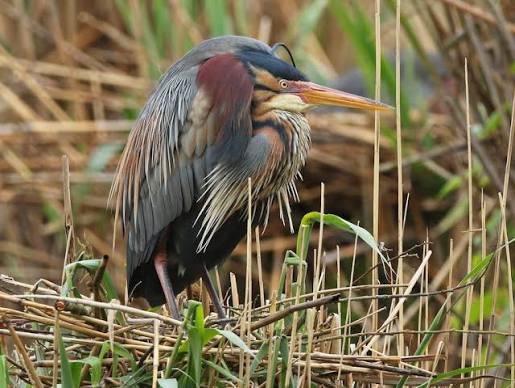
The purple heron is one of East Africa’s most elegantly proportioned herons. Its long, slender neck, narrow body, and the combination of purple-grey, chestnut, and black plumage create a more refined appearance than the bulkier grey heron with which it is most often compared. The species inhabits reedbeds, papyrus swamps, and the dense margins of lakes and rivers where it hunts fish and frogs in the shallow water among the stems.
The purple heron is significantly more secretive than the grey heron. It spends the majority of its time within the reedbed rather than on exposed waterside perches. This secretive habit means it is more often heard — a harsh, croaking flight call — than seen, particularly at sites where the reedbed is extensive and continuous enough to provide cover throughout the bird’s foraging territory.
Identification
The adult purple heron measures 80 to 90 centimetres — smaller and slimmer than the grey heron. The crown is black with a thin black crest. The neck is long and slender, striped with chestnut and black on the sides and white on the front. The back and wings are dark purple-grey. The underparts show chestnut and dark grey streaking on the breast.
The slender neck with its complex stripe pattern is the most useful identification feature for distinguishing the purple heron from the grey heron in flight. The grey heron shows a plain grey and white neck without the chestnut and black stripes of the purple heron. The purple heron’s neck also appears proportionally longer and thinner relative to body size, creating a more angular flight silhouette.
Immature purple herons show a more uniform brown and buff plumage without the vivid adult stripe pattern. The long, slender neck profile is present in immatures and is the most reliable structural identification feature for young birds before the adult plumage stripe pattern develops.
Hunting Behaviour
Purple herons hunt fish, frogs, and aquatic invertebrates in the shallow water at the edges of reedbeds. They stand motionless in the stems with the neck held in a tight S-curve and the body tilted forward at an angle that brings the bill close to the water surface. This hunting posture within the reedbed makes the bird extremely difficult to see even when it is within metres of the observer.
The hunting strike from within the reedbed is fast and direct. The bird typically retreats deeper into the reedbed with its catch rather than feeding in the open where it would be visible. This reluctance to feed in the open increases the challenge of observing the species well compared to the more openly feeding grey heron.
Purple herons are most visible during the early morning and late afternoon when they occasionally stand at the reedbed edge in open positions for brief periods. Dawn and dusk are also the times when they fly between feeding areas, producing the flight views that show the striped neck and the flight silhouette differences from the grey heron most clearly.
Where to See Purple Herons in East Africa
Purple herons are present throughout East Africa’s reedbed and papyrus wetland habitats. They are reliably encountered at the margins of Rift Valley lake reed systems, along Uganda’s wetland river systems, and at the reedbed edges of Tanzania’s lake margin habitats.
Kenya’s Lake Naivasha papyrus margins, Lake Baringo’s reedbed shores, and the papyrus-fringed shores of Lake Victoria all carry purple heron populations accessible from standard birding and boat activities at these locations.
Uganda’s Bigodi Wetland and the Kazinga Channel’s papyrus edges both produce regular purple heron encounters. The boat cruise on the Kazinga Channel occasionally produces close views of purple herons at the papyrus edge, particularly in the early morning when the birds are most active along the reedbed margins before retreating into the interior during the middle of the day.
Plan Your Birding Safari
Purple heron sightings are most reliable at reedbed and papyrus wetland destinations during early morning boat or canoe activities when the birds are most actively foraging at the vegetation edge. The species rewards slow, quiet movement along wetland margins more than fast vehicle approaches to open water.
Uganda’s Kazinga Channel and Kenya’s Lake Naivasha provide the most accessible and reliably productive purple heron environments within established East Africa safari circuits.
African Wild Trekkers includes wetland boat activities and reedbed birding walks in East Africa safari itineraries. Contact us to plan a safari that captures the full diversity of East Africa’s extraordinary heron community across the region’s wetland habitats.