ITBlack-headed Heron: The Heron That Prefers the Grassland Over the Water
The black-headed heron is one of Africa’s most distinctive herons for an unexpected reason. Unlike virtually every other heron species in East Africa, the black-headed heron spends most of its time hunting in dry grassland and open farmland far from any water body. It feeds on mice, lizards, large insects, and frogs encountered in the grass rather than on fish and aquatic prey at the waterside. This terrestrial feeding habit distinguishes the black-headed heron from all other large herons in the region and places it in a different ecological niche from its water-associated relatives.
The species is common across East Africa’s open grassland and agricultural zones. It is frequently encountered standing motionless in the middle of an open field or striding across a freshly ploughed area, hunting the exposed invertebrates and rodents disturbed by the ploughing activity.
Identification
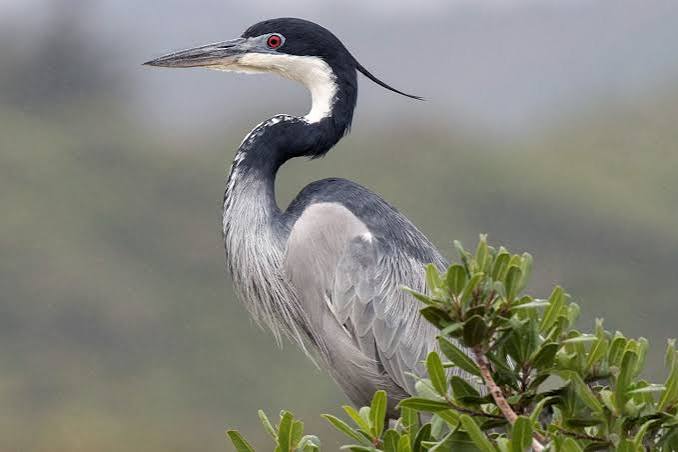
The black-headed heron measures 85 to 97 centimetres. The head and neck are black above and white below, creating a distinctive two-toned pattern that is immediately distinguishable from the grey heron’s mainly grey and white neck pattern. The back and wings are grey. The underparts are white. The legs are dark grey.
In flight, the black-headed heron shows the typical heron flight posture with the neck folded back and the long legs extended behind. The black crown and nape contrast with the white throat and the grey wings to create an easily recognised flight silhouette. The black-and-white head pattern visible from above and below in flight is the most reliable identification feature at a distance.
The call is a harsh, loud croak given in flight. The call is louder and more abrupt than the grey heron’s call and carries well across open grassland. call is frequently given when the bird is flushed from a field by an approaching vehicle or person.
Grassland Hunting Behaviour
The black-headed heron hunts in open grassland using the same stand-and-wait technique that other herons use at the waterside. The bird stands motionless in the grass with the neck held in a loose S-curve and watches the ground around it for movement.
Agricultural land that has been recently ploughed, freshly cut grass, and areas of recently burned grassland all attract black-headed herons in numbers. Groups of 5 to 20 birds sometimes gather on a single ploughed field or burned area to exploit the temporary prey abundance.
The species does also feed at waterside habitats occasionally, particularly when frogs are breeding in temporary pools and pans after rain. However, grassland hunting dominates the feeding behaviour throughout the year in most parts of the species’ East African range.
Distribution and Where to See Black-headed Herons
The black-headed heron is common across East Africa’s agricultural and open grassland zones from Uganda through Kenya and Tanzania.
Any drive through agricultural areas in Uganda, the Kenya highlands, or the farming zones of northern Tanzania will encounter black-headed herons in the fields without requiring any specific search effort. The bird’s large size and open habitat preference make it one of the most visible herons in the East African landscape.
Camp gardens and lodge lawns at highland destinations sometimes attract black-headed herons to the mown grass areas where mice and insects are accessible. These garden encounters provide particularly close views of the species in good light conditions.
Plan Your Birding Safari
Black-headed heron sightings require no specialist effort anywhere in East Africa’s agricultural and grassland zones. The species is encountered from the road on virtually every drive through open country in Uganda, Kenya, and Tanzania without any deviation from the standard safari route.
The unusual sight of a large heron standing in the middle of a dry field a kilometre from the nearest water always prompts the question from first-time safari visitors that opens the conversation about the black-headed heron’s unique grassland ecology within the heron family.
African Wild Trekkers designs East Africa safari itineraries through the full range of the region’s habitats where every large bird family is encountered in its natural context. Contact us to plan a safari that captures East Africa’s complete waterbird diversity across wetland, grassland, and open savanna habitats.