Luxury Tented Camps in Maasai Mara 2026: A Complete Guide
Luxury tented camps in the Maasai Mara represent Africa’s most refined bush camp experience — large canvas suites with four-poster beds, outdoor showers opening onto the savanna, private plunge pools at some properties, and a service standard that rivals any five-star city hotel while keeping you physically close to wildlife. The Mara’s luxury tented camp landscape spans a spectrum from superb to extraordinary in 2026, concentrated in the private conservancies surrounding the main Maasai Mara National Reserve: Mara North, Olare Motorogi, Naboisho, Mara Triangle, and Ol Kinyei. Vehicle limits at wildlife sightings and conservation fees in these conservancies create the premium-quality encounter conditions that justify the $500–$1,500 per person per night price range. African Wild Trekkers places clients at Maasai Mara luxury tented camps across all private conservancies and guides camp selection based on current staff quality, wildlife density, and each property’s most distinctive experiences.
What Makes a Maasai Mara Luxury Camp Worth the Price
Private Conservancy vs Main Reserve Access
The single most important quality differentiator between Maasai Mara camps is whether the property sits inside a private conservancy or in the main National Reserve. This location determines whether your guide shares every lion sighting with fifteen other vehicles or observes it privately with your group alone. Private conservancies — Mara North, Olare Motorogi, Naboisho, Mara Triangle, Ol Kinyei — restrict vehicle numbers through conservation fee structures that cap total daily visitor numbers and limit sightings to three to five vehicles maximum. The main Maasai Mara National Reserve imposes no vehicle limit at sightings. During peak migration season in August and September, popular sightings attract fifty or more vehicles — noise, dust, and overcrowding that fundamentally change encounter quality regardless of the camp’s accommodation tariff. A $500 per night conservancy camp delivers a better game drive experience than an $800 per night main reserve camp during peak season, because conservancy access is what the premium price actually buys. African Wild Trekkers books exclusively in private conservancies for all clients paying above $400 per person per night.
The conservancy model also funds anti-poaching ranger teams, community development programs for Maasai families on conservancy land, and wildlife monitoring that has measurably increased the Mara ecosystem’s lion, cheetah, and elephant populations over the past decade. Paying the conservancy fee — typically $80–$150 per person per night on top of the camp rate — directly funds the conservation infrastructure that maintains the wildlife density making the conservancy experience exceptional in the first place. The best Maasai Mara luxury tented camps integrate this conservation story into the guest experience — evening talks with wildlife researchers who study the conservancy’s animal populations, community visits to Maasai bomas where the conservation fee supports family income, and dawn drives with ranger guides explaining the previous night’s anti-poaching patrol findings. This narrative gives the luxury camp experience intellectual depth alongside the emotional impact of close wildlife encounters.
Tent Design and Accommodation Standards
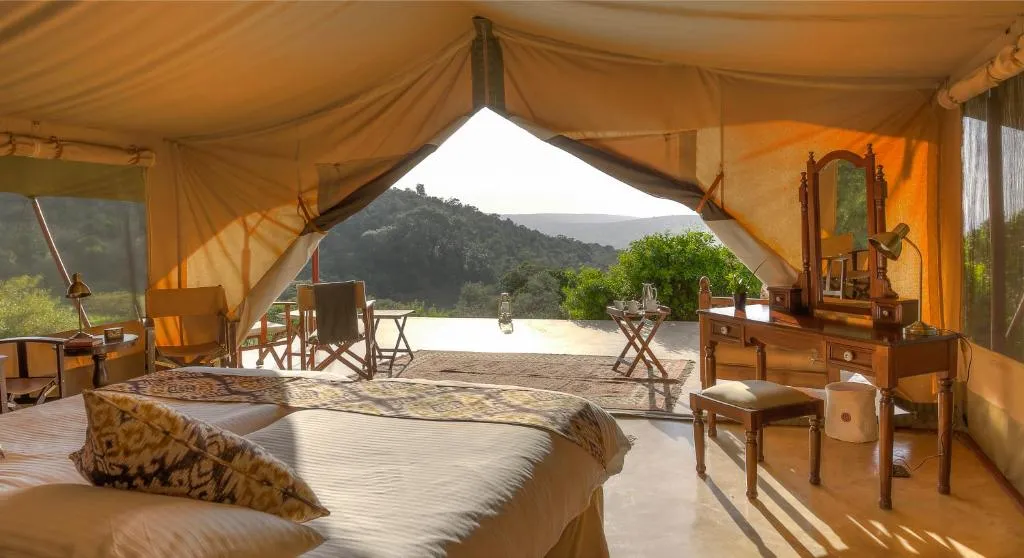
Maasai Mara luxury tented camp accommodation quality spans a genuine spectrum in 2026, and price does not always correlate perfectly with tent comfort or design sophistication. The best luxury Mara camps position tents on raised wooden platforms along riverbanks, ridge lines, or elevated plains positions combining exceptional wildlife views with natural ventilation and tent separation that creates true privacy. Premium tier tent sizes run 60 to 100 square metres of interior floor space — a canvas room with a king-size bed, open-plan bathroom with indoor and outdoor shower, a private veranda with bush-facing chairs, and often a separate dressing room. This feels genuinely spacious rather than simply an upgraded version of a budget camp tent. The outdoor shower is one of the luxury camp’s most distinctive experiences — standing under hot water in an open enclosure looking into the Maasai Mara savanna while morning mist rises above the acacia canopy creates a sensory moment no hotel room shower approaches.
Camp size significantly influences the intimacy of the luxury experience. The best Maasai Mara luxury camps limit total guests to 16 to 24 (eight to twelve tents), creating a dining and communal atmosphere where guests know each other’s names within a day and staff remember every guest’s preferences from first breakfast. Camps with 20 or more tents lose the family atmosphere the most memorable Mara experiences require — 40 guests descending simultaneously for morning coffee creates a hotel lobby feeling rather than a private camp. The best luxury camps achieve a staff-to-guest ratio of 3:1 to 4:1, producing a service attentiveness and anticipatory quality that distinguishes the experience from simply having a comfortable tent and good food. African Wild Trekkers visits every recommended property annually and assesses staff quality, tent condition, food standards, and guide expertise rather than relying on property websites and marketing materials for client placement decisions.
Best Conservancies for Luxury Mara Camps
Mara North and Olare Motorogi
Mara North Conservancy covers 19,000 acres north of the main Maasai Mara National Reserve boundary and hosts some of the ecosystem’s highest leopard sighting rates. Resident female leopards — known individually by guides who have tracked them for years — raise cubs in the fig tree groves along the Ngiro-are River. Mahali Mzuri sits in Mara North with twelve tents on a hillside ridge, sweeping conservancy views, an infinity-edge pool overlooking the plains, and a camp culture that combines conservation storytelling with high hospitality standards. Mara North’s lion population is substantial and the conservancy’s limited vehicle numbers allow extended observation periods at sightings without managing crowd dynamics. Olare Motorogi Conservancy adjoins Mara North with comparable wildlife density — Ol Seki, Kicheche Mara Camp, and Porini Lion Camp range from romantically remote (Ol Seki’s six tents on an isolated kopje) to eco-focused (Porini’s low-footprint minimal-impact model).
Naboisho Conservancy in the eastern Mara ecosystem covers 50,000 acres and hosts one of Africa’s highest lion densities per square kilometre — approximately 60 individuals in 22 prides — creating daily sighting rates that consistently exceed the main reserve and most other Mara conservancies. Naboisho’s luxury camp portfolio includes Encounter Mara, Naibor, and Ol Seki Naboisho. The conservancy’s pride identification research allows guides to introduce visitors to specific known individuals by name and family relationship. Naboisho’s eastern location places it adjacent to the cheetah territory of the Mara Triangle, and the combination of Naboisho’s lion density and the Triangle’s cheetah sighting rate makes this corridor one of the Mara ecosystem’s most consistently productive for big cats. African Wild Trekkers books Naboisho conservancy camps for clients who specifically prioritize lion encounters — the conservancy’s research-backed population data supports genuine confidence in sighting rate predictions rather than speculative hope.
Angama Mara and Elevated Camp Experiences
Angama Mara sits on the Great Rift Valley escarpment above the Maasai Mara, positioned 300 metres above the savanna floor with views across the entire Mara ecosystem from the Serengeti horizon to the Oloololo escarpment’s western edge. The camp’s aerial position delivers sunset and sunrise views that no ground-level Mara camp can match — light catching the savanna below while the camp’s infinity deck looks out across 100 kilometres of uninterrupted ecosystem. Walking paths between the tent cluster and the escarpment edge create a physical landscape engagement that game-drive-only camps do not offer. Angama’s game drives descend to the Mara plains for morning and afternoon sessions before returning to the elevated camp for meals and rest. The altitude provides natural temperature regulation — the escarpment is measurably cooler than valley floor camps, and the afternoon sun that forces midday rest at lower elevation camps is manageable enough at Angama to allow sustained outdoor activity throughout the day.
Sanctuary Olonana sits on the Mara River bank within the Mara Triangle conservancy — a six-tent camp whose position directly on the river provides the most intimate riverside wildlife experience of any Maasai Mara camp. Hippos surface 20 metres from the dining table. Crocodiles bask on the sandbar opposite the tent verandas as a standard feature of daily life rather than a specially arranged encounter. The Mara Triangle conservancy fee structure and the Triangle’s exceptional lion and cheetah population — including the famous Motorogi cheetah brothers and Marsh Pride descendants — combine with Olonana’s riverbank position to create a camp where wildlife encounters occur even when the game drive vehicle is parked and guests sit reading on their veranda between drives. African Wild Trekkers directs honeymooners and couples prioritizing romantic luxury atmosphere toward Olonana and Angama, while directing wildlife photographers and predator-focused travelers toward the higher sighting rate conservancies of Mara North and Naboisho where guide tracking intensity and vehicle caps optimize encounter frequency.
Plan Your Safari
Luxury tented camps in the Maasai Mara fill months ahead for peak migration season. The most sought-after small properties — Mahali Mzuri, Angama Mara, and Ol Seki — require booking 9 to 12 months before the travel date for July through September availability. African Wild Trekkers confirms camp availability and reserves your specific tents at the time of booking rather than holding a generic allocation.
Your Maasai Mara luxury package includes your private conservancy camp accommodation, conservancy fees, a private 4×4 game drive vehicle, an experienced conservancy guide, full-board meals and all beverages, Wilson Airport domestic flight, and Nairobi airport transfers on arrival and departure days.
Contact African Wild Trekkers at africanwildtrekkers.com/contact with your travel dates and preferred luxury camp style and we will confirm availability and send a complete Maasai Mara luxury itinerary within 24 hours.