Elephant Swimming Africa: How Africa’s Largest Land Animal Crosses Rivers
An adult bull elephant weighing 6,000 kilograms should not float. Common intuition says an animal of that mass would sink in deep water. Yet the elephant ranks among Africa’s most capable swimmers—crossingivers, lakes, and stretches of open sea. The anatomy that makes this possible surprises most safari visitors. A multi-tonnimal swimming kilometers and carrying calves safely across deep water reveals one of Africa’s most counterintuitive physiological facts.
Why Elephants Float: Bone Density and Lung Volume
Elephants float because their skeleton ranks among the least dense of any large mammal relative to their their body volume. The enormous skull contains extensive air-filled sinuses—keepingt light enough for the neck muscles to support. Lung volume is massive and fills a large proportion of the thorax. Full lung inflation provides considerable positive buoyancy. Combined low skeletal density and high lung volume givethe elephant a body density close to that of water.
When fully submerged, an elephant extends the trunk above the waterline as a snorkel while the body remains completely under. This behaviorappears in river crossings where water depth exceeds shoulder height. The trunk’s length—upo 2 meters—keepsn air connection to the surface even in deep water.
River Crossings: The Full Swimming Sequence
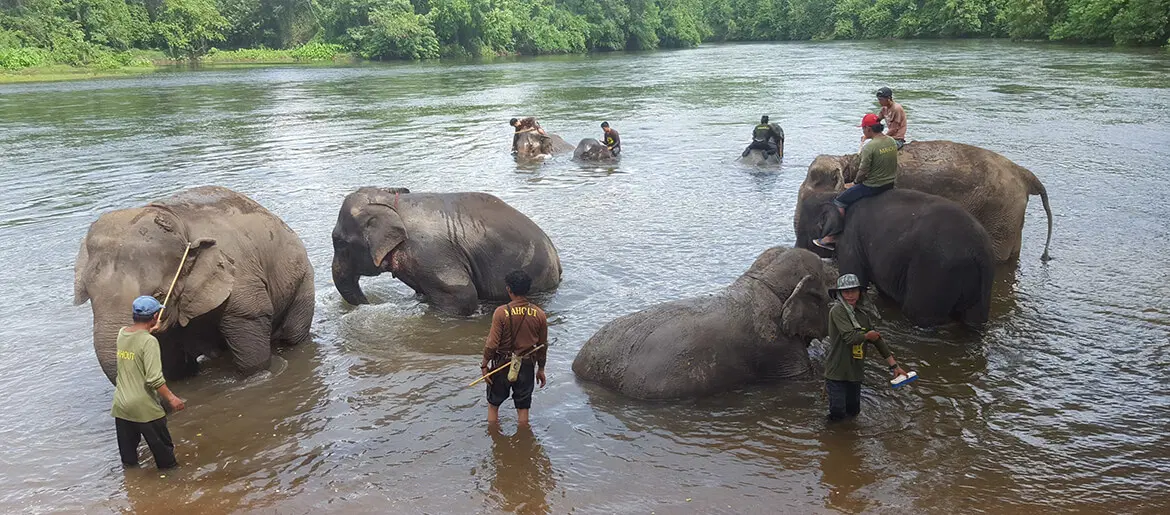
When a herd approaches a deep river crossing, the sequence follows a predictable pattern. Adult females wade into the shallows first, testing the bottom and depth. The matriarch leads the deepest section. Mothers guide calves into the water,, and other adult females push gently from behind. Calves of all ages manage independently in shallow water. In deep water requiring swimming, adults position themselves themselves alongside very young calves—allowing calf to rest a leg over the adult’s back mid-crossing.
Fully swimming elephants propel themselves with a dog-paddle movement of all four legs. The body floats horizontally,, and the trunk extends as a snorkel. Adult elephants swim at approximately 2 to 3 kilometers per hour—slowut sustained. River crossings of 100 to 400 meters are routine for East Africa’s family groups.
Sea Crossings: The Documentary Evidence
The most extraordinary swimming evidence comes from Tanzania’s Mafia Island group and Kenya’s Indian Ocean islands. Elephants from the mainland have swum open sea crossings of up to 48 kilometers—requiring to 6 hours of continuous effort. No human introduced these animals to the islands. The motivation remains speculative. The crossings happened under the elephants’ own initiative.
Calves in the Water
Elephant calves take to water from an early age. Young calves wade into waterholes within days of birth, guided by their mothers. Calves under one month old have swum in deep water supported by adults. Older calves—from months—swimndependently under supervision. Play in shallow water is constant calf behavior—rolling, trunk splashing, submersion, and charging at submerged obstacles are all documented.
Plan Your Safari
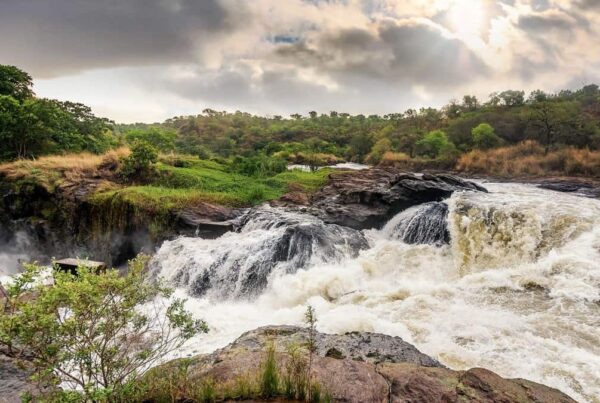
Murchison Falls National Park in Uganda is the finest location for elephant river crossings and swimming encounters in East Africa. The Victoria Nile below the falls produces daily elephant crossings in the dry season. The river’s width and depth require genuine swimming from crossing herds. The ferry from the south bank to the north bank regularly passes within 20 to 30 meters of swimming elephant family groups. Tanzania’s Ruaha National Park and Kenya’s Tsavo ecosystems also produce excellent river crossing encounters when herds concentrate on permanent rivers in the dry season.
African Wild Trekkers includes Murchison Falls in Uganda safari itineraries and designs Tanzania and Kenya circuits around dry-season river concentrations. Contact us to plan a safari that captures the full behavioral range of East Africa’s most magnificent animal.