Cape Fox Facts: The Only True Fox Native to Sub-Saharan Africa
Africa has jackals, wild dogs, and bat-eared foxes. Only one true fox—a member of the genus Vulpes—lives south of the Sahara. The Cape fox fills that role. It is small, elegant, and largely overlooked by visitors focused on the big predators.
What Is the Cape Fox?
The Cape fox, also known as the silver-backed fox or cama-fox, belongs to the genus *Vulpes*. This is the same genus as the red fox of Europe and the fennec fox of the Sahara. The Cape fox represents the southernmost member of this genus on the African continent.
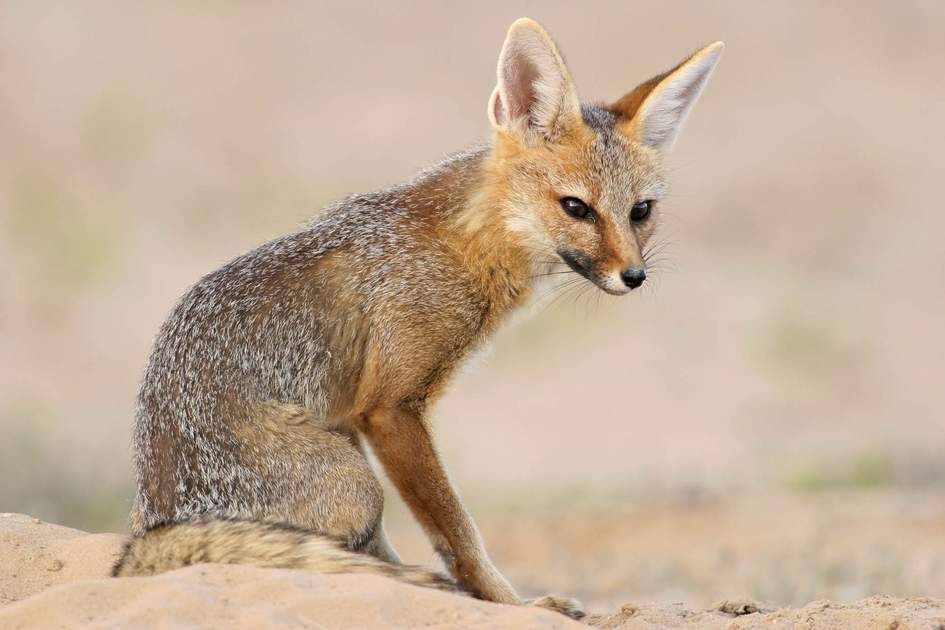
An adult Cape fox weighs between 2.5 and 4 kilograms. It stands about 35 centimeters at the shoulder. Body length reaches 60 centimeters, with a long bushy tail adding another 35 centimeters. It is roughly the same size as a domestic cat.
Physical Features
The Cape fox has a silver-grey back with a warm rufous tinge on the flanks and legs. The tail is dark and bushy. Large, erect ears give the face a sharp, alert expression. The eyes are large and amber-colored—an adaptation for low-light vision.
The nose is narrow and pointed. The feet are small and compact. Cape foxes move with a light, quick gait. They are fast over short distances. When alarmed, they drop low and sprint into dense scrub. Their coloring blends well with dry savanna grasses at dusk.
Cape Fox Diet and Hunting
Cape foxes are omnivores. Their diet shifts with season and location. They eat rodents, insects, reptiles, birds, eggs, and wild fruits, They hunt rodents with a high-arching pounce, similar to red foxes. They listen for movement below grass level and jump high before pinning prey with their forepaws.
Insects form a large part of their diet, particularly beetles, termites, and grasshoppers. During fruiting seasons they eat wild figs, berries, and other soft fruits. They also scavenge opportunistically near kills and livestock carcasses. Cape foxes are flexible feeders that adapt well to changing food availability.
Social Life and Reproduction
Cape foxes live in monogamous pairs. The pair shares a territory throughout the year. Both parents care for cubs. Litters of one to six cubs arrive after a gestation of about 52 days. Cubs emerge from the den at about three weeks old and start eating solid food at four weeks.
The male brings food to the den during the early weeks of cub-rearing. The female nurses and guards the cubs. Families stay together through the first dry season. Young Cape foxes disperse in their first year to establish their own territories.
Cape Fox Range and Habitat
The Cape fox lives primarily in southern Africa. Its range extends from South Africa northward through Namibia, Botswana, and Zimbabwe. It reaches the southern edge of East Africa in southern Tanzania. It does not occur further north in East Africa.
Cape foxes favor arid to semi-arid open country. They live in dry scrubland, open grassland, and karoo, They avoid dense woodland and high-rainfall areas. They tolerate light human settlement and sometimes live on farmland fringes.
Cape Fox Vocalisation and Communication
Cape foxes communicate through a range of calls that carry clearly in open country at night. The most common is a sharp, high-pitched contact call between pair members. This keeps mates in communication while foraging separately across their shared territory. Pups produce a persistent begging call that adults respond to until the young can hunt independently. A low growl and a sharp bark serve as alarm signals when a predator approaches.
Scent marking plays an equally important role. Cape foxes deposit urine and fecal marks on boundary objects throughout their territory. They also use a chin-rubbing behavioron objects near the den—a secretion from facial glands that carries individual-specific chemical information. These marks communicate territorial occupancy, reproductive status, and individual identity to other foxes passing through the area.
Cape Fox Conservation and Population Status
The Cape fox carriesbehavior ononcern classification from the IUCN. It is the most common fox species across southern Africa’s arid and semi-arid zones. Populations appear stable and, in some agricultural areas, have increased as grain stores attract rodents and the foxes follow. The Cape fox adapts reasonably well to low-intensity farmland and is sometimes seen near small settlements.
The main threats are road mortality, trapping, and persecution by farmers who associate foxes with livestock predation. Cape foxes do occasionally take young lambs and poultry. This brings targeted killing from farmers in sheep-ranching areas. Mange—caused by the Sarcoptes mite—affects populations periodically and can cause significant local mortality. Healthy populations recover quickly from mange outbreaks, but combined with other pressures, the disease adds meaningful additional risk.
Plan Your Safari
Cape foxes are not an East African sighting. If you want to see one, plan your safari to include southern Tanzania, Zimbabwe, Botswana, or South Africa. Southern Tanzania’s Ruaha region sits at the northern edge of the cape fox range. A night drive there during the dry season gives a reasonable chance of an encounter.
For dedicated small carnivore watching, Namibia and the Karoo regions of South Africa offer the most reliable Cape fox sightings in Africa. The animals are most active at dusk and in the first hours after dark.
African Wild Trekkers designs multi-country East and Southern Africa itineraries. If you want to combine East Africa’s primates and migration with the unique wildlife of the south, contact us to build the right route for your trip.