Great White Egret: East Africa’s Elegant Large White Waterbird
The great white egret is the largest all-white heron in East Africa. Its combination of pure white plumage, a long yellow bill, and elegant proportions makes it one of the most photogenic waterbirds in any East African wetland setting. The species is distributed across every inhabited continent and is one of the most widely distributed birds in the world. In East Africa, it is a common and conspicuous presence at lakes, rivers, and wetland margins throughout the region.
During the breeding season, the great white egret grows long, lacy plumes on the back that cascade over the folded wings and beyond the tail. These breeding plumes, called aigrettes, were the cause of mass hunting of this species in the 19th century when the plumes were used as hat decorations. The protection of the species in the early 20th century allowed the population to recover to its current abundance.
Identification
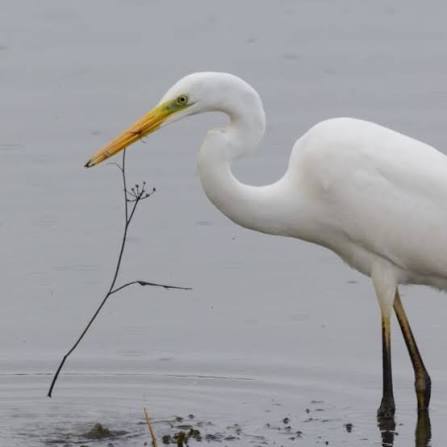
The adult great white egret measures 85 to 102 centimetres. The plumage is entirely white in all seasons. The bill is yellow in non-breeding birds, turning darker orange at the base during the breeding season. The bare facial skin around the eye is yellow-green in non-breeding birds and becomes vivid lime-green during breeding condition.
The legs are dark grey-black. This leg colour distinguishes the great white egret from the yellow-legged intermediate and little egrets that share its wetland habitats. The large size substantially bigger than both the intermediate and little egrets and the dark legs together identify the great white egret from all white heron species sharing its habitat.
The great white egret’s larger size distinguishes its flight silhouette from the smaller white egret species at a glance.
Hunting and Behaviour
Great white egrets hunt fish, frogs, snakes, and large invertebrates at the waterside using the stand-and-wait technique shared with other heron family members. The bird stands motionless in shallow water with the neck held in an S-curve and the bill aimed at the water surface. The hunting strike is fast and delivered from a full neck extension when prey passes within range.
The species is less strictly territorial than some other heron species and multiple individuals sometimes feed in relatively close proximity without significant territorial conflict. At productive fishing sites during peak activity periods, several great white egrets may be visible simultaneously along the same stretch of lake shore or river bank.
The great white egret is both a sedentary resident and a migratory species depending on the population and the region. East African populations are largely resident year-round at productive wetland sites, though local movements between wetlands occur in response to seasonal changes in water level and fish availability.
Where to See Great White Egrets in East Africa
Great white egrets are present throughout East Africa at any freshwater or coastal wetland with shallow water areas. They are among the most reliably encountered waterbirds at every wetland destination across the region without exception.
Uganda’s Kazinga Channel and the Nile River, Kenya’s Rift Valley lakes and Lake Victoria shores, and Tanzania’s lakes and river systems all provide great white egret encounters on standard waterside game drives and boat activities.
The species is one of the first waterbirds that first-time East Africa visitors identify by name due to the clarity of its all-white plumage, its large size relative to other egrets, and its habit of standing in conspicuous positions at the open waterside throughout the day.
Plan Your Birding Safari
Great white egret sightings require no specialist effort anywhere in East Africa. The species is encountered at virtually every lake shore, river margin, and wetland edge across all three of East Africa’s main safari countries without requiring any detour from standard safari activities.
Breeding plume adults seen from Uganda’s Kazinga Channel boat cruise or from a Kenya lake shore birding walk in the right season provide some of the most elegant waterbird photographic opportunities available on any East Africa safari.
African Wild Trekkers designs East Africa safari itineraries that include boat activities and lake shore stops where great white egrets and the full heron family community are encountered at close range. Contact us to plan a safari that celebrates East Africa’s extraordinary waterbird diversity.