Pink-backed Pelican: The Smaller, More Secretive Pelican of East Africa’s Forests and Lakes
The pink-backed pelican is the smaller of East Africa’s two pelican species. It is considerably less conspicuous than the great white pelican and occupies a different ecological niche within the shared wetland habitat. While the great white pelican concentrates on the large, open alkaline lakes of the Rift Valley, the pink-backed pelican prefers the vegetated margins of forest-bordered lakes, rivers, and coastal estuaries. It nests in tall trees overhanging water rather than on open lake shores, making it a forest-associated waterbird rather than the open water specialist its larger relative represents.
The pink-backed pelican is a genuine delight for birders who encounter it because it is less expected than the great white and its smaller size and different habitat association make it a distinct sighting rather than simply a smaller version of the familiar species.
Identification
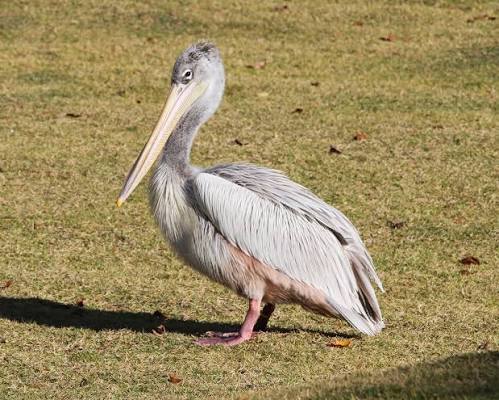
The adult pink-backed pelican measures 127 to 132 centimetres — significantly smaller than the great white pelican at 160 to 180 centimetres. The plumage is pale grey above and white below. The back feathers show a pink wash in adults of both sexes that gives the species its common name. This pink is subtle and requires good light conditions to assess clearly.
The bill is yellow with a pale yellow pouch. The facial skin is yellow-orange. The legs and feet are yellow. These yellow bare parts differ from the great white pelican’s more vivid orange-yellow colouration but are not always a reliable field feature for separation in poor light conditions.
The most reliable structural distinction from the great white pelican is size. The pink-backed is noticeably smaller when the two species are seen together and even when seen alone its smaller, more compact proportions distinguish it from the larger species once the observer is familiar with both. The flight silhouette is proportionally similar but smaller in all dimensions.
Nesting in Trees
The pink-backed pelican’s tree-nesting habit is one of its most distinctive characteristics. Unlike great white pelicans that nest in ground colonies on islands and open lake shores, the pink-backed pelican nests in colonies of 10 to 200 pairs in large trees overhanging water. This arboreal nesting habit exposes the birds to tree predation risks that ground-nesting pelicans do not face but also provides protection from ground predators that raid ground colonies.
The nest is a large, flat platform of sticks built in the upper canopy of a tall tree. Active colonies are visible from considerable distances as the large white birds moving in and out of the canopy create a distinctive activity signature above the forest canopy level.
Uganda’s Lake Victoria shores carry several accessible pink-backed pelican tree-nesting colonies. These colonies are visible from boat trips along the lake shore and are accessible for land-based observation from points along the lake shore road in the Entebbe and Kampala areas.
Where to See Pink-backed Pelicans in East Africa
Uganda provides East Africa’s most accessible pink-backed pelican sightings. The species is present on Lake Victoria and the other lakes of Uganda’s southern zone. The Entebbe Botanical Garden waterfront and the Kampala lakeside areas both carry the species in accessible numbers.
Kenya’s coastal estuaries and the vegetated shores of Lake Victoria near Kisumu carry pink-backed pelican populations. Tanzania’s Lake Victoria shore near Mwanza and the coastal mangrove systems of the Tanzania coast provide additional sighting locations.
The species’ preference for forested lake shores and tree-lined water bodies means that boat activities on Uganda’s forest-bordered lakes and rivers produce the most consistent close encounters with the species in its natural habitat context.
Plan Your Birding Safari
Pink-backed pelican sightings are most reliable in Uganda at Lake Victoria shoreline destinations. Any birding activity near the lake shore in the Entebbe area produces the species without specialist searching. Uganda’s forested lake shore habitats provide the most productive environment for this species within the East Africa safari circuit.
Combining pink-backed pelican watching with the great white pelican colonies at Kenya’s Rift Valley lakes on the same safari provides a complete picture of East Africa’s pelican diversity within a single circuit itinerary.
African Wild Trekkers includes Uganda’s lake shore destinations in East Africa birding safari itineraries alongside the Kenya Rift Valley lake circuit. Contact us to plan a safari that captures both East African pelican species in their distinct natural habitats.