The Full Wildebeest Migration Cycle
What Happens After the Migration Leaves Kenya
The Southward Return: October Through December
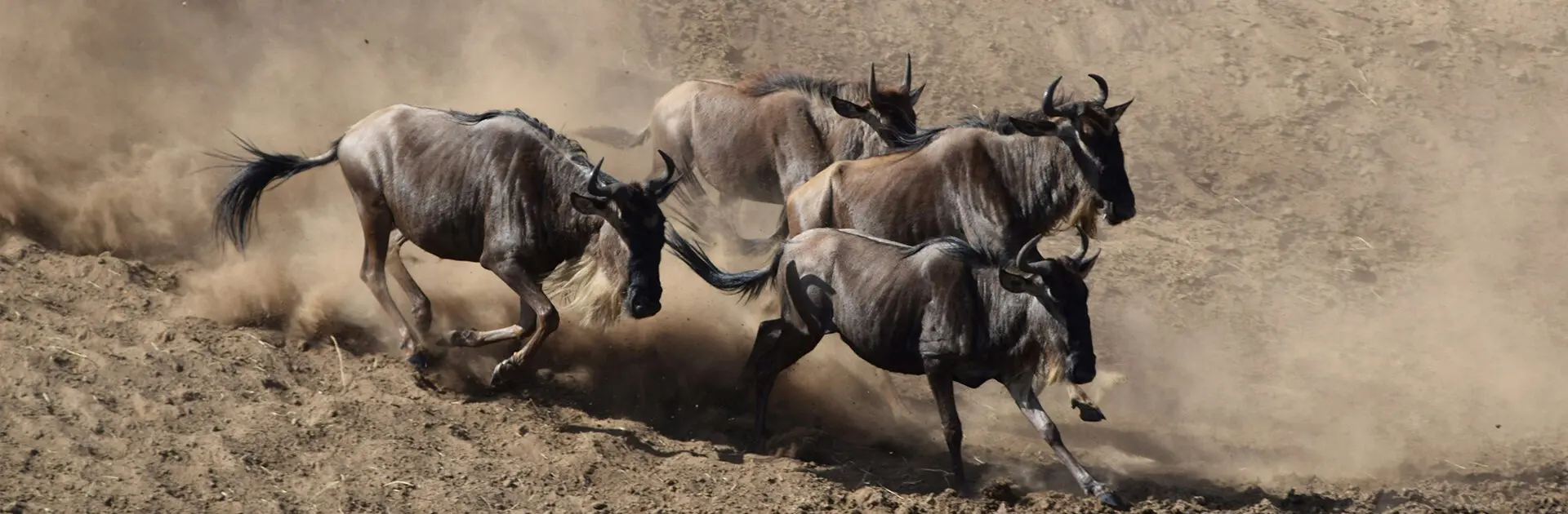
The wildebeest migration begins departing Kenya’s Maasai Mara in late October as the short rains arrive and start greening the Serengeti’s southern plains in Tanzania. The same nutritional trigger that pulled the herd north in July now reverses its direction, drawing animals southward along the western corridor of the Serengeti ecosystem. Southward Mara River crossings occur with less hesitation than the northward push because the herd’s movement follows water flow direction during the rains and because crocodiles occupying the crossing points have fed heavily through months of peak predation. Crossings in late October and November still occur at the main Mara River points but proceed faster and with less of the prolonged build-up that makes the northward crossings such dramatic spectacles — the herd’s urgency increases as the rains develop and the southern grass greens faster than the Mara’s already depleted vegetation.
By December the majority of wildebeest have recrossed the Mara River and are moving south through Tanzania’s northern and central Serengeti, following rains that arrive progressively further south through this period. The Serengeti’s famous “endless plains” — the short-grass plains of the southern Serengeti extending into the Ngorongoro Conservation Area — green rapidly during the December rains and draw the herd with an urgency that concentrates the annual southward movement into six to eight weeks of directed travel. The long grass that colonised the reserve boundary areas during Kenya’s dry season flattens and greens in the November rains, briefly restoring grazing quality before the herd’s departure makes it irrelevant until the following year’s cycle begins again.
Calving Season: January Through March
The wildebeest calving season in the southern Serengeti between January and March represents one of the two greatest spectacles in the annual migration cycle. It receives less fame than the Kenya river crossings but arguably carries more ecological significance. Approximately 500,000 calves arrive in a compressed window of six to eight weeks — a synchronisation that overwhelms the ecosystem’s predator capacity by producing more prey than lions, cheetahs, hyenas, and African wild dogs can consume simultaneously. This strategy evolved over millions of years precisely because synchronised birth dilutes predator impact. A lion that kills one calf per day during calving season has minimal effect on a population producing 500,000 young in eight weeks, while the same predation pressure against a year-round birth schedule would be devastating.
Wildebeest calves achieve standing within three minutes of birth and run within five — the fastest developmental sequence of any large land mammal, driven entirely by the predator pressure that would eliminate any calf slower to achieve mobility. The calving plains in Tanzania’s Ndutu area witness the birth of thousands of calves per day during peak calving in February, with predator activity from cheetahs, lions, and spotted hyenas creating constant motion across the open grass as hunters single out the weakest calves from birth groups. This calving season spectacle draws dedicated wildlife travellers who combine Ndutu viewing with Ngorongoro Crater game drives in an itinerary that captures one of Africa’s most compelling wildlife events outside the Kenya crossing season that most safari marketing emphasises.
The Northern Serengeti: Between Kenya and Calving
December and the Movement Through the Corridor
Between the migration’s departure from Kenya in late October and the calving season’s peak in February, the herd moves continuously through the Serengeti’s western and central areas, following rainfall and new grass growth across terrain that most safari-goers never visit during the famous peak windows of July to October. The northern Serengeti — the area immediately south of the Mara River on the Tanzanian side — retains the herd longest after the October departure. Tanzania-based camps along the river can offer exceptional game viewing through November and into December in years when the southern rains are delayed. Camps in the Kogatende sector of the northern Serengeti market specifically to this inter-season window and attract knowledgeable travellers who recognise that the river crossing spectacle continues from the southern bank after Kenya’s camps have lost their primary attraction.
December through January in the central Serengeti — the area between Seronera and the Ngorongoro Conservation Area boundary — sees the herd moving through in loose aggregations rather than the tight concentrations of the peak periods, spread across a wide front that follows the shifting rainfall pattern. This diffuse movement produces landscape-scale photography opportunities that compressed-herd crossings cannot match — vast numbers of wildebeest stretching to the horizon in an undulating mass that demonstrates the migration’s scale more completely than tight crossing-point concentrations. Predator activity during this transit period remains high as lions and hyenas follow the herd through terrain they know well from the previous dry season’s movements.
The Return North: April Through June
After calving, the herd moves northwest through the Serengeti as the long rains arrive in April and flush the western corridor with new grass growth. This northwestward movement through April and May passes through the Serengeti’s most remote and least visited habitats — the western woodlands and the Grumeti River area. The Grumeti River crossing represents a smaller-scale precursor to the famous Mara River crossings of July and August. The Grumeti’s resident hippo population and its own contingent of Nile crocodiles produce crossing drama at a scale the Mara eventually surpasses but that stands on its own as a significant wildlife event for travellers who visit the western Serengeti during May and June ahead of the main Kenya season.
By June the herd occupies the Serengeti’s northern corridor and approaches the Mara River, building toward the first Kenya crossings of the new cycle. The long dry season across Kenya and Tanzania during June and July concentrates the northward movement as southern grass dries and Kenya’s Mara continues to receive some rainfall from its proximity to Lake Victoria’s weather systems. This northward building creates a six-week anticipation window in the northern Serengeti and Kenya’s Mara in which the guides who know the terrain best watch the herd’s daily progress with excitement born from pattern recognition — knowing from the animals’ behaviour exactly when the first crossing attempt is coming, before camp guests can see it from a distance.
Planning Around the Full Migration Cycle
Visiting Outside Peak Season
Tanzania Timing for the Complete Migration Story
Travellers who understand the migration’s full annual cycle gain access to wildlife experiences in Tanzania between January and June that peak Kenya season crowds rarely encounter. Ndutu’s calving plains in February deliver the intimacy of birth and early development at population scales that the Kenya migration matches in drama but not in its specific emotional register. Watching a calf take its first steps in a landscape where ten thousand others arrive the same morning delivers a different kind of overwhelming from the chaos of a river crossing. Grumeti River crossings in June offer migration drama at a quieter scale, in a Serengeti environment less commercialised than the Mara’s peak season but with the same ecological dynamics playing out across a smaller stage.
A complete migration year itinerary — calving in Tanzania in February, Grumeti crossings in June, Kenya Mara crossings in August, and southward return in October — delivers the full story of the migration rather than a single chapter. Few travellers have the time or budget for all four windows in a single year, but understanding the full cycle allows better-informed choices. When the Kenya crossing season’s costs and crowds are weighed against the Tanzania calving season’s intimacy and lower peak-season prices, the decision can shift based on clear priorities rather than incomplete information about what each season actually offers.
Plan Your Safari
Planning around the full wildebeest migration cycle — whether targeting the Kenya crossing season, the Tanzania calving season, or the Grumeti River period — requires understanding current conditions and herd location relative to your travel dates across two countries’ worth of ecosystem. African Wild Trekkers tracks migration progress throughout the annual cycle and advises guests on the timing window that best matches their wildlife priorities and budget across both Kenya and Tanzania options.
The package covers both Kenya and Tanzania migration itineraries as standalone trips or combined circuits with cross-border logistics. Tanzania calving season camp bookings at Ndutu, Grumeti River camps for June crossings, and Kenya Mara camps for the August peak are all manageable within a single operator relationship that eliminates the coordination complexity of booking across multiple country systems independently.
Contact African Wild Trekkers at africanwildtrekkers.com/contact with your available travel window and migration priorities and we will design your safari around the best cycle timing within 24 hours.