Rwanda Road Safety: What Every Driver and Passenger Needs to Know
Rwanda’s road network is one of the best maintained in sub-Saharan Africa. The main paved roads connecting Kigali to the major destinations are in good condition with clear markings and functioning signage. However, Rwanda’s hilly terrain, the presence of motorcycle taxis, pedestrians and livestock on rural roads, and occasional unpaved sections in more remote areas create road safety challenges that visitors need to understand. Rwanda’s road accident rate, while improving, remains significant.
Rwanda has invested heavily in road safety enforcement over the past decade. Speed cameras operate on the main intercity routes. Traffic police checkpoints test alcohol compliance. Seat belt use is legally required and actively enforced. The formal road rules are clear and the enforcement environment is more consistent than in most regional neighbours. However, consistency of rule enforcement does not eliminate the road safety challenges that the road environment itself creates.
Key Road Safety Rules
Rwanda drives on the right side of the road. This is the same as most of Africa’s francophone countries and differs from Uganda, Kenya, and Tanzania which drive on the left. Visitors arriving from Uganda or Kenya need to consciously adjust to driving on the right when crossing into Rwanda. This adjustment is particularly important at junctions and when pulling out of accommodation driveways.
Speed limits in Rwanda are 40 kilometres per hour in urban areas, 60 kilometres per hour on secondary roads, and 80 kilometres per hour on national highways. Speed cameras are active on the Kigali-to-Musanze road and on several other major routes. Fines for speeding are issued on the spot or through the camera system. The limits are enforced seriously. Staying within the posted limits is the most important single road safety decision a driver in Rwanda makes.
Seat belts are compulsory for all vehicle occupants in front and rear seats. This rule applies to passengers in hired vehicles and tour safari vehicles as well as private cars. Drivers are responsible for ensuring all passengers are belted before moving. Traffic police at checkpoints check seat belt use routinely. The fine for non-compliance is applied to the driver regardless of whether a passenger refuses to belt.
Night Driving
Night driving in Rwanda is strongly discouraged for visitors. Pedestrians walk on road edges throughout the night without reflective clothing. Cyclists and motorcycle taxis operate without adequate lighting in many rural areas. Livestock cross rural roads after dark without warning. The combination of these factors makes night driving in Rwanda significantly more dangerous than daytime travel on the same roads.
Safari vehicles operated by professional tour operators do not drive after dark as a standard safety policy. This policy is based on experience of night road conditions rather than excessive caution. Visitors who are self-driving or using private hire vehicles should plan all journeys to conclude before sunset wherever possible. If night driving is unavoidable, reduce speed substantially below posted limits and expect unseen obstacles.
The Kigali urban area presents specific night driving hazards from motorcycle taxis operating without lights, pedestrians crossing multi-lane roads at informal crossings, and the general unpredictability of urban traffic at night. Kigali’s streets are well-lit compared to most African cities. However, the motorcycle taxi density creates constant lateral movement across traffic lanes that requires sustained attention from any driver.
Motorcycle Taxi Safety
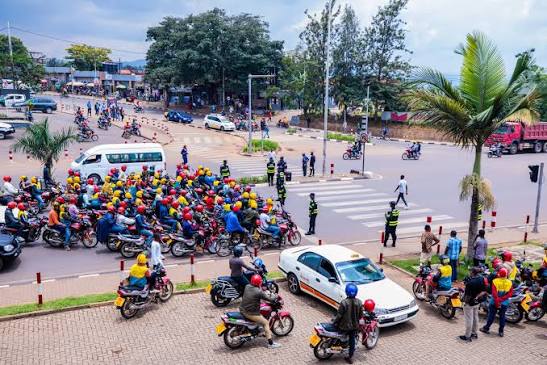
Motorcycle taxis, called motos, are the most ubiquitous transport mode across Rwanda outside of Kigali’s regulated moto zones. They carry passengers at low cost over distances that justify neither a car hire nor a bus journey. However, Rwanda’s moto taxi accident rate is high by any standard. The combination of inexperienced riders, overloaded bikes, variable road conditions, and pressure to complete trips quickly creates genuine accident risk for passengers.
Always insist on a helmet if you use a moto taxi. Helmets are legally required for riders and passengers. Any moto operator who does not carry a passenger helmet is in violation of the law and demonstrates disregard for passenger safety. The risk of head injury in a moto accident without a helmet is not recoverable. Insisting on a helmet is not excessive caution. It is the minimum acceptable safety standard for any moto journey.
Planning Safe Road Travel in Rwanda
Using a reputable tour operator with professionally maintained vehicles and experienced drivers eliminates the majority of road safety risk for visitors on a standard Rwanda safari itinerary. Professional drivers know the roads, respect the speed limits, and understand the night driving policy. Visitors who self-drive or use informal transport accept significantly higher risk than those who travel with organised safari operators.
African Wild Trekkers uses professionally maintained safari vehicles with experienced drivers on all Rwanda itineraries. Contact us to plan a Rwanda safari with the transport safety standards that your journey requires.