Fort Jesus Mombasa: The Indian Ocean’s Greatest Portuguese Monument
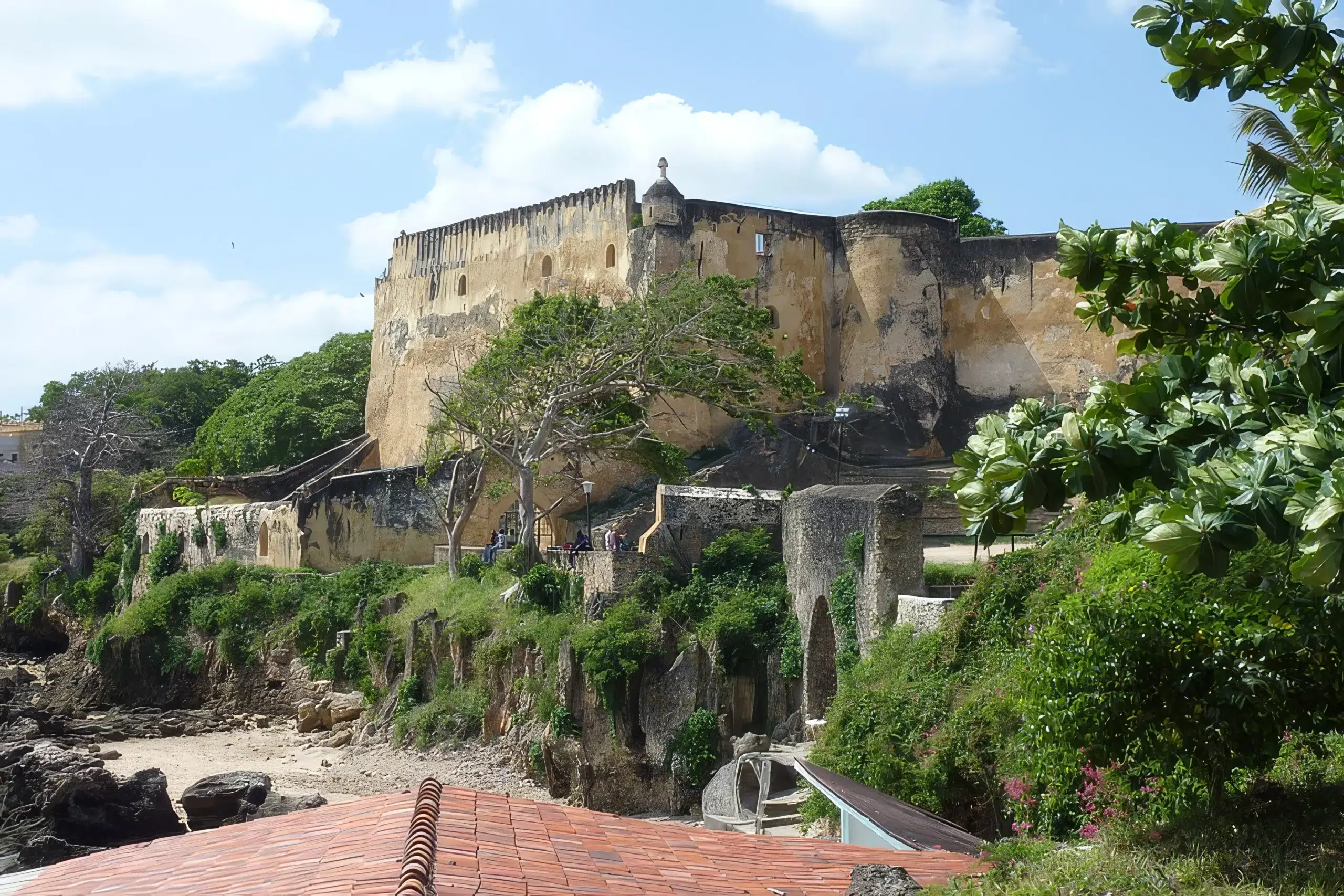
Fort Jesus Mombasa is Kenya’s most important historical monument and a UNESCO World Heritage Site. Built by the Portuguese in 1593, Fort Jesus Mombasa dominated the East African coast’s most strategic port for over four centuries. The fort changed hands nine times between Portuguese, Arab, and British control during its turbulent history. Fort Jesus Mombasa now operates as a national museum containing one of the finest collections of Indian Ocean trade artefacts in East Africa. The fort’s massive coral rag walls, carved Portuguese coats of arms, and extraordinary Indian Ocean Museum make it Kenya’s most rewarding single historical attraction. Fort Jesus Mombasa is essential for any visitor who wants to understand the history behind Kenya’s Indian Ocean coast.
Fort Jesus Mombasa was designed by Italian architect Giovanni Battista Cairati for the Portuguese Crown. The fort’s unusual shape creates an irregular quadrilateral with four corner bastions. This design was revolutionary in the late 16th century and provided overlapping fields of fire from the coral walls. Fort Jesus Mombasa sits directly on the edge of the Mombasa harbour channel. The original cannon positions along the Fort Jesus Mombasa seaward wall commanded every approaching vessel. Understanding this strategic position explains why Fort Jesus Mombasa was so fiercely contested between competing Indian Ocean powers for 300 years.
Fort Jesus Mombasa History
Portuguese Era at Fort Jesus Mombasa
Fort Jesus Mombasa was completed in 1596 after three years of construction. The Portuguese used the fort to control the lucrative Swahili coast spice and ivory trade routes. Fort Jesus Mombasa also served as a base for Portuguese missionary activity along the East African coast. The Portuguese held Fort Jesus Mombasa against multiple Arab Omani sieges during the 17th century. The great Omani siege of Fort Jesus Mombasa lasted from 1696 to 1698 — nearly three years of continuous blockade. The Portuguese garrison of Fort Jesus Mombasa eventually surrendered after disease killed all but eleven of the original 2,500 defenders.
The Omani Arab capture of Fort Jesus Mombasa in 1698 ended Portuguese dominance of the East African coast. The Omani rulers of Fort Jesus Mombasa transformed the interior to suit their administrative and residential needs. Omani period modifications at Fort Jesus Mombasa included a new captain’s house, mosque, and audience chamber. These Omani additions are still visible in the Fort Jesus Mombasa building fabric today. The transition from Portuguese to Omani control at Fort Jesus Mombasa represents the pivotal moment when Arab Swahili culture definitively replaced Portuguese influence on the Kenya coast.
British Era at Fort Jesus Mombasa
The British East Africa Protectorate took control of Fort Jesus Mombasa in 1895. The British converted Fort Jesus Mombasa into a prison for the following 63 years. This prison use preserved the Fort Jesus Mombasa structure but prevented archaeological investigation of the interior. Fort Jesus Mombasa was converted to a museum in 1962, two years before Kenya independence. Archaeological excavations at Fort Jesus Mombasa from the 1960s onwards revealed stratified layers of occupation from all controlling powers. These excavations produced the extraordinary collection of trade ceramics, weapons, and personal artefacts now displayed in the Fort Jesus Mombasa museum.
UNESCO inscribed Fort Jesus Mombasa on the World Heritage List in 2011. The inscription recognised the fort’s outstanding universal value as evidence of Portuguese influence and cultural exchange on the East African coast. The Fort Jesus Mombasa World Heritage inscription included the adjacent old town as part of the nominated area. This expanded Fort Jesus Mombasa nomination linked the fort’s history to the broader Mombasa old town Swahili cultural landscape. Kenya Wildlife Service manages Fort Jesus Mombasa as a national museum with research, conservation, and public education programmes operating continuously.
Fort Jesus Mombasa Museum Collection
Indian Ocean Museum at Fort Jesus Mombasa
The Fort Jesus Mombasa museum houses the finest Indian Ocean trade collection in East Africa. Chinese porcelain from the Ming and Song dynasties recovered at Fort Jesus Mombasa demonstrates the range of the pre-European Indian Ocean trading network. Persian blue and white pottery from Shiraz recovered at Fort Jesus Mombasa dates from the 14th and 15th centuries. Indian Gujarat pottery also appears in the Fort Jesus Mombasa collection alongside Omani and coastal Swahili ceramics. This ceramic evidence at Fort Jesus Mombasa maps a trading network stretching from China to Arabia to East Africa long before the Portuguese arrival.
Fort Jesus Mombasa also displays the extraordinary San Antonio wreck collection. The Portuguese supply ship San Antonio sank in Mombasa harbour in 1697 during the great Omani siege. Marine archaeologists excavated the San Antonio wreck over several decades and recovered thousands of artefacts. These Fort Jesus Mombasa wreck artefacts include personal items, trade goods, weapons, and ship fittings. The San Antonio collection at Fort Jesus Mombasa provides an extraordinary time capsule of life aboard a 17th-century Portuguese vessel in the Indian Ocean.
Visiting Fort Jesus Mombasa
Fort Jesus Mombasa opens daily from 08:00 to 18:00 throughout the year. Entry fee for Fort Jesus Mombasa is charged at the main gate on Nkrumah Road. A guided tour of Fort Jesus Mombasa lasts approximately 90 minutes with the museum collection and fort walls covered in sequence. Self-guided visitors can walk Fort Jesus Mombasa in one hour with the museum guidebook provided at entry. The Fort Jesus Mombasa afternoon light from 16:00 illuminates the seaward coral wall most beautifully for photography. Sunset views from the Fort Jesus Mombasa seaward bastion across the Mombasa channel are among the most atmospheric in coastal Kenya.
Fort Jesus Mombasa combines most efficiently with a Mombasa old town walking tour on the same morning or afternoon. The fort’s location at the old town’s southern entrance makes it the natural start or end point of the Mombasa old town circuit. An early Fort Jesus Mombasa museum visit followed by the old town carved door walk covers both attractions in a comfortable four-hour morning programme. Most Kenya coast safari visitors who stop at Fort Jesus Mombasa for less than two hours leave without seeing the museum collection. Allowing the full 90-minute guided Fort Jesus Mombasa tour delivers far greater historical understanding and satisfaction than a quick walkthrough visit.
Plan Your Safari
Allow a minimum of 90 minutes at Fort Jesus Mombasa for the museum collection and the fort wall walk. Book a certified Fort Jesus Mombasa guide at the gate for the most informative visit. Combine Fort Jesus Mombasa with the Mombasa old town circuit for the most complete single-day Swahili coast history programme in Kenya.
African Wild Trekkers designs Mombasa day programmes that include Fort Jesus Mombasa, the old town carved door walk, and the Old Port dhow experience. We book certified historical guides and design programmes that cover the full Fort Jesus Mombasa and Mombasa old town circuit in a rewarding half-day.
Contact African Wild Trekkers to visit Fort Jesus Mombasa. We respond within 24 hours and design coastal Kenya itineraries that place this World Heritage Site at the centre of an extraordinary Swahili coast historical safari experience.