Gede Ruins Archaeology: Kenya’s Lost Swahili City in the Forest
Gede ruins archaeology reveals one of the East African coast’s most mysterious and best-preserved medieval Swahili city sites. The Gede ruins near Watamu date from the 13th to 17th centuries when this thriving coastal city traded with Arabia, Persia, India, and China. Gede ruins archaeology has uncovered a sophisticated urban settlement with a palace, great mosque, 14 secondary mosques, and over 100 house structures. The city was suddenly and permanently abandoned in the early 17th century for reasons still debated by archaeologists. Gede ruins archaeology work over the past 60 years has produced one of the finest collections of Indian Ocean trade ceramics in East Africa. The site today is managed jointly by the National Museums of Kenya and surrounded by remnant coastal forest.
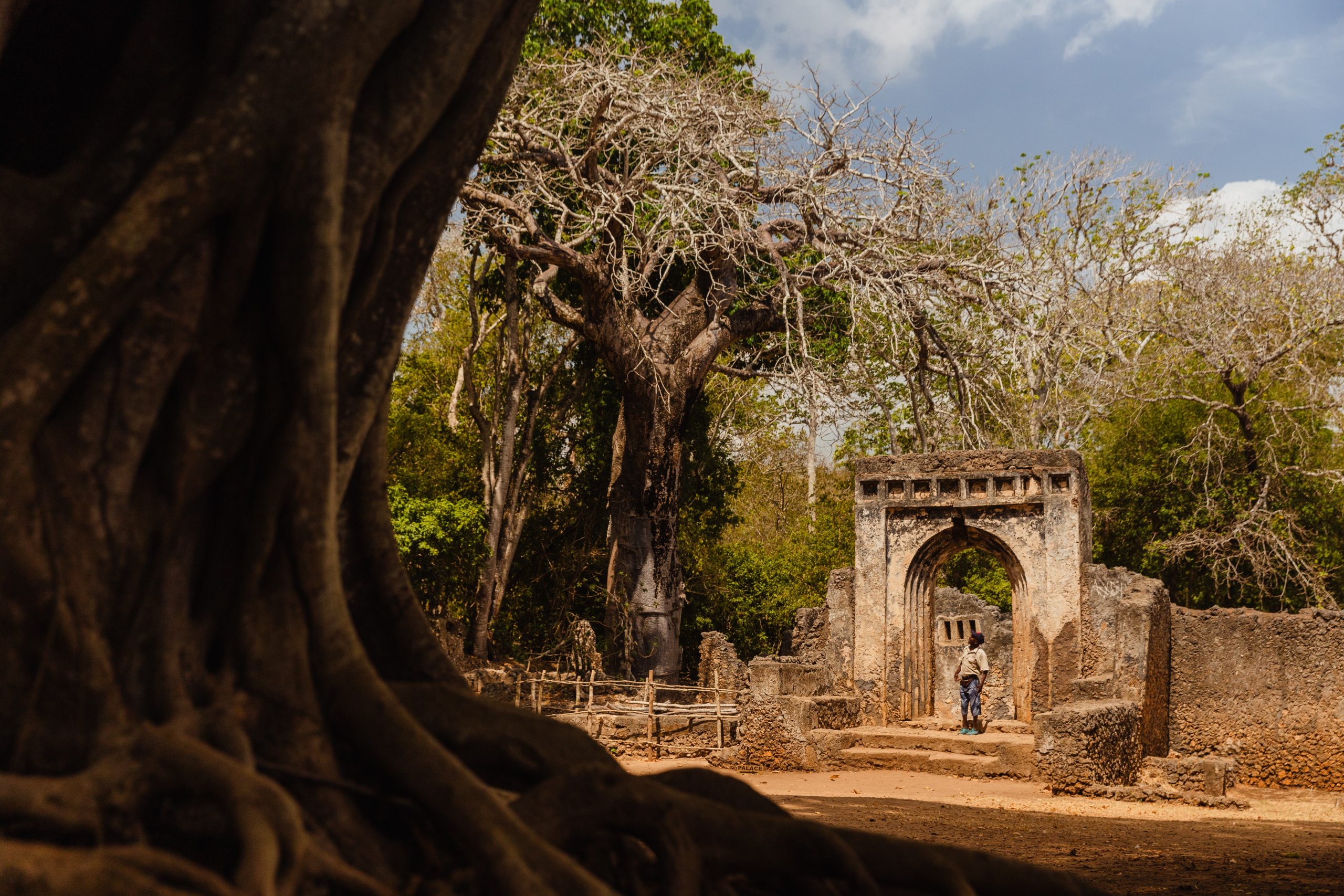
The Gede ruins archaeology site sits two kilometres from the Kenya coast at Gede village between Watamu and Malindi. The ruins are surrounded and partly engulfed by the Arabuko-Sokoke Forest. Trees grow through the Gede ruins archaeology site walls and create an atmospheric combination of nature and history. This forest integration makes the Gede ruins archaeology experience very different from an open-air desert ruin site. The filtered forest light, the ruins’ worn coral masonry, and the silent bird calls create an extraordinarily evocative atmosphere at the Gede ruins archaeology site.
Gede Ruins Archaeology: The City
The Great Mosque in Gede Ruins Archaeology
The Great Mosque at the Gede ruins archaeology site is the largest and most impressive single structure on the site. This Friday mosque served the entire Gede population at the height of the city’s prosperity. Gede ruins archaeology dating places the Great Mosque’s construction in the late 13th century. The mosque’s qibla wall, mihrab niche, and ablution tank are all clearly visible in the standing Gede ruins archaeology structure. Pillar tombs alongside the Great Mosque belong to important Gede community leaders buried in the Islamic tradition. These Gede ruins archaeology pillar tombs use carved coral and plaster decoration in recognisably Swahili artistic style.
Gede ruins archaeology has identified 14 secondary mosques throughout the site. This mosque density suggests a very large and devout Muslim population during the city’s peak period. The secondary mosques served different quarters of the Gede ruins archaeology urban layout. Each Gede ruins archaeology mosque includes a rain-water cistern that supplied ablution water for worshippers. The cistern engineering at Gede ruins archaeology sites demonstrates sophisticated water management in a context of seasonal rainfall. This Gede ruins archaeology water management innovation was repeated at settlements throughout the medieval Swahili coast trading network.
The Palace in Gede Ruins Archaeology
The Gede ruins archaeology palace is the most architecturally elaborate domestic structure on the site. This large coral stone building contained multiple audience chambers, private apartments, and service courtyards. Gede ruins archaeology excavations in the palace produced Chinese porcelain, Indian glass beads, and Omani iron objects. The variety of Gede ruins archaeology palace trade goods demonstrates the city’s direct connections to the full Indian Ocean commercial network. A carved Koranic inscription above one Gede ruins archaeology palace door is the only surviving written text from the city. This inscription links the Gede ruins archaeology palace to the Islamic scholarly tradition of the medieval Swahili elite.
The House of the Scissors and the House of the Venetian Bead are named from their Gede ruins archaeology excavation finds. These distinctive house names reflect the specific trade goods recovered from their interior deposits. A Venetian glass trade bead from 15th-century Venice at a Gede ruins archaeology site 6,000 kilometres from its origin is a vivid demonstration of Indian Ocean commercial reach. The Gede ruins archaeology house names are used by guides to orient visitors around the site. Learning these house names before the visit helps visitors track their position on the Gede ruins archaeology site map during the guided tour.
Gede Ruins Archaeology: The Forest Context
Wildlife at the Gede Ruins Archaeology Site
The forest around the Gede ruins archaeology site holds a productive wildlife community. Yellow-rumped elephant shrew inhabits the leaf litter throughout the Gede ruins archaeology forest section. This fast, insectivore is visible in flashes of movement along the shaded trail margins. Black and white colobus monkey inhabits the tall forest trees above the Gede ruins archaeology walls. Golden-rumped elephant shrew is a very rare and celebrated mammal visible at the Gede ruins archaeology forest section. The Gede ruins archaeology site guide maintains current wildlife sighting knowledge for every visit. Angolan black and white colobus monkey is particularly photogenic when seen against the Gede ruins archaeology coral wall backgrounds.
Over 100 bird species have been recorded at the Gede ruins archaeology forest site. Fischer’s turaco is the most spectacular Gede ruins archaeology bird species. This brightly coloured turaco inhabits the forest canopy and is seen in the trees above the ruins. Zanzibar red bishop inhabits the forest edge at the Gede ruins archaeology site boundary. Black-bellied starling moves through the fruiting trees in small, metallic-gleaming groups. Morning birding at the Gede ruins archaeology site before 09:00 produces 30 to 40 forest and coastal species without any specialist searching. A combined history and birding morning at Gede ruins archaeology is one of Kenya’s most varied single-site morning programmes.
Visiting the Gede Ruins Archaeology Site
The Gede ruins archaeology site opens daily from 07:00 to 18:00. A small National Museums of Kenya site museum at the entrance displays the finest Gede ruins archaeology ceramic and artefact collection. Study this museum first to understand what Gede ruins archaeology excavations have revealed before walking the site itself. Gede ruins archaeology guided tours last 60 to 90 minutes and cover the Great Mosque, the palace, and the main domestic house sections. A self-guided Gede ruins archaeology walk using the site map takes the same time for confident visitors. Most visitors combine the Gede ruins archaeology site with Arabuko-Sokoke Forest birding and Watamu Marine Park snorkelling in a single full day.
The best time to visit the Gede ruins archaeology site is early morning from 07:00 to 10:00 before the heat builds. The forest provides shade throughout the day but the morning light illuminates the Gede ruins archaeology coral masonry most beautifully. Photography at the Gede ruins archaeology site benefits from the dappled forest light filtering through the canopy. A wide-angle lens captures the full scale of the Great Mosque structure with forest trees growing through the walls. The Gede ruins archaeology forest atmosphere is most evocative in the early morning before other visitors arrive at the site.
Plan Your Safari
Visit the Gede ruins archaeology site as a morning activity combined with Arabuko-Sokoke Forest birding and an afternoon Watamu green turtles snorkelling session. Allow 90 minutes at the site for the museum and the guided ruins walk. Book a certified Gede ruins archaeology guide at the gate for the most historically informative visit.
African Wild Trekkers designs Kenya coast itineraries that combine the Gede ruins archaeology site, Arabuko-Sokoke Forest, and Watamu Marine Park in a rewarding full-day programme. We book site guides, arrange forest birding guides, and design coast programmes that cover both the natural and historical dimensions of the Watamu area.
Contact African Wild Trekkers to explore the Gede ruins archaeology site. We respond within 24 hours and design Kenya coast itineraries that access the full depth of Swahili coast history and coastal wildlife in the Watamu region.