Africa Safari Map: Where Every Major Safari Destination Is Located
Africa’s Major Safari Destinations: A Geographic Guide
Africa is a continent of 54 countries spanning over 30 million square kilometers. Understanding where the major safari destinations sit geographically relative to each other is an essential foundation for itinerary planning. The distances involved are often larger than they appear on small-scale maps. Routing options between major destinations vary enormously in efficiency and cost. This geographic guide to Africa’s safari landscape organizes the continent’s wildlife destinations by region. It explains the relationship between neighboring parks and countries. It provides the spatial context that makes realistic itinerary planning possible.
East Africa: The Core Safari Region
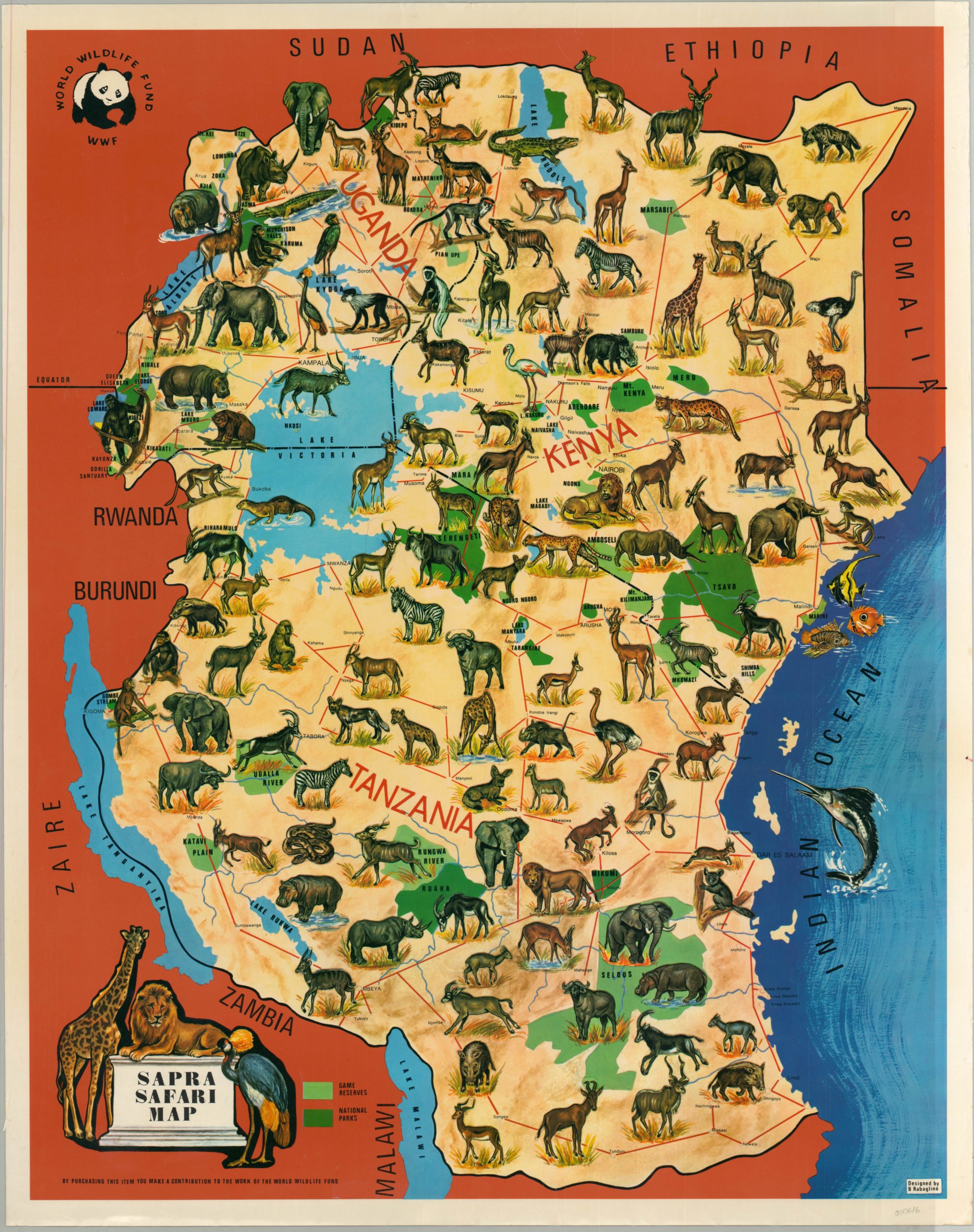
East Africa — broadly comprising Uganda, Rwanda, Kenya, and Tanzania — is the world’s most visited safari region. It contains the greatest concentration of iconic wildlife destinations in the smallest geographic area of any major safari region on the continent.
Uganda and Rwanda: The Western Primate Zone
Uganda and Rwanda sit at the western edge of the East Africa safari region, on the eastern boundary of the Congo Basin forest ecosystem. Uganda’s major wildlife destinations cluster in two groups.
The western circuit parks Queen Elizabeth National Park, Kibale Forest, and Bwindi Impenetrable Forest. And Mgahinga Gorilla National Park are accessed from Kampala and Entebbe in the south via the Rift Valley. The northern parks Murchison Falls National Park and Kidepo Valley require either light aircraft or long overland transfers from the capital. Rwanda’s main wildlife destinations Volcanoes National Park and Akagera National Park are both within three hours of Kigali by road.
This makes Rwanda one of the most efficiently accessible safari countries on the continent from its own capital city. The Uganda-Rwanda border is crossed regularly by travelers combining gorilla trekking in Bwindi with gorilla or golden monkey trekking in Volcanoes National Park. The crossing at Cyanika Gate takes under four hours by road between the two park areas.
The geographic relationship between Uganda, Rwanda, and the Democratic Republic of Congo is important for understanding the conservation context of the mountain gorilla and chimpanzee populations in this western zone. The Albertine Rift Valley runs from Uganda’s western border south through Rwanda into Congo and Burundi. It is one of Africa’s great centers of biodiversity and the habitat that mountain gorillas depend on. The transboundary nature of gorilla conservation. Bwindi’s population connects with the DRC’s Sarambwe Reserve and the Virunga ranges of all three countries. Explains why regional cooperation is essential to the gorilla population’s continued recovery. Uganda Wildlife Authority, Rwanda Development Board, and Congolese conservation agencies all participate in this cooperation.
Kenya: The Central East Africa Hub
Kenya sits at the geographic center of the East Africa safari region. Nairobi functions as the region’s principal international aviation hub, connecting East Africa to Europe and North America. And Asia with the most direct flight options of any East African city. Kenya’s major safari destinations are distributed across the country’s diverse ecological zones. The Masai Mara and surrounding conservancies are in the southwest, accessed three to five hours by road from Nairobi or less than an hour by light aircraft. Amboseli National Park sits at the base of Kilimanjaro on the Tanzanian border, three hours from Nairobi by road. Samburu National Reserve and Ol Pejeta Conservancy are in the central and northern zones, three to four hours from Nairobi. Tsavo East and West national parks are in the south, four to six hours from Nairobi by road or accessible by scheduled flight.
The geographic relationship between Kenya and Tanzania is the most important cross-border connection in East African safaris. The Serengeti-Mara ecosystem straddles the Tanzania-Kenya border. Wildebeest cross between the two countries seasonally on their annual circuit. The Namanga border crossing on the Arusha-Nairobi highway is the principal overland connection between Tanzania’s Northern Circuit and Kenya’s safari parks. The ease of this crossing makes multi-country Tanzania-Kenya itineraries among the most commonly combined East Africa journeys. Kilimanjaro International Airport in Tanzania and Nairobi’s Jomo Kenyatta Airport in Kenya are the two most used international entry points for the joint Tanzania-Kenya safari region.
Tanzania: The Southern Safari Giant
Tanzania is East Africa’s largest country and holds the greatest total area of protected wildlife habitat in the region. The Northern Circuit — Serengeti, Ngorongoro Crater, Lake Manyara, and Tarangire — is the country’s most visited safari zone. It is accessed from Kilimanjaro International Airport or Arusha town. The Serengeti’s different ecosystem zones are distributed across a north-south axis stretching 300 kilometers from the south near Ngorongoro to the northern Mara River zone. Following the migration seasonally within the park often requires internal light aircraft transfers between airstrips. Tanzania’s Southern Circuit — Ruaha National Park and Nyerere National Park (formerly Selous Game Reserve) — is accessed from Dar es Salaam by scheduled light aircraft. It is geographically remote from the Northern Circuit. Combining the two circuits within a single itinerary requires either a flight connection via Dar or a two-day overland transfer.
Zanzibar, Tanzania’s Indian Ocean island, sits approximately 35 kilometers off the coast of Dar es Salaam. It connects by regular flights from Dar, Arusha, Kilimanjaro, and direct international flights from several European cities. Zanzibar’s geographic position as an island appendage to mainland Tanzania’s safari destinations makes it the natural beach extension for all Tanzania safari circuits. It is accessible in under an hour by air from most departure points on the mainland. The geographic logic of the Tanzania safari circuit. Northern Circuit, then Zanzibar or Southern Circuit. Is the most established multi-destination itinerary structure in East Africa. It represents the country’s geographical advantages most effectively for international travelers.
Southern Africa: A Different Geographic Logic
Southern Africa’s major safari destinations occupy a different geographic space from East Africa. They operate within a distinct regional logic that reflects the countries’ different sizes, infrastructure standards, and ecosystem types.
South Africa, Botswana, Zimbabwe, and Zambia
South Africa’s major safari destinations concentrate in the northeast of the country, within the greater Kruger ecosystem. This spans Limpopo and Mpumalanga provinces and extends into Mozambique’s Limpopo National Park through the Great Limpopo Transfrontier Park. Johannesburg’s OR Tambo International Airport is the principal entry point for South African safaris. Hoedspruit Airport in the Kruger area provides a closer regional gateway for travelers connecting from Johannesburg rather than driving the five hours. Botswana’s Chobe National Park and the Okavango Delta lie approximately 1,200 kilometers north of Johannesburg. They are accessible by scheduled or charter flights from Johannesburg or Nairobi via Maun, Botswana’s main safari gateway town. Victoria Falls, at the Zimbabwe-Zambia border, sits at the same latitude as northern Botswana. It connects by road to Chobe in three hours and by regional flight to Nairobi or Johannesburg for onward East or South Africa connections.
The geographic relationship between East and Southern Africa is more distant than it appears on small-scale maps. Flying between Nairobi and Johannesburg takes four hours. Combining an East Africa safari with a South Africa safari in a single trip requires approximately 21 days to do both regions justice. The most efficient multi-region itineraries either begin or end in East Africa and transit through Johannesburg or Nairobi to connect with the other region’s hub airports. Open-jaw international tickets allow arrival in one region and departure from another, eliminating backtracking.
Plan Your Safari
Understanding Africa’s safari geography allows you to build itineraries that make geographic sense. Minimizing transit time, maximizing wildlife time. And routing between destinations in the most logical sequence given regional aviation networks and overland options. African Wild Trekkers designs East Africa itineraries across Uganda, Rwanda, and Kenya. And Tanzania that uses the geographic relationships between these countries to create efficient, high-quality multi-destination safari experiences.
Every East Africa itinerary routes to minimize unnecessary transit while covering the wildlife destinations that match your priorities. Gorilla trekking in Uganda or Rwanda, Serengeti migration, Ngorongoro Crater, and Masai Mara. All are accessible within a single East Africa trip with efficient routing and the right internal flight connections.
Contact African Wild Trekkers at africanwildtrekkers.com/contact with your travel dates and destinations of interest, and we will design the most efficient geographic itinerary within 24 hours.