African Wild Dog Kenya: Where to Find Africa’s Most Endangered Predator
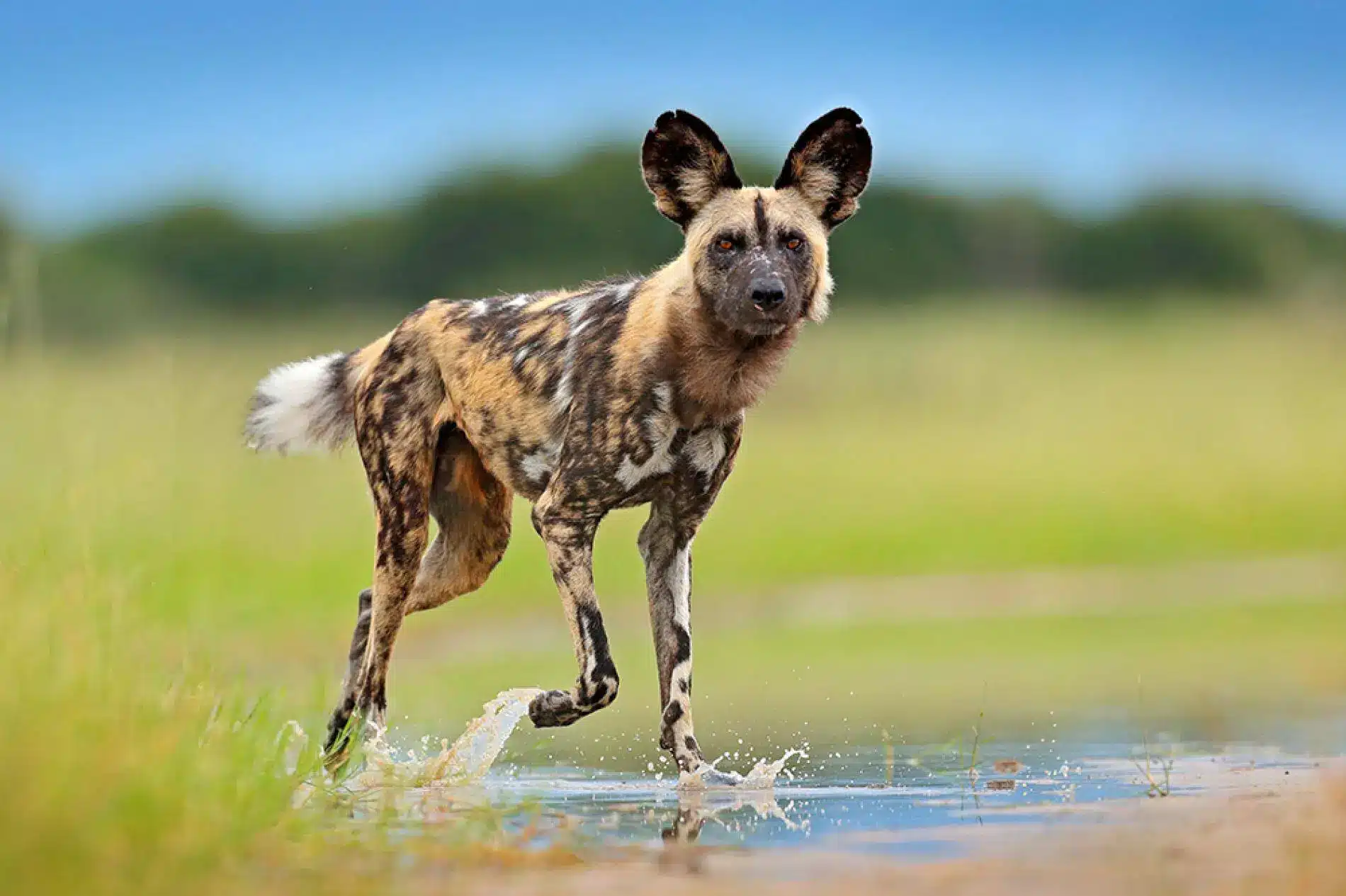
African wild dog Kenya sightings represent some of East Africa’s rarest and most exciting wildlife encounters — the painted wolf is Africa’s most endangered large carnivore, with the entire continental population estimated at fewer than 6,600 individuals, and Kenya’s national total sits at approximately 450 to 500 animals distributed across a few key protected areas. Unlike the lion’s broad distribution across Kenya’s parks or the leopard’s adaptability to a range of habitats, the African wild dog requires large, unfragmented wilderness areas with intact prey populations and minimal human-wildlife conflict — conditions that eliminate most of Kenya’s smaller and more heavily visited parks from the potential range. The Laikipia Plateau’s private conservancy network hosts Kenya’s strongest and most established wild dog population, with Ol Pejeta, Lewa, Borana, and the connecting conservancy system supporting a wild dog meta-population managed through monitored pack territories. African Wild Trekkers includes Laikipia conservancy visits in Kenya itineraries for clients who specifically identify African wild dog as a priority species, and the team maintains current intelligence on pack movements that converts the wild dog encounter from an unlikely bonus to a planned wildlife objective.
Where to Find African Wild Dogs in Kenya
Laikipia Plateau: Kenya’s Best Wild Dog Destination
The Laikipia Plateau in central Kenya hosts the country’s most reliable African wild dog viewing, with multiple packs that range across the interconnected conservancy system between Ol Pejeta, Lewa, Borana, and Segera and that researchers monitor through GPS collars and visual pack identification. The Laikipia ecosystem’s large unfenced ranches and conservancies provide the 200 to 500 square kilometer territories that wild dog packs require — territories that Kenya’s smaller fenced national parks cannot accommodate and that the agricultural areas surrounding them prevent from extending beyond the wildlife land. Morning and evening game drives in Laikipia produce wild dog encounters during the pack’s hunting activity periods — wild dogs are diurnal hunters, unlike leopard and lion, and hunt exclusively in daylight in cooperative chases that reach speeds of 60 kilometers per hour across open bush terrain. A wild dog hunt observed from a following game drive vehicle — a pack of 10 to 20 painted wolves coordinating a pursuit across the Laikipia plain, splitting and recombining around the prey’s evasive moves until exhaustion creates a killing opportunity — is a wildlife experience that seasoned Africa safari travelers consistently describe as the most kinetically exciting predator encounter on the continent.
The wild dog den site in Laikipia — typically in an abandoned aardvark burrow on a well-drained termite mound or rocky hillside — creates the most productive and sustained wild dog observation window when a pack is denning during the pupping season (June through August). A denning pack keeps the adult hunters within five kilometers of the den for the ten-week period when the pups are too young to travel, and the pack’s predictable morning departure and evening return to the den creates a reliable encounter structure that conservancy guides can schedule with genuine confidence. Pups visible at the den entrance — tumbling over each other, play-fighting with adults returning from a kill, and being suckled by the subordinate female helpers who assist the alpha pair with pup-rearing — provide the wild dog’s most emotionally engaging behavioral display and the photography opportunity that most closely approaches the popular image of painted wolves that conservation photography has made globally recognizable. African Wild Trekkers tracks current denning pack locations in Laikipia through its guide network and updates wild dog-priority clients with the most current pack information before their departure date.
Maasai Mara Wild Dog Sightings
The Maasai Mara ecosystem supports a small and less predictable wild dog population compared to Laikipia — occasional packs move through the conservancy areas, particularly Naboisho and the Mara Triangle, but the Maasai Mara’s lion population density creates a competitive pressure on wild dog that the Laikipia plateau’s more balanced predator community does not replicate. Lions kill wild dogs when encounters occur — direct predator competition drives wild dog packs to avoid lion-concentrated areas and to time their hunting activity for early morning hours before the lions’ peak activity begins — and the Maasai Mara’s exceptional lion population is simultaneously the park’s greatest attraction and the factor that limits wild dog pack establishment across much of the ecosystem. When wild dogs do appear in the Mara conservancies, the sighting creates a heightened camp excitement because the rarity of the event is understood by both guides and guests — a Mara wild dog encounter in 2026 is a significant wildlife sighting that most Mara regulars experience only once across multiple annual visits. Wild dogs in the Mara are worth reporting immediately to the camp manager, who alerts other vehicles in the conservancy and coordinates a responsible response that maintains observation distance without disturbing the pack’s hunting or movement pattern.
Samburu National Reserve in northern Kenya produces occasional wild dog sightings among the semi-arid thornbush and seasonal river valleys that some populations cross during dispersal movements between established territories. These Samburu encounters are genuinely opportunistic rather than predictable — a dispersing sub-adult group covering several hundred kilometers between natal territory and new range may cross the Ewaso Ng’iro River on a single morning and not return for months. The Kenya Wildlife Service and Laikipia Predator Project maintain population monitoring programs that track collared pack members across northern and central Kenya, and encounter data from both organizations informs African Wild Trekkers’ current intelligence on which Laikipia or northern Kenya destination offers the highest wild dog encounter probability for any specific travel month.
African Wild Dog Behavior and Pack Life
Pack Structure and Cooperative Hunting
African wild dog packs are organized around a dominant alpha pair — the only breeding pair in the pack — and their extended family of sub-adults and older offspring who function as helpers to raise each successive litter of pups without reproducing themselves. Pack sizes in Laikipia average 8 to 15 adults, though packs of 25 to 30 individuals form occasionally when several cohorts of sub-adults remain with the natal pack rather than dispersing to found new groups. The pack’s cooperative hunting strategy distinguishes it from all other African predator species — wild dogs hunt in coordinated relay pursuit where individuals take turns leading the chase and falling back to recover as fresh pack members move to the front, maintaining a constant pressure on the prey over distances of two to five kilometers that eventually exhaust even a healthy impala or Thomson’s gazelle. The hunt success rate of 70 to 80 percent per attempt makes the African wild dog Africa’s most efficient large predator — dramatically higher than the lion’s 30 percent or the cheetah’s 50 percent — and the cooperative food-sharing behavior that follows a successful hunt, where the senior pack members feed first and regurgitate meat for the pups and returning guards at the den, demonstrates a social welfare system more sophisticated than any other carnivore’s.
Wild dog communication occurs through a high-pitched twittering vocalization — the greeting call that pack members exchange on waking from rest and before departing on a hunt — that is audible from several hundred meters and that guides learn to identify immediately as a wild dog locating signal during pre-dawn game drive departures. The twittering sound is distinctive enough from other Kenya bird and mammal vocalizations that an experienced guide who hears it from 500 meters immediately redirects the vehicle toward the source rather than continuing the planned route. The morning assembly call before a hunt — when pack members emerge from sleeping positions and perform increasingly excited greeting ceremonies including face-licking, twisting, and mutual vocalization — is the behavioral display most documented by wild dog photographers because the animated social energy of the assembly sequence produces excellent multi-animal interaction images before the pack departs in a coordinated group sprint that most cameras cannot follow at dawn light levels.
Conservation Challenges for Kenya’s Wild Dogs
African wild dog conservation in Kenya faces three primary challenges — human-wildlife conflict at conservancy boundaries where dogs prey on livestock; road mortality from the highway network crossing wild dog territories; and snare and trap mortality from the bushmeat-poaching infrastructure that targets impala and other ungulates the dogs require as prey. The Laikipia conservancy system addresses all three threats through wildlife-friendly livestock management programs, wildlife crossing infrastructure on the major roads, and anti-snaring patrols that remove traps before they injure or kill dogs traveling through the farming areas between protected territories. The African Wild Dog Conservancy, Kenya Wildlife Service, and Laikipia Predator Project maintain ongoing wild dog monitoring and community compensation programs in Laikipia that have supported population growth from approximately 200 to 450+ individuals over the past 15 years — a significant recovery for a species whose continental population trajectory remains concerning despite local success stories. Understanding this conservation context — the specific threats, the specific responses, and the specific people whose daily work sustains the population — gives a Laikipia wild dog encounter an intellectual depth that most wildlife tourism experiences cannot provide, and African Wild Trekkers guides brief clients on the current conservation status of the specific pack they observe to connect the sighting to the broader conservation narrative it represents.
Climate change compounds wild dog conservation challenges by extending droughts that reduce prey populations and force packs to range beyond their protected territory boundaries into agricultural areas where livestock conflict occurs — a pattern documented in both Laikipia and the Maasai Mara ecosystem during the 2022 drought that drove significant predator movement into farming communities surrounding both wildlife areas. The 2022 drought’s impact on Laikipia’s wild dog population — reduced prey density, increased conflict, and suppressed pack breeding success — created a temporary population dip that the area’s recovery infrastructure addressed through emergency supplementary feeding programs and enhanced boundary patrol. Visiting Laikipia’s wild dog populations in 2026 occurs within a landscape whose conservation infrastructure has specifically managed this recovery process, and the packs observable today reflect the sustained investment of years of monitoring, conflict management, and habitat protection that the conservancy fee structure funds directly.
Plan Your Safari
African wild dog Kenya encounters require current pack location intelligence that African Wild Trekkers maintains through its Laikipia guide network — contact us with your travel dates and we will assess the current pack situation before recommending which Laikipia conservancy offers the highest wild dog encounter probability for your specific visit window.
Your Laikipia wild dog safari package includes Ol Pejeta or Borana conservancy accommodation, experienced guide with daily pack briefing updates, private 4×4 game drive vehicle, full-board meals, and all conservancy fees. We coordinate the northern Kenya circuit to include Samburu alongside Laikipia for maximum wildlife diversity per day on the northern Kenya leg.
Contact African Wild Trekkers at africanwildtrekkers.com/contact with your travel dates and we will confirm wild dog pack activity and send a complete northern Kenya itinerary within 24 hours.