The Big Five vs. the Great Apes: Africa’s Two Greatest Safari Encounters
Two Safari Experiences That Define Africa
Africa offers two categories of wildlife encounter so fundamentally different that choosing between them is one of the most important decisions any safari traveler makes. The Big Five safari is built around lions, leopards, elephants, rhinos, and buffalo. It takes place across the open savannas of East and Southern Africa. It represents one of the most iconic wildlife experiences on the planet. The great ape encounters of Central and East Africa offer something entirely different. Mountain gorillas live in Rwanda, Uganda, and DRC. Chimpanzees inhabit Uganda and Tanzania. These encounters offer a face-to-face meeting with our closest living relatives in primeval forests. Understanding what each experience delivers — and what it demands — is the foundation of planning an extraordinary Africa trip.
The comparison is not simply about which animals you see. It is about pace, environment, physical demand, emotional impact, and budget. A Big Five safari is typically vehicle-based, comfortable, and accessible to travelers of almost any fitness level. A great ape trek involves hiking through dense mountain forests. This can last several hours at altitude before you reach a gorilla family or chimpanzee community. Both experiences produce memories that last a lifetime. The question is which one. Or which combination? Fits your travel goals, physical capacity, and the time you have available.
The Big Five Safari Experience
The Classic Open Savanna Experience
The Big Five designation originally referred to the five most dangerous animals to hunt on foot: lion, leopard, elephant, buffalo, and rhinoceros. Today it defines the ambition of most safari travelers, even if the rhino is often the most challenging of the five to find. The best Big Five destinations deliver the open landscape and expert guiding. And resident animal populations that make multiple Big Five sightings achievable on a single safari. These include Kenya’s Masai Mara, Tanzania’s Serengeti and Ngorongoro Crater, South Africa’s Kruger and Sabi Sand, Botswana’s Chobe and Okavango, and Zimbabwe’s Hwange.
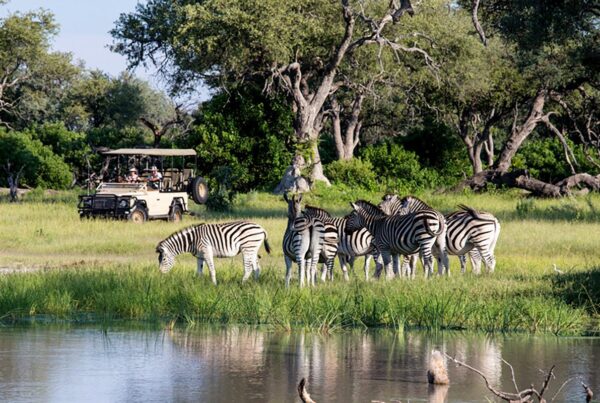
What distinguishes a great Big Five safari from a mediocre one is time. The open savanna rewards patience. A pride of lions doing nothing at dawn may suddenly pursue a zebra at full sprint by mid-morning. The leopard sleeping in a sausage tree descends at dusk to stalk impala through the long grass. Safari vehicles with experienced guides who know individual animals give you an enormous advantage. The Big Five experience is fundamentally about sustained observation. Spending hours with a pride, following a leopard through its territory, and watching elephants interact at a waterhole. Rather than a brief encounter and moving on.
Comfort, Accessibility, and Wildlife Volume
Big Five safaris are accessible to almost all travelers relative to great ape treks. Game drives operate from comfortable safari vehicles. Walking is optional rather than required. The best lodges in East and Southern Africa offer high levels of comfort before and after each day’s game drives. Families with children, older travelers, and those with limited mobility can all access world-class Big Five experiences. The physical barrier to entry is low. This means the emotional and visual rewards are available to a very wide range of people.
Wildlife volume in the best Big Five destinations is also dramatically higher than in great ape habitats. A single morning game drive in the Masai Mara or the Serengeti might produce sightings of hundreds of zebras and thousands of wildebeest. You might also see multiple lion prides and a hunting cheetah. And a leopard in a tree. Alongside giraffe, buffalo, elephant, and dozens of bird species. The sheer abundance of wildlife in the African savanna has no equivalent anywhere on Earth. The best Big Five parks deliver this abundance consistently across months of each year.
The Great Ape Trekking Experience
What Gorilla Trekking Involves
Mountain gorilla trekking takes place in three countries: Rwanda’s Volcanoes National Park, Uganda’s Bwindi Impenetrable Forest, and Mgahinga Gorilla National Park. And the Democratic Republic of Congo’s Virunga National Park. Rwanda is the most accessible and polished destination. It offers high-end lodges, seamless logistics, and well-habituated gorilla families that receive trekkers daily. Uganda offers a wider range of price points and a more adventurous atmosphere. The DRC remains off the mainstream circuit due to security concerns. Virunga’s gorillas are extraordinary for those who take appropriate travel advice before visiting.
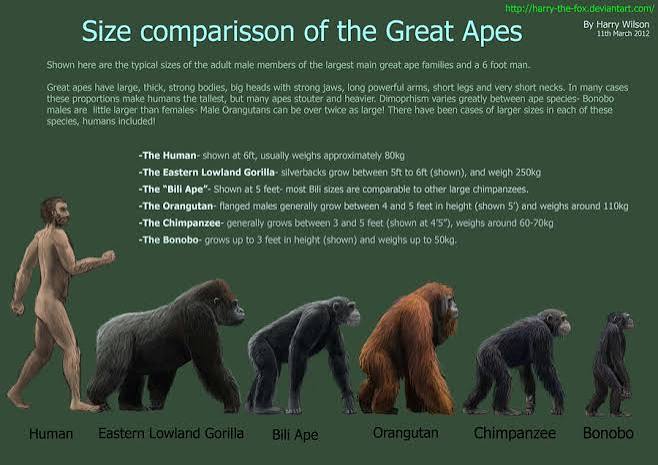
The trek begins at a ranger station at dawn. Groups of up to eight trekkers receive assignment to a specific gorilla family. They then follow guides into the forest. The hike can last anywhere from 30 minutes to five or six hours. Duration depends on where the family has moved since the previous day. The forest is dense, the terrain is steep, and the altitude. Typically between 2,400 and 3,800 meters. Adds physical challenge for some travelers. When you find the gorillas, you get exactly one hour with the family. You observe at a minimum a seven-meter distance. The gorillas themselves often approach much closer. Sitting meters from a 200-kilogram silverback is unlike anything else in wildlife travel.
Gorilla Permit Costs and Logistics
Gorilla permits are the most significant cost associated with this experience. Rwanda charges USD 1,500 per person per trek — the most expensive single wildlife permit in Africa. Uganda’s permits cost USD 700. The high cost reflects the extraordinary conservation investment that protects the remaining mountain gorilla population of approximately 1,000 individuals. Permit revenue goes directly toward ranger salaries, anti-poaching operations, community benefit programs, and habitat protection. For many travelers, the cost is justified by the rarity of the encounter. The mountain gorilla is critically endangered, and a wild encounter is genuinely sought after.
Gorilla trekking logistics require more careful advance planning than most Big Five safaris. Rwanda permits sellouts months in advance, particularly during peak season. Ugandan permits face increasing demand as more travelers discover the experience is comparable to Rwanda’s at a significantly lower price point. Most travelers combine gorilla trekking with additional safari activities. Game drives in Queen Elizabeth National Park in Uganda, or a combined Rwanda-Kenya itinerary. To build a complete Africa experience.
Chimpanzee Trekking
Chimpanzee trekking offers a more energetic and unpredictable encounter than gorilla trekking. Chimps move fast, vocalize loudly, and spend significant time in the forest canopy. This makes them harder to observe for extended periods than the more ground-dwelling gorillas. Kibale Forest National Park in Uganda is the premier chimpanzee destination in Africa. It hosts over 1,400 chimpanzees and offers some of the highest encounter success rates on the continent. Gombe Stream National Park in Tanzania—where Jane Goodall conducted her landmark research—offers a more remote alternative. Mahale Mountains National Park, accessible only by boat on Lake Tanganyika, provides an even more adventurous option.
What separates great ape encounters from Big Five safaris in emotional terms is the sense of recognition. Looking into the eyes of a mountain gorilla or watching a chimpanzee care for its infant produces a visceral awareness of shared ancestry. No lion sighting, however spectacular, can replicate that feeling. Travelers who have done both consistently describe the great ape encounter as more emotionally affecting. Even when the Big Five safari was more visually spectacular in terms of wildlife volume and action. Knowing that your visit contributes directly to the protection of endangered species makes the experience meaningful beyond the encounter itself.
Combining Big Five and Great Apes
The most ambitious African travelers do not choose between the Big Five and great apes—they combine them. Uganda is the continent’s best country for doing exactly this. It pairs gorilla trekking in Bwindi with game drives in Queen Elizabeth National Park. Add chimpanzee tracking in Kibale and tree-climbing lion sightings at Ishasha. All of this fits within a single itinerary. A two-week Uganda safari can realistically deliver all four great ape species—gorillas, chimpanzees, black-and-white colobus, and red-tailed monkeys. It also delivers buffalo, elephants, hippos, and the park’s resident Uganda kob antelope.
Rwanda-Kenya combinations are the most popular multi-country itinerary for travelers wanting both experiences. Three nights in Rwanda for gorilla trekking, followed by a Kenya safari covering the Masai Mara and Amboseli, delivers the full emotional range of African wildlife travel. This fits within a manageable two-week framework. Tanzania offers a similar combination. Serengeti and Ngorongoro for the Big Five, Mahale or Gombe for chimpanzees. Though the logistics are more complex and journey times between ecosystems are longer. The right combination depends on what each traveler prioritizes, how much time they have, and what budget they are working with.
Plan Your Safari
Combining Big Five game drives with great ape trekking requires careful permit booking and route planning across multiple countries. You also need an understanding of which destinations work best at which times of year. Gorilla permits for Rwanda sell out months in advance. Uganda chimp permits face increasing demand. Getting the sequencing right from the start avoids expensive last-minute complications.
African Wild Trekkers builds combination itineraries that connect savanna game drives with gorilla and chimpanzee trekking in a single seamless trip. We handle permits, lodge bookings, internal flights, and border crossings across Rwanda, Uganda, Kenya, and Tanzania. Every element connects without wasted travel days.
Contact African Wild Trekkers at africanwildtrekkers.com/contact with your preferred Africa destinations and travel dates. We will design a Big Five and great ape itinerary that delivers both experiences within 24 hours.