Chimpanzee and Gorilla Differences: Understanding Africa’s Great Apes
Discover the Differences Between Chimpanzees and Gorillas
Chimpanzees and gorillas are two of Africa’s most fascinating great apes. They share many similarities with humans, including intelligence, social behavior, and strong family relationships. However, these two species have major differences in their size, appearance, behavior, habitat, and lifestyle.
Understanding the differences between chimpanzees and gorillas makes wildlife experiences more meaningful. Both animals offer unique encounters during primate safaris in Uganda, Rwanda, and other parts of Africa.
Difference in Size and Appearance
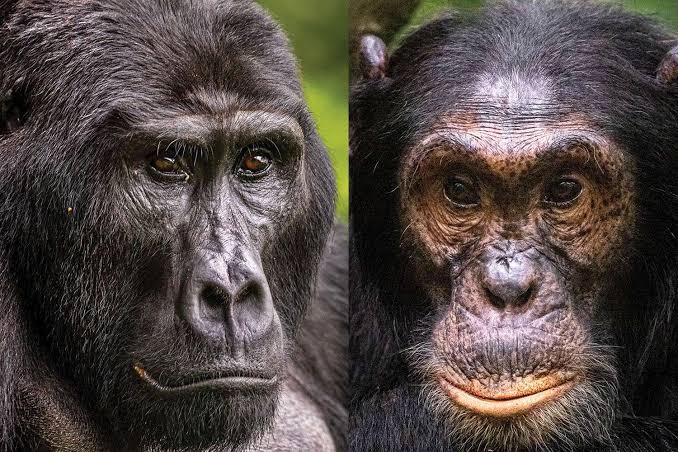
Gorillas are much larger and stronger than chimpanzees. A male mountain gorilla can weigh over 150 kilograms, while an adult male chimpanzee usually weighs between 40 and 60 kilograms. Gorillas have broad chests, powerful arms, and large bodies built for strength. Mature males develop silver hair on their backs, which gives them the name silverback. Chimpanzees have slimmer bodies, longer arms, and more agile movements. They have dark hair covering most of their bodies, with lighter skin on their faces, ears, hands, and feet.
Difference in Habitat
Gorillas and chimpanzees live in different forest environments across Africa. Mountain gorillas mainly inhabit the high-altitude forests of Uganda, Rwanda, and the Democratic Republic of Congo. Chimpanzees have a wider range. They live in tropical forests and woodland areas across Central and West Africa. In Uganda, chimpanzees are commonly found in Kibale Forest National Park, Budongo Forest, and other forest areas.
Both species depend on healthy forests for food, shelter, and survival.
Difference in Social Structure
Gorilla families usually have a calm and stable social structure. A dominant silverback leads the group and protects females and young gorillas. The silverback decides movement routes, feeding areas, and resting locations. Chimpanzee communities are more complex and flexible. They live in larger groups that may include many males and females. Leadership often changes, and chimpanzees form alliances to gain social influence.
Chimpanzees are more active socially and often spend time competing, cooperating, and building relationships within their communities.
Difference in Intelligence and Behavior
Both chimpanzees and gorillas are highly intelligent. However, chimpanzees are known for their advanced problem-solving abilities and frequent use of tools. Chimpanzees use sticks to collect termites, stones to crack nuts, and leaves for different purposes. They also show complex communication and social learning.
Gorillas are intelligent but are generally calmer. They rely more on physical strength, social bonds, and communication through body language and vocal sounds.
Difference in Diet
Both great apes mainly eat plants, but their diets differ. Gorillas mostly feed on leaves, stems, shoots, roots, and fruits. Their large bodies require them to consume large amounts of vegetation every day.
Chimpanzees have a more varied diet. They eat fruits, leaves, seeds, and insects and occasionally hunt small animals. Their flexible diet helps them survive in different forest environments.
Difference in Movement
Gorillas spend much of their time walking on all four limbs using a method called knuckle-walking. They move slowly through forests while searching for food.
Chimpanzees are more energetic and athletic. They climb trees frequently, swing between branches, and move quickly through the forest canopy. Their different body structures allow them to adapt to their unique environments.
Difference in Communication
Gorillas communicate through vocal sounds, body movements, facial expressions, and gestures. Chest beating is one of their most famous behaviors and can show excitement, strength, or warning.
Chimpanzees have a wider range of communication methods. They use calls, gestures, facial expressions, and social behaviors to interact with each other.
Their communication systems show the intelligence and emotional depth of both species.
Difference in Conservation Status
Both chimpanzees and gorillas face threats from habitat loss, disease, and human activities. Mountain gorillas remain critically endangered, but conservation programs have helped increase their numbers through protection and responsible tourism. Chimpanzees are also endangered. Protecting forests and supporting conservation programs remain important for their survival.
Chimpanzee Trekking and Gorilla Trekking Experiences
Chimpanzee trekking and gorilla trekking offer two different wildlife experiences. Gorilla trekking provides a chance to observe peaceful family groups led by powerful silverbacks. Chimpanzee trekking offers a more energetic encounter where visitors can watch active communities moving, calling, and interacting.
Uganda provides excellent opportunities for both experiences. Travelers can visit Bwindi Impenetrable National Park for gorillas and Kibale Forest National Park for chimpanzees.
Why Both Great Apes Matter
Chimpanzees and gorillas are important parts of Africa’s natural heritage. Their survival helps protect the forests where many other species depend. Learning about their differences helps travelers appreciate their unique behaviors and the importance of conservation.
Plan Your Great Ape Adventure
Planning a journey to see chimpanzees and gorillas in the wild is one of Africa’s greatest wildlife experiences. Each species tells a different story about intelligence, family, and survival.
Whether you choose chimpanzee trekking, gorilla trekking, or both, you will experience the beauty of Africa’s incredible great apes.