Chimpanzee vs Gorilla: Two Great Ape Trekking Experiences Compared
Two of Africa’s Most Powerful Wildlife Experiences
Africa offers two primate trekking experiences that consistently rank among the most emotionally powerful wildlife encounters on the continent: chimpanzee trekking in Tanzania and Uganda and mountain gorilla trekking in Rwanda and Uganda. Both involve following habituated great apes through forest habitat on foot until you locate the group, then spending time in close proximity observing animals who share an enormous proportion of their DNA with you and who make that biological kinship unmistakably apparent in their social behavior, facial expressions, and interactions with each other. Yet the two experiences differ significantly—in physical intensity, cost, emotional register, and what you specifically observe—and understanding these differences helps you decide which to prioritize.
This comparison examines chimpanzee and gorilla trekking across the dimensions that matter most to potential visitors: the physical experience of the trek itself, what you observe during the hour with the animals, cost and permit structure, ease of access, and the emotional character of each encounter. Tanzania’s Mahale Mountains provide the chimpanzee context, and Rwanda’s Volcanoes National Park provides the gorilla context, as these represent the highest quality versions of each experience currently available.
Chimpanzee Trekking: Mahale Mountains, Tanzania
The Physical Trek and What You Find at the End
Finding the Chimpanzees: The Trek Itself
Trekking for chimpanzees at Mahale Mountains begins at the forest edge with a briefing about the M Group—the habituated chimpanzee community that researchers have studied since the 1960s—and then proceeds on foot into the Afromontane forest covering the mountains rising steeply from the Lake Tanganyika shoreline. The trek duration varies from one to several hours depending on where the chimpanzees slept the previous night and how far they have moved by the time the trackers locate them.
The terrain is hilly, the forest is dense, and the physical challenge of climbing through root systems and undergrowth on steep slopes in tropical humidity makes Mahale chimpanzee trekking genuinely demanding. It is not technically difficult but physically tiring in a way that visitors who are not regular hikers should not underestimate.
Trackers locate the group by sound before you see them. The extraordinary vocalizations of chimpanzees in the forest canopy—particularly the pant-hoot calls that carry half a kilometer—direct the approach. The guide manages the pace and noise level of the visitor group to minimize disturbance during the final approach. The moment of first visual contact—typically a silhouette in the canopy or a dark shape moving through the understory—creates excitement that immediately justifies everything that came before it.
Chimpanzees are quick, loud, and unpredictable in their movement through the forest. The one-hour observation window feels simultaneously too short and absolutely complete in terms of the emotional intensity it delivers.
What You Observe During the Hour with Chimpanzees
Chimpanzee behavior during the observation hour is dynamic, varied, and often genuinely startling in its human parallels. Social grooming between group members—the slow, methodical picking through fur that communicates alliance and affection simultaneously—is the most common and visually compelling interaction. Watching two adult chimpanzees groom in a shaft of forest light creates an image of mutual tenderness that is deeply affecting.
Play behavior among juveniles, with wrestling, chasing, and tumbling that is indistinguishable from the roughhousing of human children, happens in the mid-canopy and on the forest floor simultaneously with adult activities. Fruit feeding, with multiple individuals in a single fig tree vocalizing, competing, and sharing, shows the social complexity of chimpanzee society in action.
The physical proximity at Mahale is what most differentiates it from other chimpanzee experiences in Africa. The M Group’s long habituation means that individuals move around and beneath the observation group without apparent concern. Encounters where chimpanzees pass within two to three meters of observers are not unusual. A sub-adult male making direct eye contact from a meter away—contact that registers as distinctly communicative rather than simply biological—is one of the most intense wildlife encounters available in Tanzania.
Guests consistently describe it as unlike any previous experience with animals. The hour ends too quickly, and the walk back to camp through the forest carries a quality of reflection that few wildlife experiences prompt as naturally.
Mountain Gorilla Trekking: Volcanoes National Park, Rwanda
The Physical Trek and What Awaits
The Gorilla Trek: Terrain and Physical Demands
Mountain gorilla trekking in Rwanda’s Volcanoes National Park begins with a pre-dawn briefing at park headquarters, where staff assign trekking groups of a maximum of eight people per habituated gorilla family. The trek proceeds from the forest boundary—which begins at the agricultural land edge—into the bamboo forest and then the Afromontane vegetation zone of the Virunga volcanoes at altitudes between 2,500 and 3,500 meters.
The physical demands are significant. The combination of altitude, steep volcanic terrain, dense vegetation, and variable mud and soil conditions makes some treks genuinely exhausting. Other groups find their gorilla family relatively quickly near the forest edge with minimal hiking. You cannot predict which experience you will have on any given day.
The altitude at Volcanoes National Park makes the physical challenge of gorilla trekking feel different from the lowland forest trekking at Mahale. Visitors who have not acclimatized to altitude find the exertion significantly harder than it would be at sea level. Breathlessness accompanies even moderate exertion above 3,000 meters and adds to the overall difficulty. Park headquarters offers local porters for hire at the start of every trekking day.
We strongly recommend hiring them — both for carrying bags and walking sticks and for practical physical assistance on steep sections where their support is genuinely useful for trekkers finding the terrain challenging.
The Hour with Mountain Gorillas
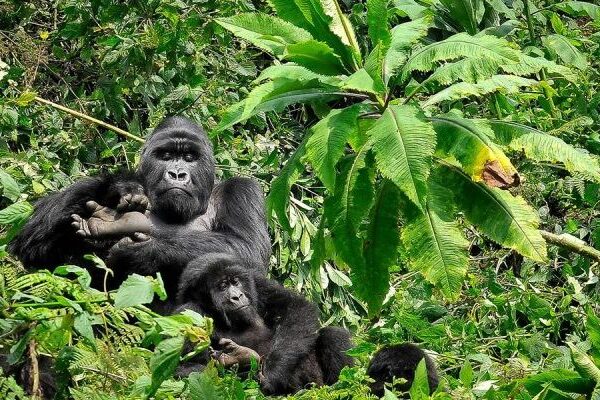
Most visitors describe the mountain gorilla encounter as the most emotionally overwhelming wildlife experience of their lives. The hour itself justifies this reputation. Mountain gorillas are enormous—adult silverback males can weigh 200 kilograms and stand 1.7 meters tall. Encountering one at close range in dense forest, watching him eat bamboo shoots with methodical precision while juveniles play and infants cling to their mothers nearby, creates an emotional response that combines awe, kinship, and something close to humility.
The gorillas in a well-habituated family are entirely indifferent to the visiting group. They go about their morning routines—feeding, resting, and social grooming—as though the eight humans standing ten meters away simply form part of the landscape.
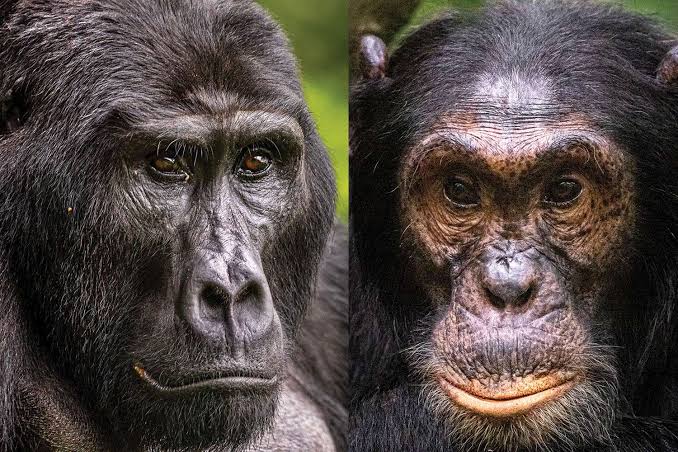
The specific interaction that most visitors describe as the peak of the encounter is sustained eye contact with a silverback. The animal’s gaze rests on you with an expression anatomically similar to human thoughtfulness. Whether or not this perception reflects actual gorilla cognition, the subjective experience of it is powerful and immediate. This is the moment that most gorilla trekkers reference when they try to explain what made the experience so significant. The hour ends with a ritual reluctance to leave and a walk out of the forest that carries the quality of having witnessed something genuinely rare and unrepeatable.
Cost Comparison: Permits and Total Trip Cost
What Each Experience Costs in 2026
Gorilla Permits vs Chimpanzee Access Fees
Mountain gorilla permits in Rwanda cost USD 1,500 per person per trek as of 2026. This makes them significantly the most expensive wildlife permit in Africa and among the most expensive single wildlife experiences available anywhere in the world. The Rwanda Development Board sets the permit price deliberately high as a conservation and demand management tool. The revenue funds gorilla protection, ranger salaries, and community benefit programs around the park. Uganda offers gorilla permits at a lower price — currently USD 800 per person — providing an alternative access point for budget-conscious gorilla trekkers willing to manage the additional Uganda logistics.
Chimpanzee trekking access at Mahale Mountains costs significantly less than gorilla permits. The total park fee and trekking permit for Mahale runs in the range of USD 100 to 150 per person as of 2026 — a fraction of the Rwanda gorilla permit price. However, the total cost of the Mahale experience runs considerably higher than the permit alone suggests. Mahale’s extreme remoteness means reaching it requires charter flights and staying in exclusive camps with relatively high accommodation costs.
A three-night Mahale trekking experience can easily cost USD 2,000 to 3,000 per person all-inclusive from Arusha, bringing the total comparable much closer to the Rwanda gorilla experience when all costs are considered.
Which Experience Should You Choose?
Matching the Experience to Your Priorities
Factors That Favour Gorilla Trekking
Mountain gorilla trekking is the right choice for travelers whose primary motivation is the most emotionally intense primate encounter available in Africa. The sheer physical scale of the gorillas and the sustained close-range observation of a large, complex social group in dense forest create a category of wildlife experience that chimpanzee trekking—despite its own considerable power—does not fully match on the dimension of awe and physical presence.
Gorilla trekking also suits travelers for whom Rwanda is already on the itinerary. Rwanda’s increasingly well-developed tourism infrastructure makes the visit straightforward to arrange as part of an East Africa grand safari or as a standalone destination.
Both experiences are worth doing if budget and time allow. Tanzania’s Mahale chimpanzees, combined with Rwanda’s Volcanoes gorillas, represent the finest great ape pairing that East Africa can offer within a single extended journey. Many travelers who have done both describe the chimpanzee experience as more intellectually engaging—the dynamic, chaotic social life of a chimpanzee group is faster-paced and more variable than the slower, more measured daily life of a gorilla family.
The gorilla experience is more emotionally overwhelming. The combination covers the full spectrum of what primate wildlife observation in Africa means and is a pairing worth planning for if you are serious about this dimension of the continent’s wildlife offering.
Plan Your Safari
Both chimpanzee and gorilla trekking require advance permit booking that you cannot leave to last-minute arrangements. Rwanda gorilla permits for peak season months sell out months ahead and must be booked simultaneously with accommodation. Mahale chimpanzee trekking is less rigidly permit-controlled, but the extremely limited accommodation at the park books out quickly for dry-season months.
Planning a Tanzania and Rwanda primate combination itinerary of three weeks allows time for the Mahale chimpanzees, a Tanzania mainland safari, and the Rwanda gorilla trek without rushing any component.
African Wild Trekkers coordinates Tanzania chimpanzee trekking at Mahale Mountains as part of western Tanzania circuits and can advise on integrating Rwanda gorilla trekking with your Tanzania itinerary through our East Africa partner network. We manage all permit applications, camp bookings, and connecting flights across the full primate combination.
Contact African Wild Trekkers at africanwildtrekkers.com/contact with your travel dates and primate trekking priorities. We will design your Tanzania and Rwanda great ape itinerary and confirm all availability within 24 hours.