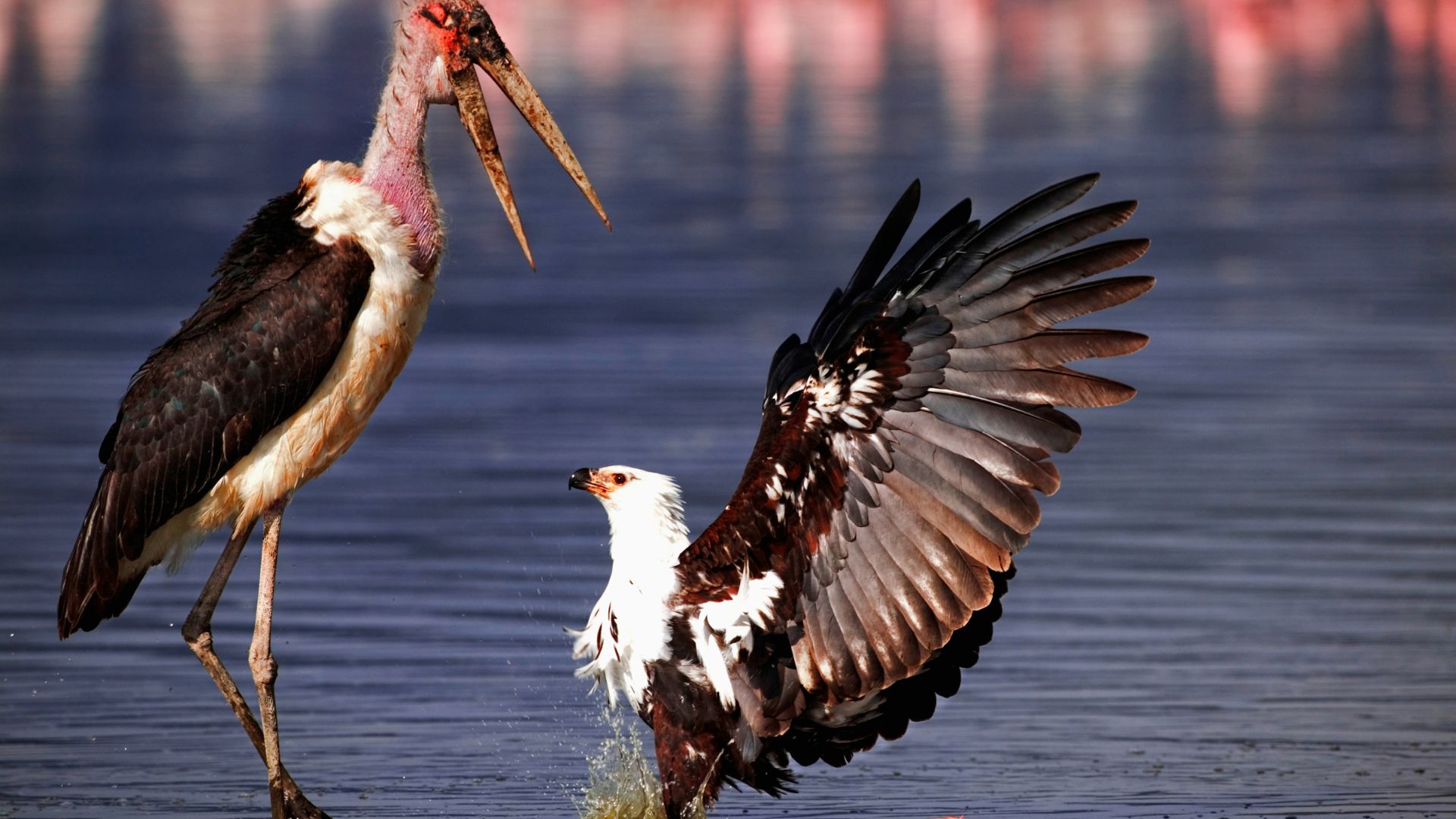
Storks, Eagles, and Rollers: Tanzania’s Best Bird Photography Opportunities
Tanzania as a Bird Photography Destination
Tanzania is home to over 1,100 bird species across its diverse ecosystems—from the open savannah of the Serengeti and Tarangire to the Rift Valley soda lakes at Manyara and Natron, the Afromontane forests of Kilimanjaro and the Usambara Mountains, the Swahili coastal forests, and the Indian Ocean reef environment of Zanzibar and Mafia Island. This extraordinary diversity, combined with the open terrain of the northern safari circuit that allows close vehicle approach to large conspicuous species, makes Tanzania one of the finest bird photography destinations in the world. The same game drive infrastructure that delivers mammal photography also works for birds — open-top safari vehicles at close range, habituated wildlife in clear light, and extended daily observation windows.
This guide targets bird photographers specifically — people bringing cameras to photograph birds rather than simply observing them. It addresses the species and locations that provide the most productive and photogenic opportunities across Tanzania’s main travel zones, covers what species to prioritize, which parks and habitats deliver the highest photography return, what equipment is most useful, and how to maximize your time in the field for bird subjects within a standard safari itinerary that also covers mammals.
Serengeti and Tarangire: Open Country Birds
Raptors, Ground Birds, and the Photogenic Open Plain Species
Raptors: The Serengeti’s Photographic Showpieces
The Serengeti’s raptor diversity and abundance are exceptional. The open terrain provides the low-background, clean-sky sighting angles that bird photographers seek. The bateleur eagle—with its extraordinary short-tailed silhouette, crimson face mask, and bold black-and-white plumage—is one of Africa’s most photogenic raptors. Bateleurs appear with regularity on Serengeti game drives, often perching conspicuously on dead trees or soaring in mid-level thermals. The martial eagle, tawny eagle, long-crested eagle, and African fish eagle are all present in good numbers. The Serengeti’s tree-lined drainage lines provide consistent perch sites so that patient photographers can work from the vehicle without disturbing the birds. Migration adds European raptors—steppe eagle, booted eagle, and European honey buzzard—to the winter mix from November through March.
The lilac-breasted roller is the quintessential African bird for many photographers—vivid blue and lilac plumage, conspicuous perching behavior on telegraph wires and dead trees, and a willingness to remain stationary while the vehicle approaches slowly. Tanzania holds multiple roller species, including the rufous-crowned roller and broad-billed roller, in addition to the lilac-breasted. A well-equipped vehicle with a telephoto lens can achieve portrait-quality images of all species across a single northern circuit itinerary. Photographers most actively work the rollers in Tarangire, where they perch on the park’s ancient baobabs and open thorn bush at heights and angles that allow vehicle approach from multiple directions for different light and background compositions.
Ostriches, Ground Hornbills, and the Large Ground Species
Tanzania’s open savannah hosts some of Africa’s most dramatic large terrestrial bird species—all well-suited to vehicle-based photography. The southern ground hornbill—a turkey-sized black bird with vivid red facial wattles—walks the Serengeti grasslands in family groups, moving slowly enough that game drive vehicles can approach at will for extended shooting sessions. Ground hornbills are bold and unhurried around vehicles and provide one of the most reliable large-bird portrait subjects in Tanzania. Black plumage photographs best in soft morning light when the red wattles saturate richly. The grey-crowned crane, with its golden feather crown and red-and-white facial pattern, is another conspicuous grassland species with outstanding photographic presence. Pairs or family groups appear regularly in wet grassland areas of the Serengeti and Ngorongoro Crater floor.
Ostriches are photographic subjects that bird photographers paradoxically underappreciate because of their familiarity and abundance—they appear everywhere in Tanzania’s open parks. But the male ostrich in breeding plumage, with his black and white body feathers flushed and spread in display, or a female leading a creche of chicks across open grassland against the plain and sky, provides genuinely striking photographic subjects worth investing time in. Male ostriches competing and sparring over a female—behaviors that occur across the Serengeti during breeding season—deliver dramatic action frames that combine movement, color, and the open plain environment in images that are specifically Tanzanian in character.
Lake Manyara and Ngorongoro: Waterbirds and Rift Valley Species
Flamingos, Pelicans, and Soda Lake Photography
Flamingo Photography at Lake Manyara
Lake Manyara hosts seasonal flamingo concentrations that can number in the tens of thousands when conditions are right—a mass of pink against the alkaline white of the lake surface that is visually arresting even from the park road above the lake level. Guides who know the lake access points can position vehicles for dramatically closer flamingo shots than the standard distance view allows. The flamingo photography at Manyara is most productive during the late afternoon when the low sun angle from the west saturates the pink plumage and creates warm reflections in the shallow water. Mass flamingo flight—when a disturbance sends thousands of birds airborne simultaneously in a pink cloud—creates one of Tanzania’s most spectacular photographic moments.
Lake Natron in northern Tanzania—a three-to-four-hour drive north of Arusha—is Tanzania’s most important flamingo breeding site and holds the world’s largest lesser flamingo population during breeding season. The photography at Natron is more challenging than at Manyara—the lake is vast, access is limited, and the breeding colonies sit properly distant from visitor areas to protect nesting birds. But the scale of the flamingo presence and the dramatic landscape of the Rift Valley volcanic environment create photography of a scope impossible at smaller lake locations. Visit Natron as a dedicated birding and flamingo photography excursion rather than an incidental addition to a standard safari game drive circuit.
Tarangire and the Swamp Birding
Kingfishers, Herons, and the Tarangire River Corridor
Tarangire’s river corridor and seasonal swamp areas provide outstanding opportunities for close-range waterbird photography unavailable in the more open Serengeti landscape. The malachite kingfisher—a jewel of metallic blue and orange found along any fish-bearing water—perches on low vegetation overhanging the Tarangire River. Vehicles can approach at distances that allow frame-filling portraits with a 400mm lens. Giant kingfishers, half-collared kingfishers, and grey-headed kingfishers all use the river corridor. A slow drive along the river road during the morning golden hour produces multiple kingfisher photography opportunities across species that collectively represent some of Tanzania’s finest small bird photography subjects.
The Silale Swamp in southern Tarangire during the dry season hosts extraordinary waterbird concentrations—open-billed storks, yellow-billed storks, African spoonbills, and a variety of heron species all feeding in diminishing water. The combination of birds, water, and the dramatic baobab backdrop creates compositions available nowhere else in the northern Tanzania circuit. Stork photography at Silale with birds in active feeding behavior—the beak-tip sensitivity fishing technique of yellow-billed storks and the mechanical opening-bill motion of open-billed storks working freshwater mussels—delivers detailed behavioral documentation alongside straightforward portrait opportunities that satisfy both general wildlife photographers and dedicated birding specialists equally.
Zanzibar and the Coast: Forest and Marine Birds
Coastal Specials and the Indian Ocean Species
Zanzibar Endemic and Near-Endemic Birds
Zanzibar and the East African coast hold several bird species endemic or near-endemic to the coastal forest that specialist birding photographers rank among Tanzania’s most sought-after subjects. The Fischer’s turaco—a vivid green forest bird with crimson wing patches and a striking headcrest—lives in Zanzibar’s Jozani Forest and represents the most photogenic of the island’s forest species. Jozani is the only true forest on Zanzibar and also holds the endemic Kirk’s red colobus monkey, making it a productive half-day destination for both mammals and birds. The lighting conditions in forest photography are challenging—fast lenses, high ISO capability, and patience are all required to capture birds in the dappled shade-and-sun environment. But the color saturation of these forest species when you catch them in a light gap rewards the technical challenge.
The coastal forests of the Swahili mainland coast—accessible at sites including the Arabuko-Sokoke Forest and the Amani Nature Reserve in Tanzania’s Usambara Mountains—hold additional coastal forest specials that complement a Zanzibar birding extension with mainland diversity. Sunbirds, particularly the gorgeous scarlet-chested sunbird and the variable sunbird, provide outstanding small bird photography at flowering trees throughout coastal Tanzania and Zanzibar. Their metallic iridescence photographs particularly well in the soft morning light of the coast’s sheltered forest understory.
Equipment and Practical Field Advice
What Works for Tanzania Bird Photography
Telephoto Choice and Autofocus Requirements
Tanzanian bird photography works most effectively with a telephoto lens of 500 mm or more on a full-frame body or an equivalent reach on a cropped-sensor camera. Many bird photographers choose a 100 to 400mm zoom for its versatility and lighter weight across a long safari itinerary, accepting slightly lower reach in exchange for faster subject acquisition and lighter carrying weight. For dedicated bird photography with perched subjects—raptors on exposed trees, kingfishers on waterside perches, rollers on thornbushes—a 600mm prime lens with an excellent autofocus system delivers noticeably sharper results and better background separation than shorter options. The decision depends on whether birds are your primary or secondary photographic subject within the Tanzania itinerary.
Modern mirrorless camera autofocus systems with bird-detection tracking have transformed flight photography. Tracking a flying bateleur eagle across the sky frame while the photographer concentrates on framing rather than focus management is now achievable in ways that were not possible even five years ago. If bird flight photography is a specific priority, investing in a camera body with dedicated bird-tracking autofocus delivers more usable frames per flight sequence than any lens upgrade. Sony, Canon, and Nikon all offer current mirrorless systems with competitive bird-tracking autofocus that perform well in Tanzania’s fast-moving flight photography scenarios.
Plan Your Safari
Tanzania bird photography itineraries benefit from extended stays at productive locations. A single morning at Tarangire’s river corridor is not the same as three mornings when you know which perch sites are productive and can time your approach for the best light angles. Discussing bird photography priorities with your guide before each drive ensures the game drive schedule incorporates the specific habitat areas and timing that bird subjects require rather than following a mammal-focused route exclusively.
African Wild Trekkers designs Tanzania itineraries for bird photographers and birding enthusiasts, with guide selection prioritizing ornithological knowledge and game drive routing adjusted for bird habitat access alongside mammal viewing. We can incorporate dedicated birding excursions to Tarangire swamps, Natron flamingos, and Zanzibar forest into standard safari itineraries on request.
Contact African Wild Trekkers at africanwildtrekkers.com/contact with your Tanzania travel dates and bird photography priorities. We will design your birding safari itinerary and confirm availability within 24 hours.