Climate Change & African Wildlife: How a Warming Planet Is Changing Safaris
A Continent in Transformation
Climate change and African wildlife interactions are already measurable, documented, and in some cases irreversible. Africa is warming at approximately 1.5 times the global average rate, according to the Intergovernmental Panel on Climate Change’s Sixth Assessment Report. The most severe warming is concentrated in semi-arid regions of the Sahel, the Horn of Africa, and southern Africa’s Karoo and Kalahari ecosystems.
This accelerated warming does not unfold uniformly across a continent as ecologically diverse as Africa. The effects on wildlife in the equatorial rainforests of the Congo Basin differ fundamentally from the effects on savanna mammals in the Serengeti or marine ecosystems along the Atlantic coast. But the common thread is disruption of the seasonal patterns and ecological relationships that African wildlife evolved around over millions of years.
For safari travelers, the practical implications are substantial and increasingly difficult to navigate with advice based on historical patterns. The “best times” to visit specific parks and see specific wildlife events that have been reliable for decades are shifting. In some cases the shift is subtle; in others it is dramatic.
The wildebeest migration’s timing is becoming less predictable as Serengeti rainfall patterns shift. The dry season water concentrations that made East African game viewing predictably excellent during June to October are changing. Aquifer recharge rates are altering, and some perennial rivers run dry earlier in the year. Understanding how climate change is already affecting African wildlife is increasingly essential context for anyone planning a meaningful safari in 2026 and beyond.
Species-Level Impacts Across the Continent
Mammals and Migration
The Wildebeest Migration Under Climate Pressure
The wildebeest migration moves approximately 1.5 million blue wildebeest and 400,000 zebra. And 200,000 Thomson’s gazelle across the Serengeti-Mara ecosystem in an annual cycle. This cycle is driven by rainfall and grass growth. Researchers from the Frankfurt Zoological Society and Serengeti Ecosystem Research Project have tracked the migration since the 1990s. They have documented timing disruptions that are becoming more pronounced.
The migration is not a rigid calendar event. Wildebeest move in response to actual rainfall and the green grass it triggers rather than following a fixed schedule. But the historical patterns of when herds moved northward from the southern Serengeti calving grounds to the Masai Mara were reliable enough to anchor the entire safari industry’s seasonal calendar.
Increasingly variable rainfall in both Tanzania and Kenya is creating years when migration timing deviates by four to eight weeks from historical averages in either direction. Travelers who booked months in advance around the famous Mara River crossings can arrive to find the herds far from their expected location.
More concerning than the timing variability is research evidence suggesting that extreme drought years are becoming more frequent in the Serengeti ecosystem. These droughts cause significant wildebeest mortality that temporarily reduces the size of the migrating population. A severe drought in 2009 killed an estimated 40,000 wildebeest in the southern Serengeti. Dry season conditions had extended unusually far into the expected wet season.
Hydrological modeling by researchers at Yale University projects that extreme drought frequency in the Serengeti will increase by 30 to 50 percent by 2060 under moderate climate change scenarios. The long-term question for the migration.
Whether the Serengeti-Mara ecosystem’s water budget can continue supporting 1.5 million large herbivores as average temperatures rise. Is one that no conservation program can answer with certainty. The ecological processes involved operate at scales that exceed any single organization’s capacity to manage.
Elephant Range Shifts and Water Stress
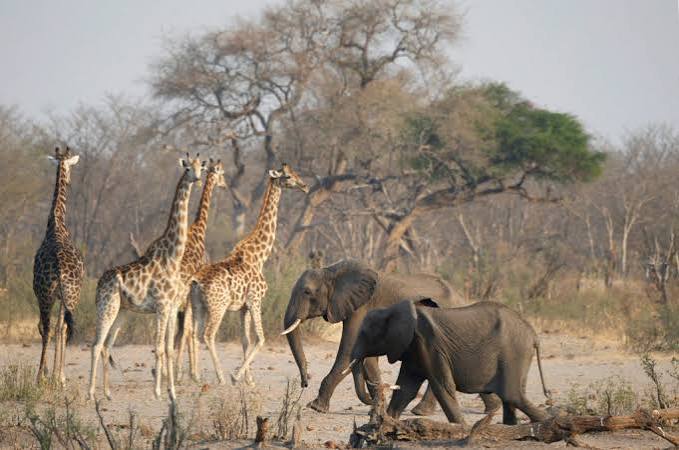
African elephants have some capacity to adapt to changing water availability through learned behavior. Matriarchs with long memories of previous drought conditions can guide herds to distant water sources that younger elephants have never visited. But this adaptive capacity has limits when water sources dry up entirely rather than merely shifting in timing or location.
Research from the Amboseli Elephant Research Project in Kenya has tracked individual elephants continuously since 1972. It has documented measurable changes in elephant ranging behavior during the past two decades. Herds spend more time in areas previously used only in extreme drought years, as severe dry periods become more frequent.
The long-term viability of Amboseli’s elephants depends partly on their ability to access swamp water in the park core during increasingly frequent dry periods. It also depends on their freedom to move into the Kilimanjaro ecosystem’s forests when savanna water runs short. Movement that requires continued tolerance from the Maasai communities whose land forms the corridor between Tanzania and Kenya.
In West Africa, savanna elephant populations in the Sahel region face the most direct climate threat of any elephant population on the continent. The semi-arid habitats they occupy are warming and drying faster than anywhere else in Africa. Mali’s desert elephants have adapted over centuries to survive in some of the driest conditions of any elephant population anywhere.
They travel over 700 kilometers in an annual circuit between dry-season water sources. Increasingly, they are finding that their traditional water sources have failed completely during severe drought years. The Wildlife Conservation Society, which monitors Mali’s desert elephants, has documented increasing conflict with Tuareg pastoralists competing for the same diminishing water resources. Human-elephant conflict incidents are rising as both species are compressed into ever-smaller areas of viable habitat by encroaching desert conditions.
Ecosystems and Habitat Changes
Savanna Bush Encroachment and Vegetation Shifts
One of the most significant but least publicized climate impacts on African safari ecosystems is the accelerating encroachment of woody shrubs into open grassland savannas. These open grasslands previously supported the spectacular concentrations of grazing animals that safari photography has made iconic.
Bush encroachment results from a combination of elevated atmospheric CO₂.. Which directly stimulates woody plant growth. Elevated temperatures that favor some shrub species over grass species and altered fire regimes. And changes in rainfall seasonality that shift competitive dynamics between grasses and shrubs.
In Kruger National Park, researchers have documented a significant increase in woody cover over the past 30 years in areas that were previously open grassland. Some monitoring plots show shrub cover increases of over 60 percent. This bush thickening reduces the visibility of wildlife during game drives. It decreases the carrying capacity for grazers like wildebeest, zebra, and buffalo that depend on open grassland. And it fundamentally changes the aesthetic character of safari landscapes.
Paradoxically, climate change is also causing savanna die-off in some regions through the opposite mechanism. Extreme heat events and multi-year droughts kill mature trees and prevent regeneration.
The baobab die-off documented by researchers Adrian Patrut and colleagues in southern Africa from 2005 to 2017 was the most dramatic single indicator of climate stress on savanna tree populations. Eight of the 13 oldest and largest African baobabs died during that period.
Baobabs can live for over 2,000 years and have survived countless climate fluctuations. Their die-off is therefore a significant marker of conditions outside the range of historical variability. For safari travelers, baobab trees are one of the most visually distinctive features of African savanna landscapes in Tanzania, Zambia, Zimbabwe, and South Africa. Their loss would fundamentally alter the visual character of ecosystems that millions of travelers visit specifically for their iconic appearance.
Marine and Freshwater Ecosystem Changes
Coastal and freshwater ecosystems supporting Africa’s marine wildlife are experiencing climate impacts that operate through different mechanisms than savanna changes. But the implications for the species they support are equally significant. Coral bleaching events driven by elevated ocean temperatures have devastated reef ecosystems along the East African coast, particularly around Mozambique and Tanzania’s offshore islands.
The 1998 El Niño bleaching event destroyed 80 to 90 percent of coral cover at some sites in the Western Indian Ocean. While some reef systems have shown partial recovery, the frequency of bleaching events has increased. This gives less time between episodes for coral colonies to re-establish. Reef ecologists warn this pattern will eventually push bleaching from periodic catastrophe to permanent ecological condition in some areas. The cascading effects on fish populations, sea turtles, and marine mammals that depend on reef ecosystems would be severe.
Freshwater lakes and rivers supporting hippos, crocodiles, African fish eagles, and flamingos. And thousands of endemic fish species are experiencing warming water temperatures and altered seasonal flow patterns. And in some cases dramatically declining water levels. Lake Chad, which once covered 26,000 square kilometers, has shrunk by over 90 percent since the 1960s. It once supported millions of people and extensive wildlife populations across four countries.
A combination of agricultural water extraction and reduced rainfall drove this decline—a process that climate change is accelerating. Lake Naivasha in Kenya supports one of East Africa’s most important hippo populations and extensive bird life. It fluctuates significantly with rainfall cycles in a pattern that has always been natural but is becoming more extreme as rainfall variability in the Rift Valley region increases.
What This Means for Safari Planning
Adapting Your Safari Strategy
Flexibility and Local Intelligence
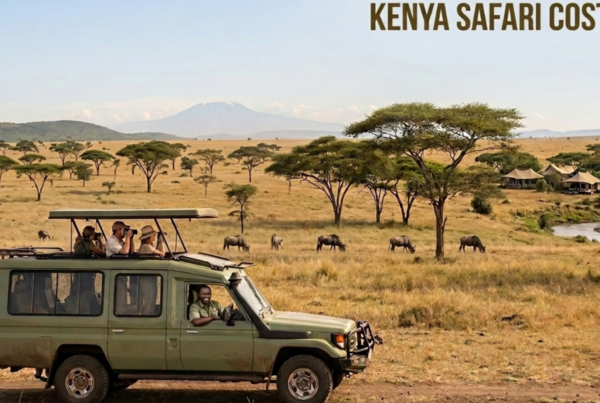
The most important practical advice for safari travelers in a climate-changed landscape is to build flexibility into your itinerary. Rely on local intelligence rather than fixed historical patterns. Book with operators who have real-time field communication networks capable of tracking wildlife movements daily. They must be able to adjust game drive timing and routes in response to current animal locations rather than expected historical ones.
Choose accommodation options in multiple ecosystem types. Forest, wetland, and open savanna. So that if one environment experiences poor wildlife concentration due to unusual rainfall patterns, alternative experiences remain available. And stay genuinely open to the possibility that the wildlife event you specifically came to see may not manifest in the expected way during your particular visit. The unexpected ecological conditions you encounter instead may prove equally or more remarkable than the anticipated spectacle.
Conservation organizations working in African ecosystems are themselves adapting their management practices in response to climate change. Understanding these adaptations enriches the safari experience significantly. African Parks, which manages 22 protected areas across the continent, is implementing water management infrastructure. Artificial water points, pan maintenance, borehole drilling. To buffer wildlife populations against the most severe effects of rainfall variability.
They are simultaneously conducting research on which species have the behavioral flexibility to adapt naturally versus which will require active management intervention. Staying in parks that organizations manage with sophisticated climate adaptation programs. Including Malawi’s Liwonde and Zambia’s Liuwa Plain. And Rwanda’s Akagera. Provides a safari experience embedded in active conservation science rather than simply wildlife observation.
Carbon Responsibility in Safari Travel
The carbon footprint of long-haul air travel to African safari destinations creates an uncomfortable ethical dimension for conservation-minded travelers. They recognize that their journey contributes to the very climate change threatening the wildlife they have come to see. A return long-haul flight from Europe to East Africa generates approximately 2 to 3 tonnes of CO2 equivalent per passenger.
This represents several months of average European household emissions from all other sources combined. Carbon offset programs, while imperfect as a mechanism for resolving this contradiction, provide a meaningful way to direct financial resources toward African conservation and reforestation projects. These projects generate measurable climate benefits while supporting local communities.
The Wildlife Conservation Society, African Wildlife Foundation, and Cool Earth all operate verified offset programs with projects in African forest and savanna ecosystems. They provide options for travelers who want to offset their flight emissions through programs with direct connections to African conservation rather than generic international offset markets.
Spending more time in Africa per trip. Staying three weeks rather than ten days, visiting more destinations overland rather than flying between every park. Reduces the per-day carbon cost of your visit. It simultaneously increases the depth of experience and the total tourism revenue that flows to local economies and conservation programs. This logic argues for the extended, overland, slower-paced safari style that was the norm before budget airlines and short-haul safari packages compressed Africa visits into week-long itineraries.
The traveler who spends three weeks traveling overland from Nairobi through Tanzania and Rwanda. And Uganda by road and boat contributes far more to the conservation economies of multiple countries than the traveler who flies into Nairobi, takes a domestic flight to the Mara, and flies home after five days. The overland traveler also generates a smaller climate impact per conservation dollar generated.
Plan Your Safari
Planning a safari that accounts for climate variability in 2026 requires working with operators who have current field knowledge, flexible itinerary structures, and booking conditions that accommodate timing adjustments. Fixed departure group tours built around historical seasonal calendars carry increasing risk as climate variability makes those calendars less reliable. Private itineraries with flexible routing and real-time local guidance become more valuable.
African Wild Trekkers designs private itineraries with built-in flexibility and real-time field intelligence from our guide networks. This means we can respond to current wildlife distribution patterns rather than historical expectations. We also advise on carbon offset options with direct African conservation links.
We can incorporate climate-resilient destination choices that combine multiple ecosystem types to provide a robust wildlife experience regardless of local conditions.
Contact African Wild Trekkers at africanwildtrekkers.com/contact with your travel dates and wildlife priorities. We will build you a climate-aware safari itinerary designed to deliver exceptional wildlife encounters even in the increasingly variable conditions that define Africa’s evolving natural calendar.