Africa’s Night Sky: A Wilderness Experience Above the Horizon
Dark sky stargazing on an African safari occupies a different category of experience from the wildlife encounters that most visitors primarily come to see. When the generator shuts down at a remote Ugandan wilderness camp after dinner and the staff douse the lanterns, the sky above reveals itself as something that residents of any city or suburb have genuinely never seen — not as an improved version of the night sky they know, but as a fundamentally different phenomenon that makes it immediately comprehensible why ancient civilisations across Africa built entire cosmologies around stellar observation. The Milky Way does not appear as a faint smear at the edge of peripheral vision; it appears as a luminous band of such complexity and depth that experienced safari guides describe first-time guests falling silent for extended periods when they step outside to look up, regardless of whether wildlife viewing during the day had been exceptional or disappointing. Africa’s dark sky stargazing potential is inseparable from the continent’s broader wilderness character — the same remoteness, the same absence of industrial development, the same vast uninhabited landscapes that protect wildlife also protect darkness.
The equatorial and southern African night sky offers celestial features that are invisible from most of Europe and North America — the Large and Small Magellanic Clouds, which are dwarf galaxies orbiting the Milky Way and visible to the naked eye as bright cloud-like patches in the southern sky; the Southern Cross constellation that orients navigation across the southern hemisphere and appears on five national flags; and the centre of the Milky Way galaxy, which passes almost directly overhead from equatorial East African latitudes and appears with a density of stars and nebulae that makes the familiar Milky Way visible from mid-northern latitudes look sparse by comparison. Understanding what you are looking at requires either prior knowledge or the services of a knowledgeable guide — and across East Africa’s most remote camps, a growing number of lodges now offer structured night sky sessions led by guides who have received astronomy training and who can connect the visible stars to both scientific context and the indigenous star knowledge of the Maasai, Karamojong, and other pastoral communities for whom stellar navigation and seasonal calendars have been functional tools for centuries.
Best Stargazing Locations in East Africa
Uganda’s Remote Parks Under Pristine Skies
Kidepo Valley: Uganda’s Darkest Wilderness
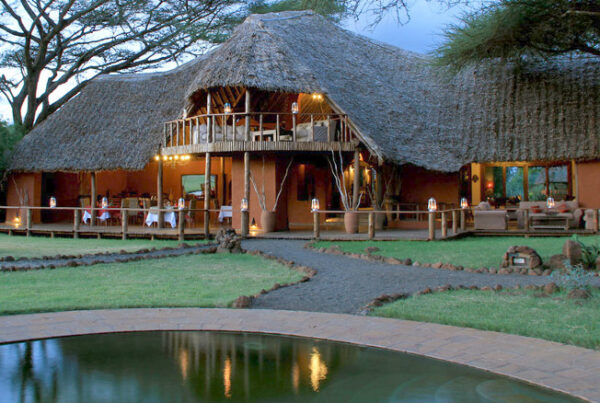
Kidepo Valley National Park in Uganda’s Karamoja region in the far northeast corner of the country offers some of the darkest skies accessible to safari travellers anywhere in East Africa, primarily because the park is surrounded by one of the least densely populated and least electrified regions of the continent. The Karamoja region’s pastoral Karamojong communities live across a landscape with minimal grid electricity infrastructure, meaning that the light pollution that even small market towns create in more densely settled parts of Uganda is essentially absent across hundreds of kilometres surrounding Kidepo. Apoka Safari Lodge, the most established accommodation within the park, sits on a hill overlooking the Narus Valley with 360-degree horizons that allow unobstructed views of the sky from true astronomical darkness at altitudes around 1,000 metres where atmospheric clarity is excellent. On clear nights between June and September — Kidepo’s dry season, when cloud cover is minimal — guests report sky conditions matching those described in remote desert observatory sites, with limiting visual magnitudes that allow the unaided eye to detect stars that require binoculars from suburban locations.
The Karamojong people’s traditional relationship with the night sky provides a cultural dimension to Kidepo stargazing that distinguishes it from purely astronomical observation. Karamojong elders historically used stellar positions for calendrical navigation — timing cattle migrations, agricultural plantings, and ceremonial gatherings based on the positions of specific stars and the visibility of the Pleiades cluster, which marks important seasonal transitions in the Karamojong agricultural calendar. Lodge guides at Apoka who have been raised in or near Karamoja communities can share this indigenous astronomical knowledge alongside scientific information about the same stars, creating a night sky experience that simultaneously engages the scientific curiosity of astrophysically literate travellers and the anthropological interest of travellers drawn to the deep integration of natural knowledge in pastoral African cultures. Combining a Kidepo Valley safari with intentional evening stargazing sessions on multiple nights — rather than a single perfunctory look before bed — allows the sky to unfold progressively as your eyes adapt more fully to darkness and you learn to identify and find the features your guide points out.
Murchison Falls and the Albertine Rift Night Sky
Murchison Falls National Park’s remote northern and western zones, accessible only by boat from the Paraa lodge area or by four-wheel drive on the north bank of the Nile, offer excellent dark sky conditions despite the park’s relatively accessible location compared to Kidepo. The north bank of the Nile within Murchison is particularly dark because it lies between the park’s extremely sparse internal tourism infrastructure and the Uganda-South Sudan border, with minimal settlement in either direction. Chobe Safari Lodge and the Red Chilli Rest Camp, both located within or immediately adjacent to the park, are far enough from Masindi — the nearest town with significant artificial lighting — that the night sky above them is dramatically darker than what travellers experience in most other Uganda accommodation. During the dry seasons of December to February and June to August, Murchison’s nights are typically clear and warm, with temperatures comfortable enough for extended outdoor stargazing without the cold that makes high-altitude East African stargazing physically demanding.
The Albertine Rift escarpment that forms the western boundary of the Murchison Falls ecosystem creates a dramatic skyline of highland silhouettes against the night sky that enhances the visual experience beyond purely astronomical factors. The rift wall, visible from the park’s western zones as a dark mass rising several hundred metres above the valley floor, frames the night sky in a way that emphasises the continental scale of the African landscape even in darkness. Star trails photographed from Murchison’s western zones with the Albertine escarpment as a foreground have become among the most widely shared wildlife photography images from Uganda, demonstrating that the park’s night sky potential is beginning to receive the recognition that its exceptional daytime wildlife has long commanded.
Kenya and Tanzania’s Stargazing Destinations
The Serengeti Under the Stars
Tanzania’s Serengeti National Park, which covers over 14,750 square kilometres with minimal internal artificial lighting beyond a small number of camps and lodges, provides some of the most accessible excellent stargazing in East Africa precisely because the park’s fame and infrastructure make it relatively straightforward to visit while still offering genuine astronomical darkness. Mobile camps in the Serengeti’s southern and western zones — which move seasonally to follow the wildebeest migration — are positioned in areas so remote that even the faint glow of Arusha, the nearest city of any size, is invisible on the horizon. Operators including Asilia Africa, &Beyond, and Alex Walker’s Serian operate mobile camps that provide guided night sky sessions as a standard part of the safari programme during migration season, with stargazing becoming a natural extension of the nocturnal awareness that the bush environment cultivates during daytime game drives.
The Ngorongoro Conservation Area, despite its higher population density and greater vehicle traffic than the Serengeti, offers exceptional stargazing from the crater rim itself, where lodges like Ngorongoro Crater Lodge and The Manor at Ngorongoro sit at altitudes of over 2,200 metres in air that is noticeably cleaner and clearer than the savanna below. At these altitudes, atmospheric turbulence that degrades astronomical seeing — the technical term for sky image stability — is reduced, making Ngorongoro rim stargazing particularly effective for observing the fine structure of stellar objects through binoculars or small telescopes. The Milky Way visible from the crater rim on moonless nights in the dry season combines with the unique topographic experience of looking down into Africa’s most famous wildlife caldera to create a nighttime experience that Safari veterans who have made multiple Africa trips describe as among the most memorable single moments of their combined travels.
Kenya’s Laikipia and Northern Frontier Darkness
Kenya’s Laikipia Plateau conservancy network, which extends across approximately one million acres of highland savanna north of the central Rift Valley, offers both exceptional wildlife and exceptional stargazing conditions from several lodges that have specifically invested in dark sky infrastructure and astronomy programming. Ol Malo Lodge in the north Laikipia, situated on a escarpment overlooking the Ewaso N’yiro River, has worked with professional astronomers to provide structured stargazing programmes using quality telescopes, sky charts calibrated for the specific location’s latitude, and guide training that enables meaningful interpretation of what guests observe rather than simply pointing at bright stars and naming them. The northern Laikipia landscape has almost no urban light pollution in any direction because Nanyuki, the nearest town of any size, sits far enough south that its glow barely registers on the horizon from Ol Malo’s elevated position.
Kenya’s northern frontier — the arid landscapes of Samburu, Marsabit, and the Chalbi Desert north of Lake Turkana — represents some of the darkest terrain anywhere in East Africa because this region’s combination of low population density, minimal electrification, and extremely arid clear-sky conditions produces the kind of astronomical darkness typically associated with the world’s premier observatory sites. The Chalbi Desert specifically offers horizontal visibility in all directions from its flat salt surface, creating a 360-degree dark sky dome that photographers and amateur astronomers who have visited rate among the top five dark sky locations in Africa. Accessing this darkness requires expedition-style travel to genuinely remote areas, but the Shaba National Reserve and Samburu National Reserve — more accessible dark sky destinations in the northern frontier zone — provide exceptional stargazing combined with distinctive dry-country wildlife that complements the Serengeti and Mara ecosystems’ mammal concentrations with species including the reticulated giraffe, Grevy’s zebra, and Beisa oryx that are found only in northern Kenya’s arid habitats.
Making the Most of Safari Stargazing
Practical Preparation for Night Sky Safari
Equipment and Dark Adaptation
Maximising the stargazing experience on an African safari requires less equipment than most travellers assume and more patience than most are initially prepared for. The human eye requires approximately 20 to 30 minutes of complete darkness to reach full dark adaptation — the physiological process through which the rod cells in the retina shift from photopic (bright light) to scotopic (low light) sensitivity and become capable of detecting faint objects invisible under normal lighting conditions. This adaptation is immediately and completely destroyed by brief exposure to white light, including smartphone screens, tent lanterns, or vehicle headlights, which is why serious stargazers carry red-light torches whose long-wavelength red light does not trigger the photoreceptor bleaching that destroys dark adaptation. Instructing your lodge or camp before arrival that you intend to stargaze and asking them to keep exterior lighting minimal or to use red-filtered lights during your visit significantly improves the sky quality available to you without requiring any personal equipment beyond patience and the willingness to spend time outside in the dark.
Binoculars that you bring for daytime wildlife watching double as excellent stargazing instruments that reveal detail invisible to the unaided eye — the individual stars of the Pleiades cluster, the Galilean moons of Jupiter as small dots flanking the planet’s bright disc, the dark dust lanes of the Milky Way’s core region, and the nebulosity of large star-forming regions like the Orion Nebula visible to southern hemisphere observers above the horizon from equatorial Africa. The same 8×42 or 10×42 binoculars optimal for daytime game drives work perfectly for these astronomical observations without additional weight or expense in your luggage. A star atlas or smartphone app — Sky Map, SkySafari, or Stellarium — loaded with your destination’s coordinates and the dates of your visit provides a planisphere of what will be visible and when, allowing you to prioritise which features to look for on each night rather than scanning the sky randomly and missing the most interesting objects because you did not know where to look.
Moon Phases and Optimal Stargazing Windows
The single most important astronomical variable affecting stargazing quality on any given night is not cloud cover, atmospheric clarity, or altitude — it is moon phase. A full moon in a dark-sky location brightens the sky sufficiently to eliminate all but the brightest stars from naked-eye visibility, while a new moon night in the same location reveals the full depth of the Milky Way and reduces the limiting magnitude by four to five stellar magnitudes, making visible objects over 100 times fainter than those detectable under a full moon. Planning your stargazing safari around new moon periods in your destination’s dry season — when both cloud cover and moon interference are minimised simultaneously — dramatically improves the night sky experience compared to arriving during full moon regardless of how dark the location is. New moon dates for 2026 can be found in any astronomical almanac and should be considered alongside wildlife seasonal calendars when planning an itinerary specifically designed to include exceptional stargazing as a primary objective.
The combination of new moon nights with clear dry season skies creates a relatively small number of optimal stargazing windows per year at any specific African location, typically spanning three to five consecutive nights around each new moon during the dry months. Travellers who specifically plan their Africa visits around these windows — rather than treating stargazing as an incidental benefit of any Africa trip — invest a modest amount of astronomical planning for a return of sky quality that experienced amateur astronomers describe as transformative. The Southern Hemisphere’s night sky visible from East Africa includes celestial objects — the Eta Carinae Nebula, the Omega Centauri globular cluster, the Centaurus A galaxy — that northern hemisphere observers can never see from their home latitudes and that represent genuine bucket-list astronomical targets for travellers who combine wildlife passion with any interest in the universe beyond the horizon.
Plan Your Safari
Combining exceptional wildlife game drives with deliberately planned dark sky stargazing sessions adds a dimension to East African safari travel that most itineraries currently underuse. The same remote wilderness camps that position you optimally for dawn game drives offer extraordinary skies on the same evenings — the two experiences complement each other naturally because the absence of artificial light that protects the sky is the same quality that makes the surrounding landscape feel genuinely wild after dark.
African Wild Trekkers can identify camps in Uganda, Kenya, and Tanzania that combine excellent wildlife with genuine dark sky quality and astronomy programming, and can time your visit to coincide with new moon periods in the dry season for the best possible combination of clear skies and absence of lunar light pollution. This is the kind of detail that makes the difference between a good safari and a remarkable one.
Contact African Wild Trekkers at africanwildtrekkers.com/contact with your travel dates and we will match you with camps that offer both the wildlife encounters you came for and the night sky experiences that will stay with you just as long after you return home.