Chimpanzee Tracking in Nyungwe Forest Rwanda: The Complete Guide
Chimpanzee tracking Nyungwe Forest Rwanda offers a primate encounter in one of Africa’s oldest and most biodiverse montane rainforests, where a habituated chimpanzee community lives at the heart of a 1,019-square-kilometer ecosystem supporting 13 primate species. The Nyungwe chimpanzee experience differs from Uganda’s more famous Kibale Forest program in atmosphere, forest type, and group dynamics — the ancient Nyungwe canopy is denser, the terrain steeper, and the overall encounter feels more genuinely wild than the heavily visited Kibale equivalent. Travelers who have already completed a gorilla trek in Rwanda consistently describe chimpanzee tracking in Nyungwe as the experience that surprised them most, because the intelligence, vocalization, and social complexity of the chimps creates an emotional impact that rivals the gorilla encounter in a completely different way. African Wild Trekkers includes Nyungwe chimpanzee tracking in western Rwanda itineraries and pairs it with the canopy walk and colobus monkey trekking to create a full forest day that delivers exceptional value for a single permit cost.
The Habituated Chimpanzee Community
About the Cyamudongo Group
The Cyamudongo section of Nyungwe Forest hosts the primary habituated chimpanzee community used for tourist tracking, a group of approximately 40 individuals occupying a separated forest patch within the main Nyungwe block. Reaching Cyamudongo requires a short vehicle transfer from the main Uwinka visitor centre, and this brief drive through the highland landscape that borders the forest provides an orientation to the scale and geography of Nyungwe before you enter on foot. The smaller group size at Cyamudongo compared to the larger communities at Uganda’s Kibale Forest works in the tracker’s favor because fewer animals means less dispersal across the forest, and encounters feel more focused and intimate than those in communities of 100 or more individuals. Rangers who work with this community daily know individual chimps by face, behavior, and family relationship, and your guide’s ability to identify the alpha male, describe his rank history, and point out his current females and offspring transforms the encounter from anonymous wildlife watching into a genuine introduction to specific known individuals.
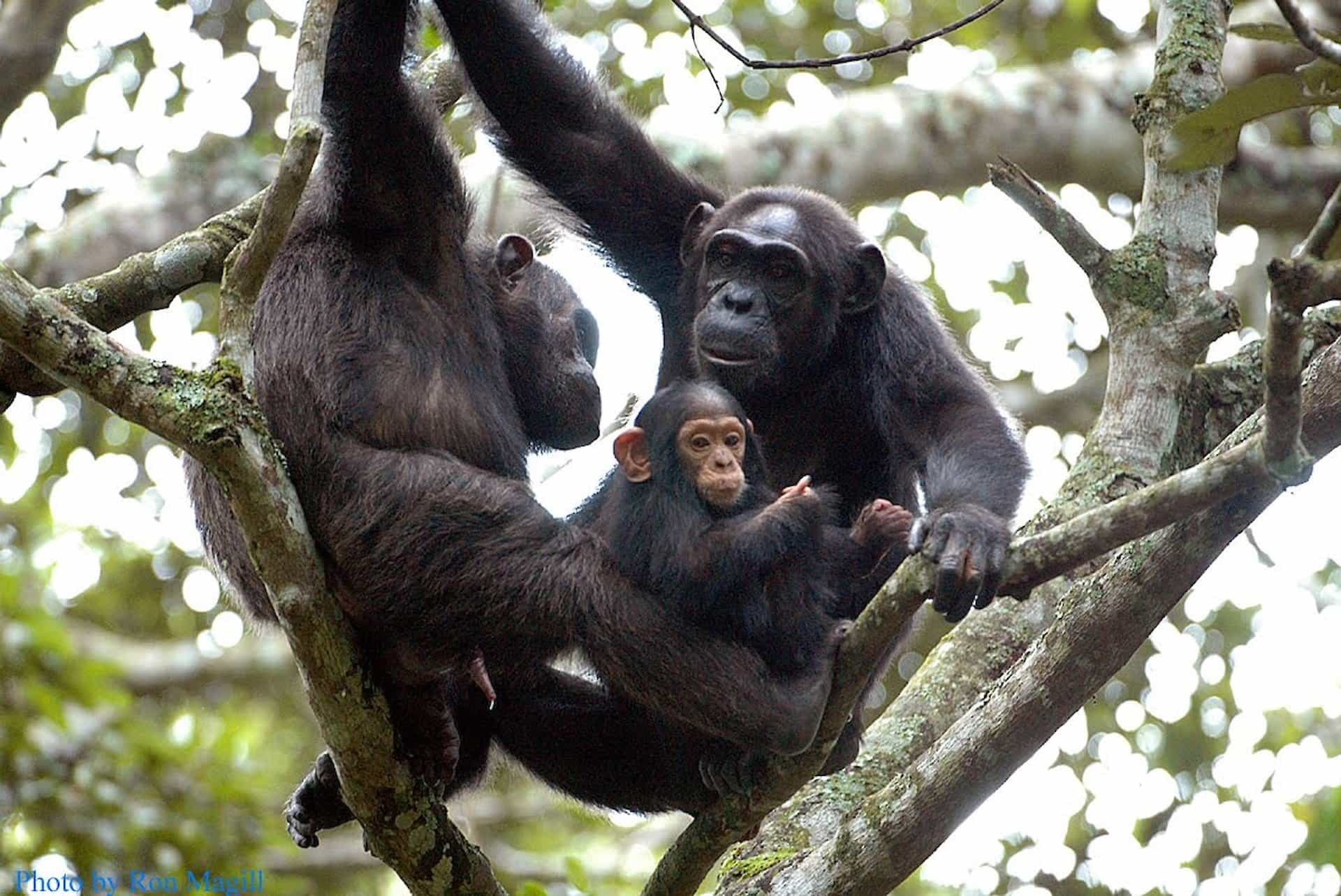
The Cyamudongo community’s habituation level is well-established, meaning the chimps tolerate human presence within a few meters without stress behaviors like fleeing, alarm calling, or canopy-level retreating that less habituated groups display. This tolerance comes from years of patient ranger contact — daily approaches that gradually reduced the chimps’ threat response to human presence until the group treats observers as a neutral feature of their environment rather than a potential predator. The behavioral richness you observe as a result of this high habituation level is remarkable — fruit feeding in the upper canopy, social grooming sessions at the forest floor, loud vocalization displays between rival males, and mother-infant interactions where newborns cling to their mothers’ chests during the group’s movement through the forest. Encounters in the denser Nyungwe forest frequently bring the chimps down to ground level in a way that Kibale’s more open forest structure does not consistently deliver, and the closeness of a chimpanzee making eye contact with you at ground level in a forest this ancient and dense is an experience that stays with travelers long after the formal 60-minute observation window closes.
Chimpanzee Behavior to Watch For
Chimpanzees in Nyungwe display their most varied behavioral repertoire during the feeding hours of early morning and late afternoon, and the 6 AM departure time for the trek positions your 60-minute encounter window precisely at the period when the group is most active. You may watch the alpha male perform dominance displays — charging through undergrowth with exaggerated movements, stamping, dragging branches, and vocalizing — that communicate his rank to every community member and remind subordinate males of the consequences of challenge. Female chimps in the group nurse infants, groom each other in bonding sessions that reinforce long-term social alliances, and occasionally vocalize in response to the male display with calls that serve as social commentary on the group’s internal dynamics. Juveniles represent some of the most engaging subjects during a chimpanzee encounter because their play behavior — wrestling, chasing, and swinging from the same branches repeatedly with obvious enjoyment — mirrors human children in ways that feel simultaneously familiar and genuinely wild.
The Nyungwe forest environment shapes chimpanzee behavior in specific ways that distinguish this encounter from chimpanzee tracking in more open Ugandan forests. Nyungwe’s closed canopy creates a cathedral-like dimness at forest floor level even on clear mornings, and chimps here use both the canopy and the ground fluidly in a way that forces trackers to scan multiple vertical levels simultaneously rather than fixing attention on a single layer. When the group moves between feeding trees, the entire community relocates with a coordinated urgency that generates noise, movement, and excitement throughout the forest — crashing branches, loud pant-hoots echoing between trees, and the rapid descent and ascent of multiple individuals creates a wildlife spectacle of extraordinary sensory intensity. Your ranger guides read these movement signals during the encounter and reposition the visitor group to maintain safe viewing distance while staying close enough for photography, and the active navigation this requires creates a dynamic participatory quality absent from more static wildlife viewing experiences.
The Trekking Experience
Trek Day Schedule and Logistics
Chimpanzee tracking in Nyungwe begins with a 5:30 AM briefing at Uwinka visitor centre, where rangers assign groups to habituated communities and review behavior protocols before the forest walk begins. Ranger tracking teams depart before dawn using radio communication to locate the chimpanzee community’s overnight nest site — chimps build fresh nests each evening and the morning’s starting position depends entirely on where the group chose to sleep, which can be anywhere within their several-square-kilometer range. The visitor group follows once rangers confirm the chimps’ position and direction of morning travel, and the trek from the trailhead to the chimps varies between 30 minutes and two hours depending on how far the group ranged overnight. This variability is not a problem but a feature — the tracking component of the experience, during which your ranger reads signs, communicates with the advance team, and navigates the forest with purposeful confidence, is itself a genuinely immersive wildlife encounter before you ever see a single primate.
The morning departure is not negotiable because chimpanzee activity peaks in the early hours and rangers need to reach the group before the chimps move deeply into the forest interior where access becomes difficult. Your lodge or camp near Nyungwe should be no more than 30 minutes from Uwinka to make the 5:30 AM briefing achievable without a 4 AM wake-up call, and African Wild Trekkers selects accommodation specifically for this proximity so clients arrive rested rather than sleep-deprived at the forest gate. Pack your daypack the night before with rain jacket, water, snack, camera with extra batteries, and hiking boots already mud-proofed, so your morning routine is simple and unhurried before the pre-dawn departure. Rangers provide a packed lunch for trekkers who request it in advance, and the meal is eaten at the forest edge after the timed encounter ends before the return walk to the visitor centre.
The 60-Minute Chimpanzee Encounter
Rwanda Development Board limits visitor time with each habituated chimpanzee group to exactly 60 minutes from the moment of confirmed visual contact, and this regulation exists to protect the chimps from respiratory disease transmission risk that prolonged human proximity creates. Your ranger signals the start of the hour when the group is in stable viewing position, and from that moment every second counts in the best possible way — the concentration you bring to the observation, knowing the clock is running, produces a quality of attention that 60 minutes of forest time rarely achieves in any other context. The ranger guides manage visitor positioning throughout the encounter by directing you to crouch, advance, or hold still as the chimps move and adjust their tolerance of the group’s proximity, and following these instructions precisely is both a safety requirement and the behavior that keeps you closest to the action. A ranger who trusts that the visitor group will respond immediately to position commands brings you much closer to the chimps than one who must worry about unpredictable visitor movement.
Photography during the Nyungwe chimpanzee encounter is permitted throughout the 60 minutes but requires specific camera settings to handle the forest’s challenging low-light conditions at ground level and in the canopy. Set your ISO to Auto with a maximum ceiling of 6400, use aperture priority at f/2.8 if your lens allows, and accept that some shots will show grain in exchange for shutter speeds fast enough to freeze chimpanzee movement — a minimum of 1/400 second for a stationary chimp and 1/1000 second or faster for one moving at any speed. A 70-200mm lens covers both wide-context shots showing the forest environment and close portraits of individual chimps without requiring the physical repositioning that a fixed focal length demands in terrain where moving quickly is impractical. The most experienced Nyungwe photographers carry a small LED fill light for the darkest canopy shots, but the overwhelming majority of compelling chimp photographs from Nyungwe come from natural light in the first hour after sunrise when the sun angle still reaches into forest gaps.
Difficulty and Physical Requirements
Trail Conditions and Terrain
Nyungwe chimpanzee tracking rates as moderate in difficulty, which in practical terms means the trails involve sustained steep sections on volcanic soil that becomes deeply muddy during the October to May wet season, and trekkers need enough fitness to climb and descend at a maintained pace for up to two hours before reaching the chimpanzees. The Cyamudongo section involves more challenging terrain than some of the flatter Kibale Forest routes in Uganda, and travelers who found Kibale’s tracked sections easy should expect a noticeably more demanding physical experience in Nyungwe. Hiking boots with ankle support and deep rubber lug soles are essential equipment rather than a casual recommendation — running shoes, trail runners, and sandals are inadequate on Nyungwe’s steep, root-crossed, muddy tracks and create both injury risk and frustration during the approach trek. Gaiters prevent mud from filling your boots on the wettest trail sections and are worth carrying even in the dry season because shaded north-facing slopes retain moisture throughout the year and catch trekkers off guard.
The wet season months of March through May and October through November produce the most challenging trail conditions, with sustained rainfall turning the approach paths into slick clay channels where each step requires deliberate foot placement and trekking poles become genuinely useful tools rather than optional accessories. Dry season months of June through September and December through February deliver firmer trail surfaces and more predictable footing, and these months suit travelers who prioritize comfortable trekking over any other consideration. The forest itself is beautiful in both seasons — wet season brings vivid green vegetation and active waterfall sounds that dry season cannot match — but the physical effort required in wet conditions is substantially higher, and first-time Nyungwe trekkers without strong hiking backgrounds are better served by a dry season visit. African Wild Trekkers briefs clients on current trail conditions at Nyungwe before departure so expectations match the actual experience rather than the idealized version described in dry-season photography.
Who Can Complete the Trek
Most visitors with reasonable fitness and no significant knee, hip, or cardiovascular conditions complete the Nyungwe chimpanzee trek without major difficulty, and the experience is designed to be achievable by a broad range of travelers rather than only highly athletic ones. Porters are available at Uwinka for hire at approximately $15 USD, and engaging a porter to carry your daypack frees your hands for trekking poles and camera while reducing shoulder fatigue over the two-to-four-hour walking period. Older travelers who maintain an active lifestyle and walk regularly manage the Nyungwe trek well when they pace themselves on the ascents and descend with attention to foot placement on the steeper sections — the trail does not require athletic speed, and the ranger team moves at the pace of the slowest participant. Trekkers with chronic knee conditions should consult their physician before booking and consider whether the descending sections on wet trail would be within their pain threshold, because the terrain in Nyungwe demands more from knees than flatter forest tracking environments.
Participants must be at least 15 years old to join chimpanzee tracking in Nyungwe, a regulation established to protect both the chimps from disease transmission risk associated with younger children and the children themselves from the physical demands and behavioral unpredictability of the encounter. Children under 15 are not permitted regardless of fitness level or parental preference, because the disease transmission protocols are based on immunological risk rather than behavior, and Rwanda Development Board enforces this rule strictly at the briefing point. Travelers who develop a cold, flu symptoms, or any respiratory illness in the 48 hours before their scheduled trek should not participate, as the 60-minute close-proximity encounter creates exactly the transmission conditions that have historically introduced human respiratory viruses into habituated primate populations. If you feel unwell on the morning of your trek, inform your African Wild Trekkers guide immediately — we handle permit rescheduling where availability allows and treat this as a health protection responsibility rather than a scheduling inconvenience.
Combining Nyungwe Activities
Chimpanzee Tracking Plus Canopy Walk
The most popular Nyungwe day combines chimpanzee tracking in the morning with the Nyungwe canopy walkway in the afternoon, and the two activities complement each other by delivering the forest from two completely different perspectives — ground level immersion during the chimp trek and elevated aerial overview from the 70-meter suspended walkway. The combined permit cost of $210 per person ($150 for chimps plus $60 for the canopy walk) represents exceptional value for a day that includes close-range primate observation and some of Africa’s most dramatic forest views across an unbroken canopy that stretches to the horizon in every direction. African Wild Trekkers coordinates the timing of both bookings so the canopy walk entry slot follows the chimp trek without a gap that forces a long wait at Uwinka, and the afternoon timing for the walk captures the best light conditions for photography from the elevated platforms. The canopy walkway frequently produces colobus monkey sightings at eye level — the long-tailed primates move through the canopy at walkway height with genuine indifference to human presence — which adds a third primate species to what has already been a primate-saturated day.
Adding the afternoon canopy walk to your chimp morning requires planning your energy reserves, because the morning trek already demands several hours of forest walking before the afternoon walkway adds another 90 minutes of moderate activity. Eating a full lunch at the Uwinka visitor centre café between activities and hydrating thoroughly with at least one liter of water during the midday break prevents the energy dip that undermines the afternoon activity for under-prepared trekkers. The canopy walk is significantly less physically demanding than the chimp trek because the walkway follows a constructed path to the first platform before the elevated section begins, and the elevated portion itself involves walking steadily rather than climbing. Most travelers who complete both activities in a single day finish the walkway feeling genuinely satisfied rather than exhausted, and the combination represents the densest concentration of high-quality Nyungwe experiences available within a single day’s permit budget.
Colobus Monkey Trekking as an Alternative
Travelers who want a Nyungwe primate experience at a lower cost and with less physical demand than chimpanzee tracking can opt for colobus monkey trekking, which costs $100 per person and follows the habituated Ruwenzori colobus groups through the main Nyungwe forest block on trails that are generally less steep than the Cyamudongo chimpanzee approach. Nyungwe’s colobus troops are remarkable in scale — groups of up to 400 individuals travel together in what ranks as the largest single primate group trek available anywhere in the world, and the visual spectacle of hundreds of black-and-white colobus moving simultaneously through the upper canopy produces a wildlife experience with a completely different character from the intimate close-range chimp encounter. The colobus’ long white-fringed tails and dramatic black-and-white patterning create outstanding photographic subjects in the broken canopy light where they feed and travel, and their leaping movements between trees cover distances that seem impossible for their body size and generate collective gasps from every observer group regardless of how many primate encounters they have previously experienced.
The colobus option also works well as a complementary second day activity for travelers already committed to chimpanzee tracking on their first Nyungwe day, because the two experiences target different forest levels and behavioral patterns in ways that avoid repetition. A colobus trek in the morning followed by a chimp trek the following morning, with the canopy walk scheduled on whichever afternoon fits your accommodation departure, creates a two-day Nyungwe program that delivers comprehensive coverage of the forest’s primate diversity and landscape character. African Wild Trekkers tailors Nyungwe day structures to the fitness level, budget, and primate interests of each client group, and the flexibility to choose between chimpanzee and colobus permits — or combine both across consecutive days — means there is a Nyungwe program that works for every type of wildlife traveler regardless of physical ability or permit budget.
Plan Your Safari
Nyungwe Forest chimpanzee tracking requires advance permit booking because daily group numbers are limited and peak season dates from June through September fill quickly. African Wild Trekkers secures your $150 chimpanzee permit alongside canopy walk and colobus monkey bookings so your entire Nyungwe day is confirmed before you travel. We also coordinate your accommodation near Uwinka visitor centre so the 5:30 AM briefing is achievable without a pre-dawn drive from a distant lodge.
Your Nyungwe package includes the tracking permit, private 4×4 transfer, experienced ranger guide, and porter hire. We pair the chimp trek with your Rwanda gorilla permit and build a complete western Rwanda itinerary that connects Volcanoes National Park, Nyungwe Forest, and Lake Kivu into a seamless circuit without wasted driving days.
Contact African Wild Trekkers at africanwildtrekkers.com/contact with your travel dates and we will confirm Nyungwe permit availability and send a full Rwanda itinerary within 24 hours.