Dolphin Swim Zanzibar: Swimming With Wild Dolphins off Kizimkazi
Kizimkazi village sits on Zanzibar’s southern tip. The bay here holds one of the Indian Ocean’s most reliable dolphin habitats. Spinner and bottlenose dolphins use these waters daily. They rest in the bay each morning. Later, they move offshore to feed as the day progresses. Visitors who enter the water quietly beside a resting pod experience something genuinely rare. Wild dolphins choose to stay near humans rather than flee. The encounter is not guaranteed. However, it is consistent enough that Kizimkazi has built an entire community economy around it.
Spinner and Bottlenose Dolphins at Kizimkazi
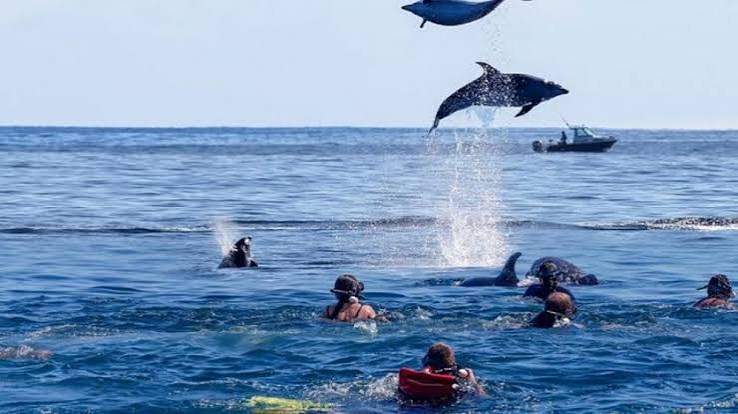
Two dolphin species use Kizimkazi’s waters regularly. Spinner dolphins are smaller and highly social. They travel in pods of 50 to 200 individuals. They rest in tight groups in the shallow bay through the morning. Bottlenose dolphins are larger and move in smaller groups of 5 to 15. Both species are identifiable at distance from the boat. Spinners show a slender body and a long beak. They perform spinning aerial leaps that give them their name. Additionally, both species carry their calves alongside them in the pod. The smallest individuals stay just below the nearest adult at the surface.
How the Encounter Works
Boat operators locate the pod using visual scanning from the bow. Once the pod is confirmed, the boat positions 30 metres ahead of the dolphins. Swimmers enter the water quietly over the side — no jumping, no splashing. They float face-down and wait for the pod to pass. The dolphins choose their own distance. Relaxed pods pass at 2 to 5 metres from the nearest swimmer. Curious individuals peel away from the main group and investigate. However, chasing dolphins always causes them to accelerate and leave. Staying still consistently produces longer encounters than any active pursuit.
Responsible Practice
Kizimkazi receives many boats each morning during peak season. The concentration of boats around resting dolphins has caused documented disruption. Pods leave the bay earlier and rest periods shorten. Poorly managed encounters have caused calf separation incidents. Responsible operators limit swimmers in the water at one time. They avoid driving boats into the centre of resting pods. They observe the 30-metre approach minimum before releasing swimmers. Furthermore, they exit the area when dolphins show avoidance behaviour. Tail slapping, erratic direction changes, and tight grouping around calves are all clear warning signs. Choosing an operator who follows these guidelines determines the quality of the encounter.
Plan Your Safari
Kizimkazi is a 1.5-hour drive from Stone Town on Zanzibar’s southern tip. Dolphin trips depart from Kizimkazi beach at 07:00 to 08:00. The trip takes 2 to 3 hours. It combines naturally with a Stone Town afternoon or a south coast beach day. Most Zanzibar beach camps arrange transport and booking through local operators.
African Wild Trekkers builds Zanzibar extensions into Tanzania safari itineraries, including Kizimkazi dolphin swim experiences. Contact us to plan a Tanzania safari combining the Serengeti circuit with Zanzibar’s coastal and marine encounters.