Fly Camping Africa: Sleeping in the Wild on East Africa’s Remote Walking Safaris
A fly camp is the most stripped-down safari accommodation on earth. It is a small tent, a sleeping bag, a campfire, a ranger with a rifle, and the bush in every direction. No fence. No wall. No building between you and whatever moves through the night. The fly camp carries everything it needs on foot or by a short vehicle support trip from the nearest camp. Setup takes 45 minutes. Pack-down takes 30. There is no generator, no running water, and no concrete floor. What it provides instead is direct, unfiltered immersion in the African night. A level of wilderness intimacy that even the finest safari tent camp cannot replicate. Fly camping is not for everyone. For the guest who wants it, nothing else comes close.
How a Fly Camp is Set Up
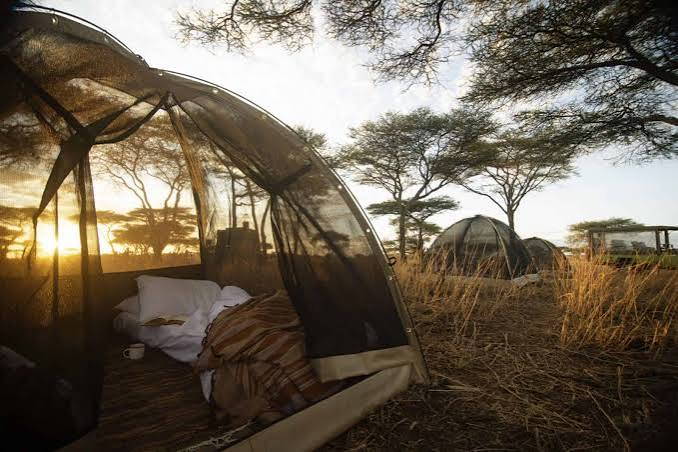
The camp team selects the fly camp site during the afternoon game drive. They look for ground with good visibility in all directions. They also need shelter from wind, proximity to water for animal activity, and firm, flat tent substrate. Equipment travels by vehicle to the nearest accessible point and then on foot to the chosen site. The setup includes small lightweight dome tents with sleeping mats and bags. A small central campfire area uses log seating. A simple bush toilet is screened by a tarpaulin. A perimeter awareness system tripwires or fire placement alerts the ranger to animal approach. Additionally, a lantern, folding table, and camp chairs create a simple dining area. The evening meal cooks over the fire.
The Night at a Fly Camp
The fly camp night is the activity itself. Dinner cooks over the fire. Conversation happens in low voices. Stars emerge directly overhead in a dome of sky unobstructed by any surrounding structure. Wildlife moves near the camp. Hyenas investigate the fire perimeter from the darkness. Their eyes are visible as reflections at the glow’s edge. Bush babies call from the tree overhead. At some point in the night, the fire settles to embers. The acoustic environment opens fully — lion roaring in the distance, wind in the grass, and the deep quiet of the African bush at 03:00. The tent fabric is thin. There is nothing between you and whatever is moving outside except nylon.
Safety on a Fly Camp
Fly camp safety rests entirely on the ranger’s competence and the team’s operational discipline. The ranger maintains a fire through the night. Firelight creates a deterrence perimeter for most dangerous species. The ranger stays awake or sleeps in short rotations. He carries a high-calibre rifle. He knows which species are present, where water is, and which directions carry the highest risk. Guests follow the ranger’s instructions absolutely. No leaving the tent without waking the ranger first. No movement toward animal sounds. . These rules are the operating conditions that make fly camping safe in genuine wildlife habitat.
Plan Your Safari
Fly camping is available from walking safari camps in Kenya’s Maasai Mara conservancies, Tanzania’s Selous-Nyerere Game Reserve, and Ruaha National Park. The activity requires booking at a camp specifically set up to provide it not all walking safari camps include overnight fly camping. A minimum of two nights in the field gives the full experience. Physical fitness for a moderate afternoon walk to the site is the only requirement.
African Wild Trekkers designs East Africa walking safari itineraries with fly camping nights at the finest wilderness locations. Contact us to plan a safari that takes you as close to the African bush as it is possible to sleep.