Giant Kingfisher Africa: The Powerhouse Hunter of East Africa’s Rivers
The giant kingfisher is Africa’s largest kingfisher species. It measures 42 to 46 centimetres from bill tip to tail. The bill alone is massive — heavily built, dark-coloured, and capable of handling large fish. The bird’s size and its powerful, deliberate hunting method make it one of East Africa’s most impressive waterside birds.
Despite its size, the giant kingfisher is surprisingly easy to overlook when perched motionless on a shaded riverside branch. The chestnut and white spotted plumage provides effective camouflage against the dappled light of a riverine forest. The bird reveals itself through movement or through the loud, rattling call it delivers before taking flight from a disturbed position.
Identification
The giant kingfisher shows chestnut and white streaked underparts with a white throat. The male shows a chestnut breast and white belly. The female shows white underparts with chestnut flanks and a white breast with chestnut streaking. Both sexes show a dark, heavily streaked black and white back and wings.
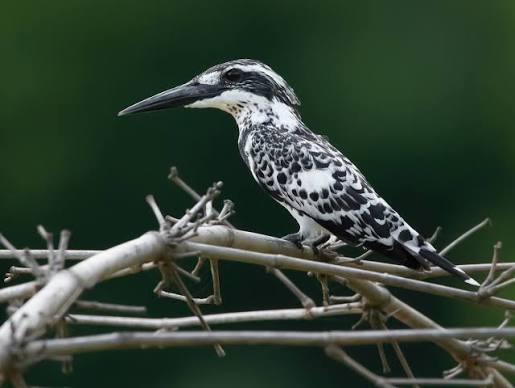
The massive black bill and the large body size immediately distinguish the giant kingfisher from all other African kingfisher species. The pied kingfisher, the second largest kingfisher in the region, is noticeably smaller and shows a completely different black and white plumage pattern without the chestnut component.
The call is a loud, harsh, rattling series of notes that carries clearly across open water. The call is given when the bird flushes from a perch and often when it is calling from a prominent position above the water. Experienced guides identify the giant kingfisher by call well before the bird comes into view.
Hunting Behaviour
Giant kingfishers hunt from elevated perches above water. They sit motionless and watch the water surface below with the head held at a slight forward angle. When prey is detected, the bird drops from the perch in a direct plunge, entering the water at an angle and submerging briefly before emerging with the fish held crossways in the bill.
The bird returns to the perch and manoeuvres the fish to a head-first position before swallowing it whole. Large fish are beaten against the branch to stun them and to break bones before swallowing. The whole sequence from detection to swallowing can take 2 to 5 minutes depending on the size of the prey.
Giant kingfishers take fish considerably larger than those that smaller kingfisher species can handle. They regularly catch tilapia, barbel, and other medium-sized river fish of 10 to 15 centimetres. In certain habitats they also take freshwater crabs, frogs, and lizards as secondary prey items.
Where to See Giant Kingfishers in East Africa
Giant kingfishers are widespread across East Africa wherever permanent rivers, lakes, and dams provide clear water with good fish populations. The species is most easily encountered on slow-moving rivers and lake shores with overhanging vegetation that provides suitable perching positions above the water.
Uganda’s Nile River between Murchison Falls and Lake Albert produces reliable giant kingfisher sightings on the park’s sunset cruise. The birds perch on exposed dead branches above the river and are visible from the boat at close range. Kenya’s Tana River and Tanzania’s Rufiji River both provide excellent giant kingfisher habitat with regular sightings on guided river activities.
Lake Naivasha in Kenya’s Rift Valley carries giant kingfishers on the lake’s margins and in the riverine vegetation of the inflows. Boat trips on the lake regularly encounter the species at close range perched on papyrus stems or dead branches over the water.
Plan Your Birding Safari
Giant kingfisher sightings are most reliable at East Africa’s permanent river and lake destinations. Any boat activity on a major river or lake edge within the species’ range produces sightings without requiring any deviation from standard safari activities.
Uganda’s Murchison Falls sunset cruise is the most reliably productive giant kingfisher activity in East Africa, combining close kingfisher sightings with hippo, Nile crocodile, and waterbird encounters in a single two-hour boat trip.
African Wild Trekkers includes river and lake boat activities in East Africa birding safari itineraries. Contact us to plan a safari that covers East Africa’s full diversity of kingfisher species from the giant to the pygmy across the region’s rivers, lakes, and wetlands.