How to See the Big Five in Tanzania: Best Parks & Timing for Each Animal
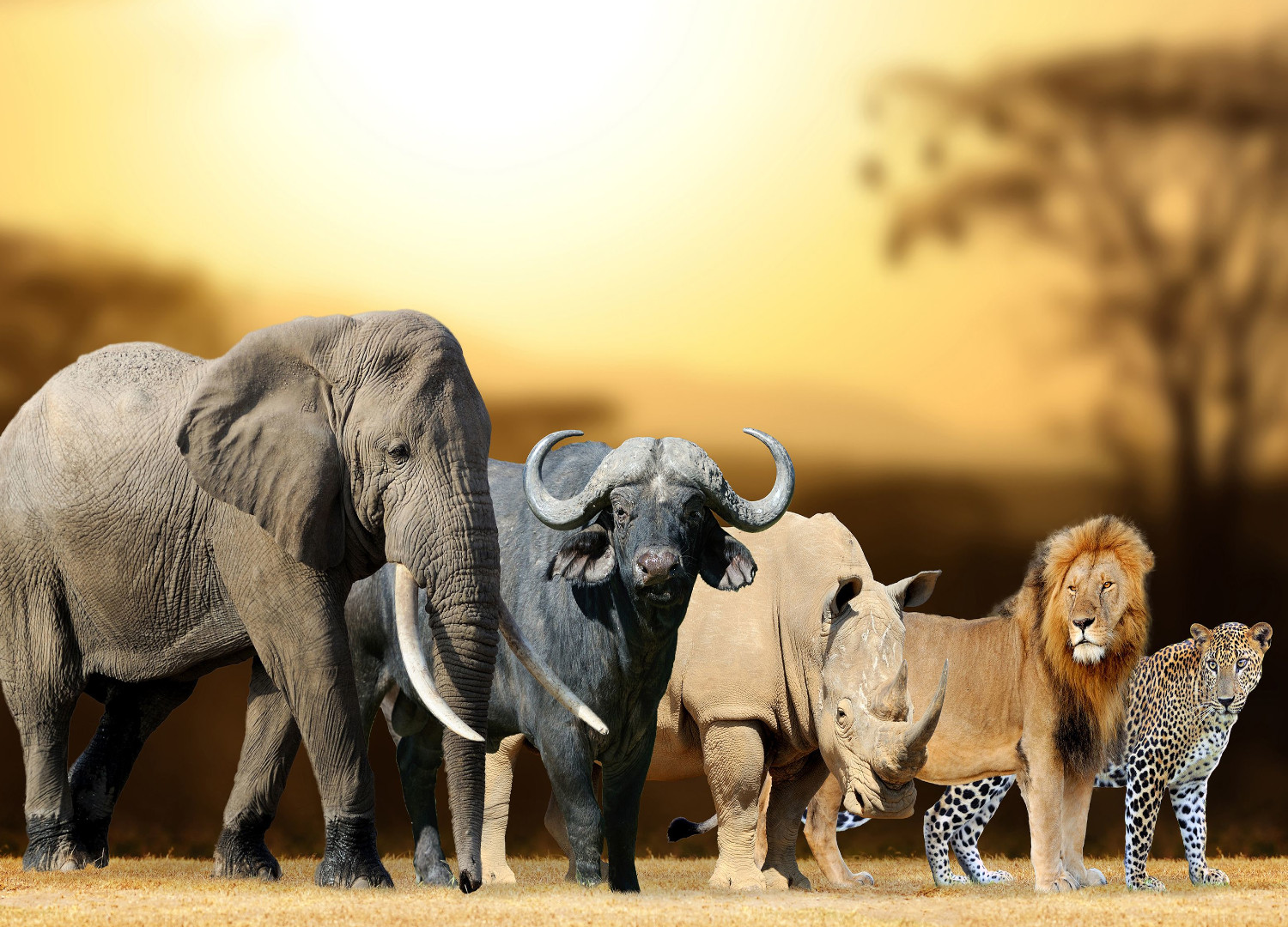
Big-game hunters originally named the Big Five — lion, leopard, elephant, buffalo, and rhinoceros — for the difficulty and danger of hunting them on foot. Today the term has become the ultimate safari benchmark. Tanzania is one of the few countries on earth where you can realistically see all five in a single trip. The country’s extraordinary mix of ecosystems — open savannah, dense woodland, and crater floors — supports the full range across several distinct regions. Tanzania’s game-rich parks give determined safari-goers a genuine shot at the complete set within a well-planned itinerary.
Tanzania’s wildlife density sets it apart from most Big Five destinations. The Serengeti alone holds tens of thousands of wildebeest and one of the world’s greatest concentrations of big cats. Ngorongoro Crater functions as a natural enclosure that concentrates animals — including the rare black rhinoceros — within a compact area, significantly improving sighting chances. Tarangire draws massive elephant herds during the dry season, sometimes numbering in the hundreds at a single waterhole. Understanding which park excels for each species and timing your visit correctly is the key to maximising your success across all five.
Lions in Tanzania: Where and When to Find Them
Serengeti Lion Sightings
Pride Behaviour and Open Savannah Advantage
The Serengeti is arguably the best place on earth to see lions in their natural context. The park holds an estimated 3,000 lions across multiple prides. The terrain is open grassland for much of the year, making lion spotting from a vehicle relatively straightforward. Lions in the Serengeti have fully habituated to vehicles. They continue hunting, playing, and nursing cubs without concern for nearby game drive vehicles. This makes for extraordinary close-range observation that you cannot replicate in many other parks.
The dry season from June through October is prime lion time in the central and southern Serengeti. Lions concentrate near permanent water sources and follow the wildebeest migration northward, bringing them close to the Mara River crossing points in July and August. During the green season from November through March, the southern plains around Ndutu hold lion prides with young cubs, as this is the calving season when prey is abundant and easy to catch. Both seasons offer excellent sightings, though game drive conditions differ significantly.
Tree-Climbing Lions at Lake Manyara
Lake Manyara National Park is famous for its tree-climbing lions — a behaviour rarely documented elsewhere in Africa. These lions have developed the unusual habit of resting in acacia and fig trees, possibly to avoid ground-level insects or to gain a vantage point over the lake floodplain. Sightings are not guaranteed, but the park is small enough that rangers can often track pride locations. A morning game drive with an experienced guide significantly improves your chances of finding these iconic animals draped over branches at eye level with the vehicle roof hatch open.
Manyara is often part of a northern circuit itinerary alongside Tarangire and Ngorongoro, making it an easy add-on rather than a dedicated detour. The park is compact and a single full-day game drive covers it thoroughly. Lion sightings here feel more exclusive because fewer visitors come specifically for lions at Manyara, meaning you often share the experience with far fewer vehicles than in the Serengeti.
Ngorongoro Crater Lions
High Density in an Enclosed System
Ngorongoro Crater holds a resident population of around 70 lions within its 260-square-kilometre floor — one of the highest lion densities on the continent relative to area. Because the crater walls act as a natural barrier, the same prides remain in place year-round. Guides accumulate detailed knowledge of individual pride home ranges and favourite rest spots. This makes crater lion sightings highly predictable for experienced operators, and a full day in the crater rarely passes without encountering at least one pride.
The crater also provides the unique experience of watching lions interact with the full Big Five ecosystem simultaneously. You can observe lions resting near a waterhole while elephants drink and buffalo graze in the background, with black rhino visible on the far slope through binoculars. This layered sighting intensity is difficult to replicate anywhere else on the continent and makes Ngorongoro exceptional even for repeat safari visitors.
Leopards in Tanzania: The Hardest of the Five
Ruaha and Serengeti for Leopard Sightings
Why Leopards Require Patience and Skill
Leopards are the most elusive of the Big Five. Solitary, nocturnal, and instinctively cryptic, they rely on remaining invisible for survival. They are masters of concealment in vegetation that would seem far too sparse to hide an animal their size. In Tanzania, the Serengeti, Ruaha, and the Seronera Valley consistently produce the most leopard sightings. Decades of researcher and tourist presence have allowed leopards in the Seronera Valley to become slightly more tolerant of vehicles than leopards elsewhere.
The Seronera Valley in the central Serengeti is Tanzania’s best leopard habitat. Leopards there cache kills in sausage trees and fig trees along the seasonal rivers. Guides who know the specific trees where individual leopards regularly feed can significantly increase sighting chances. Early morning drives when leopards are still active from overnight hunting give the best opportunity. Ruaha National Park in southern Tanzania also holds good leopard numbers in its riverine forest corridors, and lower visitor numbers make sightings feel more intimate when they occur.
Night Drives and Leopard Activity
Standard game drive rules in most Tanzanian national parks restrict driving to daylight hours, which coincides with the period when leopards are least active. In private conservancies bordering the Serengeti and in some southern parks, licensed operators can conduct night drives that dramatically increase leopard encounter rates. If seeing a leopard is a priority, discuss night drive options with your operator before booking. Some tented camps within private concession areas include night drives as a standard activity. These drives are specifically valuable for nocturnal species like leopards, servals, genets, and porcupines.
Leopard sightings in Tanzania are never guaranteed regardless of effort or timing. A ten-day itinerary that includes multiple Serengeti game drives with a skilled tracker gives you a realistic chance. Many guests encounter leopards unexpectedly when the animal walks across a road or emerges from cover. The unpredictability is part of what makes a leopard sighting one of the most celebrated moments in any Tanzania safari.
Elephants in Tanzania: The Easiest of the Five
Tarangire and Amboseli Ecosystem
Tarangire’s Massive Dry-Season Herds
Tanzania holds one of Africa’s largest elephant populations, with over 60,000 individuals across its national parks and game reserves. Tarangire National Park is the single best park in Africa for elephant sightings during the dry season from June through October. As seasonal waterholes dry across the surrounding Maasai steppe, elephants converge on the permanent Tarangire River in numbers that can reach several hundred animals in a single viewable area. Game drives along the river during July and August routinely encounter multiple herds throughout a single morning, often at very close range.
Tarangire’s elephants are also behaviourally fascinating. The park contains ancient elephant migration routes that cross from the Maasai steppe into the core protected area. The herds include multiple generations of matriarchs who navigate these routes by memory. Calf activity is particularly visible during the early dry season when families move as cohesive units with young calves staying close to their mothers. The combination of volume and behavioural interest makes Tarangire the definitive Tanzania elephant experience, and many operators build northern circuit itineraries specifically around the dry-season elephant concentrations here.
Elephants Across the Serengeti Ecosystem
Elephants are present year-round in the Serengeti, Ngorongoro, and the Ndutu area, though concentrations are lower than in Tarangire. In the Serengeti, elephant sightings are most common in the western corridor near the Grumeti River, where riverine vegetation provides year-round food and water. Ngorongoro Crater holds a resident elephant population on the crater floor, often in dramatic proximity to other Big Five species. Amboseli in neighbouring Kenya — easily combined with a Tanzania itinerary — adds the visual spectacle of elephants against the backdrop of Kilimanjaro.
Elephant encounters in Tanzania are overwhelmingly calm and non-threatening when guides approach correctly. Guides read elephant body language carefully and maintain safe distances while allowing guests close enough for photography without zoom. Bulls in musth are the exception and guides give them wide berth. Family herds with calves in all other conditions behave naturally around well-positioned vehicles. Elephant sightings are the most reliably achievable of the Big Five across Tanzania and appear on any standard northern or southern circuit safari.
Buffalo in Tanzania: Widespread and Abundant
Buffalo Distribution Across Parks
Ngorongoro and Serengeti Buffalo
African buffalo rank among Tanzania’s most common large animals and are present in substantial numbers across virtually every major national park. In Ngorongoro Crater, buffalo herds of several hundred animals graze the open grasslands and gather at seasonal marshes, making them among the most visible and photogenic species on the crater floor. Their mass congregations — tight-packed, moving in waves across the grassland — create extraordinary photographic scenes, particularly in soft morning light when the herds are most active before the midday heat.
Buffalo are also extremely common throughout the Serengeti ecosystem. Large herds appear frequently in the western corridor and southern plains. Unlike lions and leopards, buffalo require no special timing or technique to see — they are simply present in abundance wherever habitat conditions suit them. Old bulls, known as dagga boys, tend to rest alone or in small groups near water. Guides enjoy pointing out the worn horns and scarred hides that indicate decades of survival in a landscape full of lions and crocodiles. Buffalo complete the Big Five checklist with little effort on most Tanzania safaris.
Buffalo in Southern Tanzania Parks
Ruaha National Park and the Selous Game Reserve (Nyerere National Park) in southern Tanzania both hold extremely large buffalo populations. Ruaha holds some of the largest buffalo herds in East Africa, numbering in the thousands during peak dry-season concentrations near the Great Ruaha River. Game drives in Ruaha during July and August regularly encounter herds of 500 to 1,000 animals moving to water — an experience that rivals anything available on the northern circuit. The southern parks attract far fewer visitors, meaning these buffalo sightings occur without the vehicle concentrations sometimes found at popular northern locations.
Southern Tanzania’s buffalo populations are also closely associated with exceptional lion activity. Large prides follow the herds, and hunting attempts — including dramatic buffalo defensive behaviour — are regularly witnessed on game drives. The predator-prey dynamic between lions and buffalo in Ruaha and Selous is among the most raw and unscripted wildlife interactions available in Tanzania. Guests who venture south for these encounters find a quality of sighting that is genuinely world-class.
Rhinoceros in Tanzania: The Rarest of the Five
Black Rhino at Ngorongoro
Tanzania’s Critically Endangered Black Rhino Population
The black rhinoceros is the most difficult of the Big Five to see in Tanzania, and indeed across most of Africa. Intensive poaching throughout the twentieth century reduced Tanzania’s rhino population dramatically. Today the country’s most reliable location for black rhino sightings is Ngorongoro Crater, which protects a small but stable population of around 30 individuals. Crater rangers closely monitor these rhinos, and the population has grown slowly under protection — but the animals remain critically endangered and sightings are never guaranteed.
Crater rhino sightings are most likely in the open grassland areas on the western and southern sections of the crater floor, where the animals browse on acacia scrub and move between seasonal waterholes. Because the crater floor is large and rhinos are shy, binocular sightings from a distance are more common than close-range encounters, though the latter do occur for guests on longer crater visits. Morning game drives give the best chance as rhinos are most active before midday heat forces them to seek shade. Even a distant sighting of a Ngorongoro black rhino represents one of the rarest wildlife encounters available anywhere in Africa.
Rhino Conservation Efforts and Where Else to Look
Outside Ngorongoro, Tanzania’s rhino numbers are extremely small and wild sightings are largely accidental. Some conservation areas and private sanctuaries operate rhino monitoring programmes, and African Wild Trekkers can advise on whether any sanctioned rhino trekking experiences are currently available during your visit period. The Tanzanian government and international conservation partners continue to invest in rhino protection, and numbers are gradually improving after decades of decline. Completing the Big Five in Tanzania means Ngorongoro Crater is an essential component of any itinerary — there is no realistic substitute for the crater’s rhino population elsewhere in the country.
Visitors committed to seeing all five should allocate a minimum full-day excursion to Ngorongoro Crater and ideally two half-day descents on consecutive mornings to maximise time on the crater floor. Crater access fees and vehicle fees apply per day, and the experience justifies every cost involved. Even on days when rhinos prove elusive, the crater consistently delivers exceptional sightings of lions, elephants, flamingos, hippos, and buffalo in a landscape of extraordinary beauty.
Plan Your Safari
Seeing all five of the Big Five in Tanzania requires careful park selection and timing. The most effective itineraries combine Ngorongoro Crater with the Serengeti, Tarangire, and at least one southern park depending on your priorities. Book well in advance for the dry season from June through October, when sighting conditions and accommodation demand are both at their peak. Crater descent permits must go through licensed operators rather than at the gate.
African Wild Trekkers designs Big Five itineraries around current wildlife conditions, guide expertise, and your available travel dates. Every package includes park fees, crater descent permits, private vehicle game drives, and full-board lodging at strategically chosen camps. The team ensures you spend maximum time in the field rather than managing logistics on the ground. All reservations are confirmed in writing before any deposit is requested.
Contact African Wild Trekkers at africanwildtrekkers.com/contact with your Tanzania travel dates and we will build your Big Five itinerary and confirm availability within 24 hours.