Tanzania Cultural Experiences: Hadzabe Tribe, Maasai and Chagga Coffee Walks
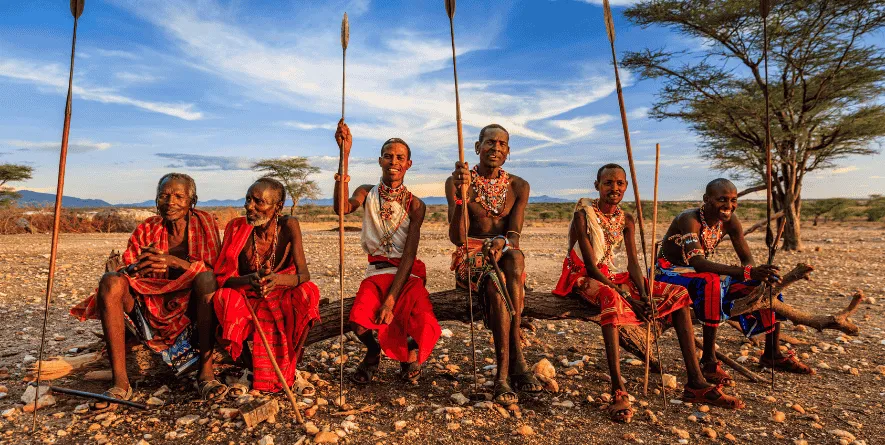
Tanzania’s wildlife safari is justifiably famous, but the country’s human cultural landscape is as extraordinary as its wildlife. Three cultures in particular offer a window into ways of life unlike anything in the modern world. The Hadzabe — one of the last remaining hunter-gatherer peoples in Africa — live near Lake Eyasi south of the Ngorongoro highlands. The Maasai pastoralists define the northern Rift Valley landscape with their red shuka and their cattle. The Chagga farmers on Kilimanjaro’s slopes practise an agricultural system of terraced coffee and banana gardens and underground irrigation channels that has sustained communities on the mountain for centuries. This guide covers all three cultural experiences and how to access each responsibly.
The Hadzabe: Africa’s Last Hunter-Gatherers
Visiting the Hadzabe Near Lake Eyasi
Who the Hadzabe Are
The Hadzabe (Hadza) people number approximately 1,300 individuals living in the Lake Eyasi basin south of the Ngorongoro Conservation Area. They represent one of the last populations on earth to maintain a primarily hunter-gatherer subsistence lifestyle. The Hadzabe’s click language has no relation to any other language family — it is linguistically isolated, suggesting continuity with a deep ancestral population that predates the migration of Bantu farming peoples into East Africa. Genetic studies have identified the Hadzabe as among the most ancient human lineages on earth, carrying DNA markers that diverged from other human populations more than 100,000 years ago. Meeting the Hadzabe is not an anthropological exercise. It is a recognition that different approaches to human life have persisted to the present day in the same ecosystem where our shared ancestors evolved.
A morning with the Hadzabe typically begins with a predawn pickup from your Lake Eyasi area camp or from a hotel in Karatu, followed by a drive to the community’s current camp location. The location shifts regularly as the group follows game and plant resources. Men hunt with traditional bows and poison-tipped arrows, targeting impala, baboons, monkeys, and smaller game using individual stalking techniques refined over generations. Women gather berries, tubers, and baobab fruit using digging sticks and woven baskets. A Hadzabe morning hunt demonstrates the tracking skills, bow accuracy, and landscape knowledge that sustain the community without agriculture, domesticated animals, or permanent settlement. Visitors walk with the hunters, observe the tracking process and the stalk, and if the hunt is successful witness the preparation and sharing of meat according to the community’s traditional distribution protocols.
How to Visit the Hadzabe Responsibly
The Hadzabe experience is one of the most meaningful cultural visits available anywhere in Tanzania and also one of the most ethically complex. The community’s way of life faces pressure from surrounding agricultural encroachment, government land policies, and the demographic changes that contact with the wider Tanzanian economy creates. Tourism has the potential to either support the Hadzabe’s cultural continuity — providing income that reduces pressure to adopt farming lifestyles — or to undermine it by creating a performative cultural economy that simulates tradition for tourist consumption without sustaining it. The difference between these outcomes depends entirely on how the visit is organised and who receives the income.
The most responsible Hadzabe visits go through community-based operators who pay fees directly to the Hadzabe community council, arrange visits through the community’s own permission system, limit visitor numbers to small groups of four to six people per morning, and follow protocols that the community itself has established. African Wild Trekkers works specifically with community-based Hadzabe partners rather than tour operators who access the community without direct community agreements. The team advises clients before the visit on how to engage respectfully — gift-giving protocols, photography permission, and the importance of following the guide’s cues rather than approaching community members independently.
The Chagga People and Kilimanjaro Coffee Walks
Agricultural Heritage on the Mountain’s Slopes
The Chagga Farming System
The Chagga people have lived on Kilimanjaro’s fertile lower slopes for centuries, developing an agricultural system of remarkable sophistication. The Chagga homestead system — known as the kihamba — consists of a multi-layered garden surrounding the family’s home. Shade trees of banana and coffee stand above a lower layer of food crops and medicinal plants, all drawing from a system of furrows (mifereji) that the Chagga constructed and maintained for centuries to distribute Kilimanjaro’s snowmelt water across the mountain’s inhabited slopes. Walking through a traditional Chagga kihamba garden is a lesson in sustainable agriculture — a high-yield, self-sustaining polyculture system that predates modern agroforestry principles by centuries and continues to produce without chemical inputs.
Coffee cultivation is central to the Chagga economy and to the Kilimanjaro brand. Kilimanjaro arabica coffee earns international recognition for its quality and flavour. Smallholder farmers grow it at altitude in the volcanic soil of the mountain’s slopes and process it through a system of village cooperatives that has operated in various forms since the colonial era. A Chagga coffee walk visits a working smallholder farm, observes the coffee plants at different stages of fruiting, follows the processing from cherry to dried bean through the traditional wet-process method, and ends with a tasting of the locally grown coffee. Kilimanjaro coffee drunk on the mountain, brewed over a wood fire in the farmer’s kitchen, is one of Tanzania’s great sensory experiences — entirely inaccessible from a standard safari itinerary.
The Chagga Underground Tunnels
The Chagga constructed an extensive system of underground tunnels beneath the mountain’s inhabited zone during the nineteenth century as a defence against slave raiders and inter-tribal conflict. The tunnels, some extending for several hundred metres, gave communities space to hide members, livestock, and food stores when raiding parties approached. Several of these tunnels are now accessible for guided visits in the Marangu area near the Kilimanjaro National Park gate. A guided tunnel walk — crawling through passages barely wide enough for an adult and lit by a guide’s torch — delivers a visceral experience of the Chagga’s ingenuity and the historical pressures that drove its creation. African Wild Trekkers includes the Chagga tunnel and coffee walk as a combined cultural half-day for Kilimanjaro climbers based in Moshi before their ascent or after their descent.
Moshi, the gateway town at Kilimanjaro’s foot, has its own weekly market where Chagga farmers from surrounding villages sell produce, crafts, and livestock in a commercial event that is primarily a local economic transaction rather than a tourist attraction. Visiting the Moshi market with a guide who speaks Swahili and can facilitate introductions transforms the experience from observation to participation. Bargaining for fresh avocados and ripe bananas from a Chagga farmer who grows them on the mountain slopes above creates the kind of human connection that structured cultural visit programmes sometimes miss. African Wild Trekkers includes Moshi market visits as an option for Kilimanjaro clients with free time in the town.
Combining Cultural Experiences with Safari
How to Integrate Culture into the Northern Circuit
Lake Eyasi and Hadzabe as a Northern Circuit Extension
Lake Eyasi lies approximately two to three hours’ drive south of Karatu and the Ngorongoro Conservation Area, making it a logical one-to-two night extension from a northern circuit safari. Adding a morning with the Hadzabe before rejoining the main circuit costs relatively little in time but adds enormously in cultural dimension. The drive from Karatu to Lake Eyasi passes through the Great Rift Valley’s transition zone — from highland farmland through Datoga pastoral territory to the semi-arid lakeshore — delivering a continuous landscape change that is itself worth the journey. A two-night Lake Eyasi stay combines the Hadzabe morning hunt with a Datoga community visit and a flamingo and waterbird morning on the lake shore.
For northern circuit Tanzania itineraries of ten days or more, a Lake Eyasi addition fits naturally between the Ngorongoro Conservation Area and either the Serengeti or Tarangire without requiring significant additional driving. The access road from Karatu to Lake Eyasi deteriorates significantly in rain, so the visit works best in the dry season months. African Wild Trekkers builds Lake Eyasi-Hadzabe extensions into extended northern circuit itineraries for clients who specifically request cultural experiences alongside wildlife, managing all community visit logistics and camp bookings as part of the package.
Plan Your Safari
Tanzania’s cultural experiences — the Hadzabe, the Maasai, and the Chagga — each offer a genuinely distinctive window into human ways of life that have no parallel in the modern world. African Wild Trekkers integrates these experiences into safari itineraries where they complement rather than compete with the wildlife programme, ensuring that each cultural visit goes through community-based channels that direct income to the people whose heritage is being shared. The team advises on the responsible engagement protocols specific to each community.
Every cultural experience booking from African Wild Trekkers includes confirmed community access arrangements, a cultural briefing for clients before the visit, transport logistics from the nearest camp or town, and all community fee payments made directly to the relevant community organisation. All reservations are confirmed in writing before any deposit is requested. The team advises on which cultural experiences are most appropriate for specific travel dates — the Hadzabe, for example, move seasonally and the community’s location relative to the standard access point varies through the year.
Contact African Wild Trekkers at africanwildtrekkers.com/contact with your Tanzania travel dates and cultural interest and we will integrate the relevant cultural experiences into your personalised Tanzania itinerary within 24 hours.