Kenya and Kilimanjaro: Combining Safari With Africa’s Highest Peak
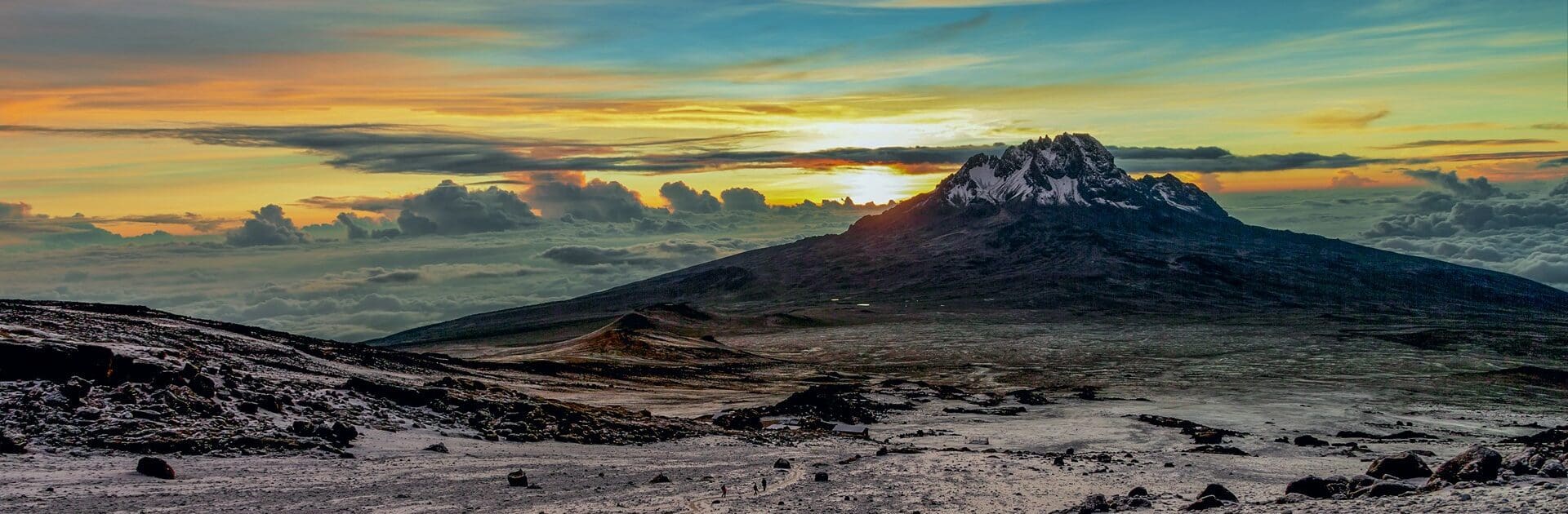
The Kenya Kilimanjaro safari climb combination pairs the Maasai Mara’s wildlife to Africa’s highest summit in one East Africa adventure. Kenya delivers the savanna’s horizontal drama — lion hunts, river crossings, and the Great Migration. Kilimanjaro delivers the vertical challenge of a 5,895-metre volcanic peak. Travelers who photograph Kilimanjaro above Amboseli’s elephant herds on Day 3 and then stand on that same summit on Day 10 complete a geographic arc that no other East Africa combination replicates. African Wild Trekkers coordinates the Kenya safari alongside experienced KPAP-certified Kilimanjaro guide services in Arusha to deliver the full combination as one managed package.
Planning the Kilimanjaro Climb
Choosing the Right Route
Kilimanjaro offers seven established climbing routes and the route choice shapes the entire experience. The Lemosho Route suits most first-time climbers who combine the mountain with a Kenya safari. It takes seven to eight days, allows the best acclimatization profile of any route, delivers an 85–90 percent summit success rate, and passes through multiple ecological zones from rainforest to moorland to alpine desert. The Machame Route — “Whisky Route” — covers equally spectacular scenery in six to seven days at slightly lower cost, with a similar high success rate. Both routes approach from the southern flank and summit at Uhuru Peak before descending via Mweka.
The Northern Circuit Route takes nine days and achieves the highest summit success rate of any Kilimanjaro route — roughly 90 percent — because the extra acclimatization days allow the body to adjust to altitude stress at a pace the shorter routes cannot match. The nine-day commitment suits travelers adding Kilimanjaro to a longer East Africa trip. The northern flank traverses landscapes the southern routes never enter — vast arctic plateau terrain and a complete 360-degree crater rim traverse. The Rongai Route approaches from the drier northern side: less crowded than southern routes, with a more gradual first day, but without Lemosho or Machame’s dramatic vegetation changes. African Wild Trekkers advises on route selection based on fitness, available days, and whether summit success or scenic diversity is the priority.
Summit Success and Physical Preparation
Kilimanjaro’s summit success rate averages 65–70 percent across all operators and routes. The main cause of failure is altitude sickness, not fitness. Strong marathon runners turn back at high camp while older travelers with careful pace management summit — the body’s response to altitude is not predictable from athletic performance alone. The “pole pole” (slowly slowly) mantra every Kilimanjaro guide repeats reflects the core truth: slow ascent dramatically improves summit rates. Choose a route with at least seven acclimatization days rather than the cheapest five-day option, which carries success rates below 50 percent. Diamox at 125–250mg twice daily reduces AMS symptoms for most climbers and is worth discussing with a travel medicine clinic before departure.
Start physical preparation three to four months before the climb. Build cardiovascular fitness through running, cycling, or hiking three to four times per week. Train specifically with a 5–8kg weighted daypack on uphill sections — Kilimanjaro is about sustained uphill movement under load, not speed. Previous high-altitude experience helps but is not essential. Climbers without altitude experience succeed on appropriate routes at high rates when they follow guide instructions on pace. The most important insight: Kilimanjaro fitness means walking slowly for long hours, not moving fast. Training programs that emphasize sustained endurance prepare climbers far more accurately than those focused on peak aerobic output.
Connecting the Kenya Safari to Kilimanjaro
Amboseli as the Bridge
Amboseli National Park sits directly on the Kenya–Tanzania border with Kilimanjaro rising above the park’s elephant plains. Positioning Amboseli as the final Kenya stop before crossing to Arusha creates the combination’s strongest visual connection — travelers who photograph elephant herds against Kilimanjaro’s snow cap on Day 3 and stand on that summit on Day 10 complete a journey no other East Africa trip replicates. The Amboseli-to-Arusha road transfer takes four hours through the Namanga border crossing and the foothills north of the mountain. A noon departure from Amboseli reaches Arusha by late afternoon — enough time for a gear check and early dinner before the following morning’s climb start at the Kilimanjaro gate.
Travelers who place the Maasai Mara as the Kenya anchor before Kilimanjaro lose Amboseli’s visual Kilimanjaro connection but gain the Mara’s superior big cat and river crossing potential. The Mara-to-Arusha routing requires a Nairobi overnight — fly from the Mara to Wilson, overnight in Karen, then drive or fly to Arusha — adding one logistical day that the Amboseli-to-Arusha direct road eliminates. Both routings work. African Wild Trekkers presents both options and recommends based on travel dates relative to the migration calendar and each client’s stated wildlife priorities.
Gear, Permits, and Booking
Kilimanjaro National Park charges approximately $900–$1,000 per person for a seven-day climb — covering all mountain nights, conservation levies, and a rescue fee, all included in the operator’s quoted package price. Gear requirements include cold-weather layering for summit night (temperatures reach -20°C to -15°C), trekking poles, a four-season sleeping bag rated to -20°C, gaiters, and broken-in waterproof hiking boots. Operators provide porters at the 20kg maximum load set by the Kilimanjaro Porters Assistance Project. Book with a KPAP-certified operator to ensure fair porter treatment — the slightly higher price directly benefits the people who carry your equipment at altitude. African Wild Trekkers works with two established KPAP-certified Arusha operators.
Book Kilimanjaro climbs at least three months ahead for peak season (January–March, July–September) and six weeks ahead for shoulder season months. The mountain carries daily visitor caps per route managed by Tanzania National Parks, and last-minute peak-season bookings often find preferred routes fully booked. Gear rental in Arusha covers summit-quality sleeping bags, down jackets, gaiters, and trekking poles — a practical option that reduces the need to carry bulky cold-weather equipment on your international flight. Confirm rental availability and equipment standard with your operator during booking, not on arrival in Arusha when alternatives are limited.
Post-Climb Zanzibar Recovery
Zanzibar Beach After Kilimanjaro
Kilimanjaro climbers descend physically tired and emotionally full. A three to five night Zanzibar beach extension provides the most natural recovery, and the logistics are simple — Kilimanjaro Airport to Zanzibar Airport takes 55 minutes on Coastal Aviation’s daily scheduled service. The transition from the mountain’s arctic summit to the Indian Ocean within 48 hours creates the most dramatic physical environment contrast in any East Africa combination. Most climbers lose two to three kilograms during the ascent and carry seven to eight days of cumulative exertion. Zanzibar’s beach hotels with pools, spas, and ocean swimming give the body exactly what it needs after that sustained output.
A 15-day Kenya-Kilimanjaro-Zanzibar combination structures as three nights Maasai Mara, one Amboseli or Nairobi night, seven nights Kilimanjaro on the Lemosho Route, one night Arusha post-climb, and three nights Zanzibar. This timeline requires 15 nights total and represents a complete East Africa expedition rather than a short holiday. It suits travelers for whom the Kilimanjaro summit is the central ambition and the safari and beach components provide complementary context. African Wild Trekkers designs this combination for clients who identify Kilimanjaro as their primary goal, and the team’s coordination experience eliminates timing gaps, doubled transit nights, and permit confirmation gaps between all three components.
Plan Your Safari
Kenya Kilimanjaro safari climb combinations require coordinated booking of Maasai Mara accommodation, the Kilimanjaro route and operator, Kilimanjaro park permits, and any Zanzibar extension — all confirmed before you fly. African Wild Trekkers manages all three components as a single booking.
Your Kenya Kilimanjaro package includes Maasai Mara safari game drives and accommodation, the Kilimanjaro climb with KPAP-certified guides and porters, all park fees, optional Amboseli connection, and a Zanzibar beach extension where selected. We provide the full gear list and pre-departure fitness guidance specific to your chosen route.
Contact African Wild Trekkers at africanwildtrekkers.com/contact with your travel dates and climbing ambition and we will design a complete Kenya Kilimanjaro safari combination and confirm availability within 24 hours.