Kenya and South Africa: The Ultimate Two-Country Africa Safari
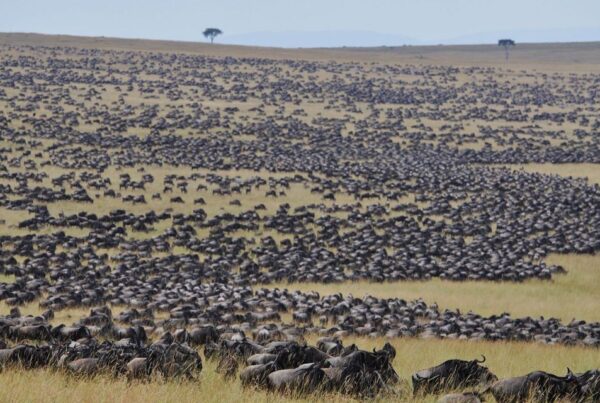
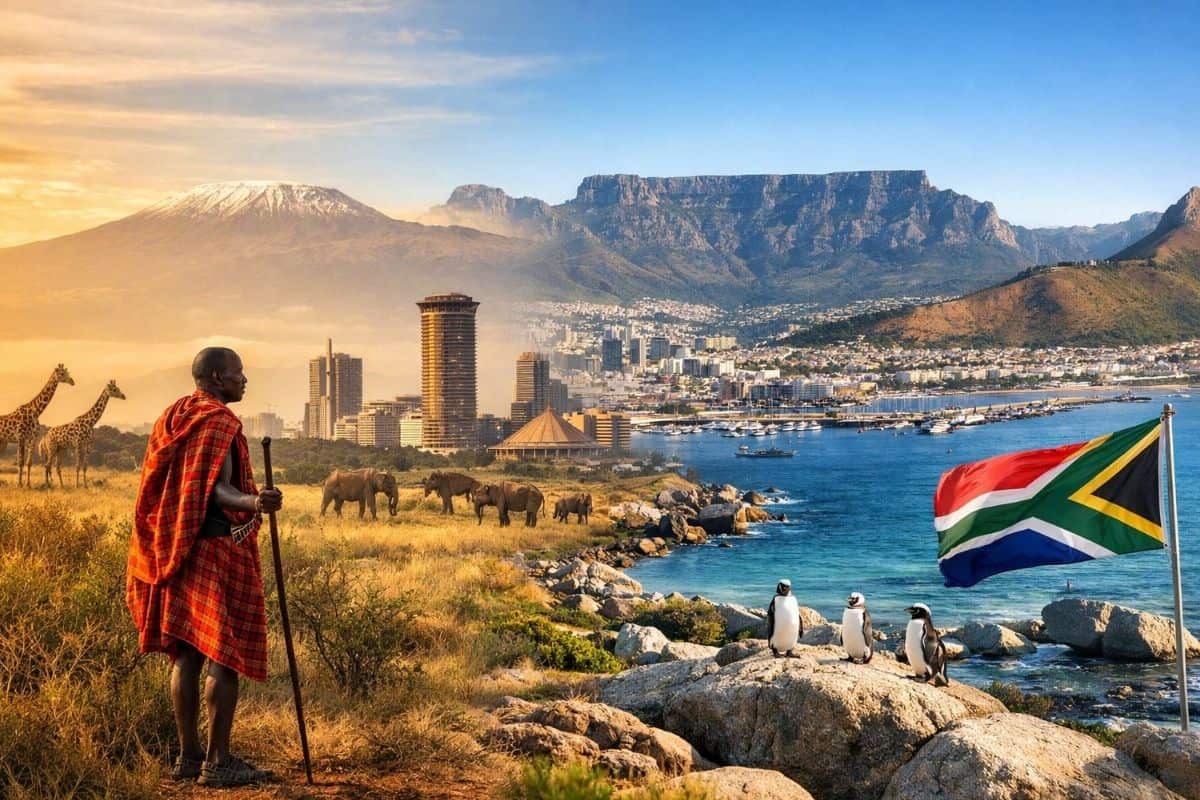
The Kenya South Africa safari combination delivers the widest possible spectrum of African wildlife within a single long-haul trip. The Maasai Mara provides East Africa’s most celebrated savanna spectacle — the Great Migration, big cat predation, and wildebeest river crossings. Kruger National Park provides southern Africa’s densest Big Five wildlife in a completely different bushveld ecosystem. Cape Town adds dramatic mountain and ocean scenery as a final counterpoint. These two countries anchor Africa’s safari industry from opposite ends of the continent. A connecting flight through Nairobi or Johannesburg links them, making the combination practical within a 14–21 day itinerary. African Wild Trekkers handles the Kenya component directly and coordinates the full combination through trusted South Africa partners.
Kenya Safari: Maasai Mara and More
Best Kenya Parks for a Two-Country Combination
The Kenya leg should maximize experiences that South Africa cannot replicate. The Maasai Mara’s wildebeest river crossings, Samburu’s northern endemic species, and Amboseli’s Kilimanjaro elephant herds represent Kenya’s three most distinctive wildlife experiences that Kruger’s bushveld ecosystem simply does not offer. South Africa delivers better Big Five density than most Kenya parks in absolute terms, but Kenya’s open grassland migration spectacle in July–October and Samburu’s uniquely adapted species fill wildlife categories that Kruger’s woodland environment cannot match. A four-night Maasai Mara plus two-night Amboseli Kenya leg covers the open plains migration and the Kilimanjaro elephant viewing before the South Africa connection — six Kenya nights that maximize differentiation from what follows.
Adding Samburu extends the Kenya leg to eight to ten nights and builds a comprehensive introduction to Kenya’s diverse ecosystems. Three nights at Samburu covers the northern specials — gerenuk, Grevy’s zebra, reticulated giraffe, beisa oryx, Somali ostrich — alongside resident lion, leopard, and the intimate Ewaso Ng’iro river elephant encounters that rank among Kenya’s finest wildlife experiences. The longer Kenya leg suits travelers on 20-plus-day trips who regard Africa as a once-in-a-decade investment. The shorter Mara-plus-Amboseli leg works best for two-week combinations that leave six to eight nights for South Africa without feeling compressed at either destination. African Wild Trekkers designs the Kenya leg length around the available total trip duration and the South Africa minimum night requirements.
Connecting Kenya to South Africa
The Nairobi to Johannesburg direct flight takes approximately four hours on Kenya Airways, South African Airways, or Airlink. Multiple daily departures from JKIA keep the connection timing flexible. One-way fares run $250–$500 per person on direct services booked two to three months ahead. Ethiopian Airlines connections via Addis Ababa cost somewhat less with two to four additional hours of transit time. The Nairobi to Cape Town routing offers a direct Kenya Airways seasonal service or a Johannesburg connection — direct Nairobi-Cape Town flights eliminate the OR Tambo transit when available, saving two hours on the travel day. Flying into Johannesburg for Kruger and then flying or driving to Cape Town creates the most logical geographic sequence across the South Africa component without doubling back.
OR Tambo International Airport in Johannesburg processes most international arrivals on a visa-free basis. Citizens of the UK, EU, USA, Canada, and Australia enter South Africa without a visa for up to 90 days. The entry process requires only a passport and arrival card — no ETA, no visa fee, no advance application for qualifying nationalities. This contrasts with Kenya’s advance ETA requirement and Tanzania’s on-arrival visa queue, making South Africa the least documentation-intensive entry point in the combination. The Kenya ETA requires advance application before departure, but South Africa adds no additional documentation burden on top of the East Africa paperwork already completed.
South Africa: Kruger and Cape Town
Kruger National Park for Big Five
Kruger National Park in Mpumalanga and Limpopo provinces covers nearly 20,000 square kilometres of bushveld and offers Africa’s most accessible Big Five wildlife viewing. Lion, leopard, elephant, rhino, and buffalo appear in densities that make multi-species sightings possible on virtually every game drive. Kruger’s road network of 2,858 kilometres of paved and unpaved roads makes self-drive safari viable for experienced drivers — rent a vehicle at the gate, navigate to viewing points, and stay in the park’s own rest camps for a budget-accessible alternative to guided private lodges. Private reserves bordering Kruger — Sabi Sands, Timbavati, Thornybush, and Klaserie — offer guided open-vehicle game drives with trackers and no vehicle limits at sightings, with lodge accommodation from $500 to $2,000-plus per person per night.
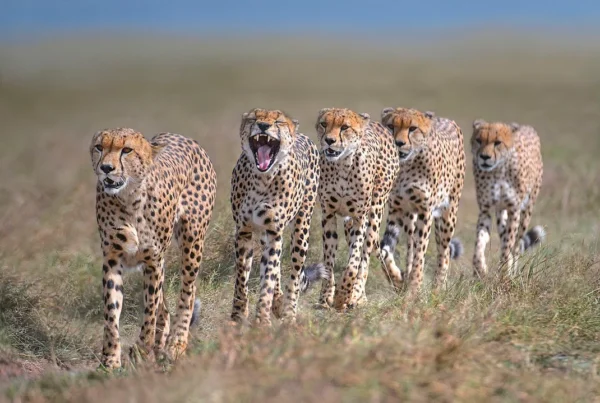
Kruger’s most distinctive feature relative to the Maasai Mara is its rhino population — both white and black rhinoceros inhabit the park, and the Mara has none. A Kruger morning watching a white rhino wallow at a waterhole or a black rhino browse acacia fills a wildlife gap that no Kenya park in the standard safari circuit can substitute. Wild dog sightings are more frequent in Kruger and Sabi Sands than in the Mara — the Kruger bushveld waterhole network produces extended watching opportunities of painted wolves drinking at dawn that Kenya’s open savanna does not consistently replicate. Leopard sightings in Sabi Sands are among Africa’s most reliable — the habituation level of Sabi Sands’ leopard population rivals Botswana’s Okavango, and daytime tree-resting and nocturnal hunting encounters occur on the majority of game drives.
Cape Town as the South Africa Conclusion
Cape Town’s position at Africa’s southwestern tip — Table Mountain above the city, two oceans meeting at Cape Point, the Winelands spreading inland — makes it one of the world’s most visually extraordinary urban destinations. Including Cape Town as the final stop creates a scenic conclusion that contrasts effectively with both the Maasai Mara’s savanna and Kruger’s bushveld. The Cape Peninsula day drive — Table Mountain cable car, Boulders Beach penguin colony, Chapman’s Peak coastal road, and Cape Point — fills a full day with scenery and accessible wildlife in one compact geographic package. Cape Town’s V&A Waterfront, Bo-Kaap colored houses, and Long Street restaurants offer urban sophistication that no East African capital currently matches.
The Cape Winelands — vine rows climbing mountain flanks, oak-lined avenues leading to 300-year-old Cape Dutch manor houses — occupy a landscape unlike anything else in the combination. A Franschhoek wine tram day covers multiple estates on a single admission ticket and creates an afternoon of relaxed indulgence that actively contrasts with the focus and alertness of predator watching from earlier in the trip. Cape Town’s international terminal connects directly to London Heathrow, Amsterdam, Frankfurt, Dubai, and Singapore. Most long-haul travelers find their home city well-served by Cape Town’s direct international connections, making it a logical final stop before departing Africa rather than routing back through Nairobi or Johannesburg.
Practical Logistics and Costs
Budgeting the Kenya South Africa Combination
The Kenya South Africa safari combination costs more than single-country East Africa itineraries because it involves two sets of international and domestic flights, two sets of national park fees, and accommodation at three to four distinct destinations. A two-week combination — six nights Kenya, six nights South Africa, two transit nights — at mid-range accommodation costs approximately $6,000–$9,000 per person all-inclusive from Nairobi arrival to Cape Town departure. A luxury version with private conservancy lodges in Kenya and Sabi Sands in South Africa reaches $12,000–$18,000 per person. Budget travelers choosing mid-range Kenya tented camps and self-drive Kruger rest camps can complete the combination for $4,000–$6,000 per person, particularly during May, June, January, and February when accommodation prices drop 20–40 percent from peak rates.
The Nairobi to Johannesburg flight forms the largest single transport cost at $250–$500 one-way per person. Total flight costs for the full combination — international Kenya arrival, Nairobi to Johannesburg, South Africa domestic transfers, and international Cape Town departure — can reach $1,500–$2,000 per person in economy class. This transport overhead is justified for travelers making a once-in-a-decade Africa investment, but points toward a single-country focus for those with strict budget limits. African Wild Trekkers provides a complete cost breakdown for the Kenya component and coordinates with South Africa partners who match that pricing transparency — so clients see the true total cost before committing, with no surprise additions during the booking process.
Plan Your Safari
Kenya South Africa safari combinations require coordinated booking across both countries with aligned travel dates, domestic and international flight connections, and accommodation confirmed at each destination. African Wild Trekkers manages the full Kenya component directly and coordinates with trusted South Africa partners to deliver a seamless single-package booking experience.
Your Kenya component includes Maasai Mara and optional Amboseli accommodation, private 4×4 game drives, national park fees, an experienced guide, and all Kenya airport and inter-destination transfers. We coordinate the Nairobi-Johannesburg flight connection and South Africa operator introduction as part of the full booking process.
Contact African Wild Trekkers at africanwildtrekkers.com/contact with your travel dates and we will design a complete Kenya South Africa safari combination and send a full itinerary with pricing within 24 hours.