Kenya Overland Safari: The Self-Drive Option
Is Self-Driving in Kenya Right for You?
The Case for Kenya Overland Travel
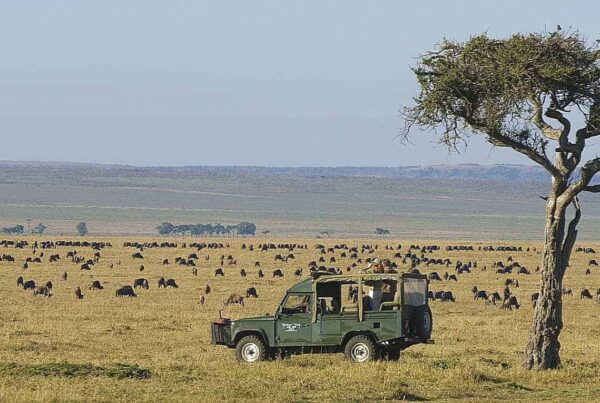
Kenya’s network of national parks and reserves connects across a road system that — in its better sections — makes overland self-driving genuinely practical for travellers with experience navigating unfamiliar road environments and comfort making independent decisions in remote areas. The Nairobi–Naivasha–Nakuru highway runs on excellent tarmac, the road to Amboseli from Nairobi is manageable in a high-clearance vehicle, and the main access road to Samburu from Isiolo is traversable in dry conditions without specialist off-road skills. The flexibility that self-driving provides — stopping where you choose, spending extended time at any sighting without a guide’s schedule, moving between camps on your own timetable — suits a specific type of traveller who values independence over the convenience of organised guiding.
The honest caveat is that self-driving Kenya’s more remote parks and the Maasai Mara in particular presents challenges that informed decision-making should account for. Park tracks become deeply rutted and muddy during the long rains, navigation within parks requires GPS and good map reading in the absence of signage, and the bush wildlife emergency procedures that guided camp guests follow automatically become the self-driver’s own responsibility. Kenya’s parks prohibit driving outside designated tracks and enforce this with fines that add up quickly for travellers who stray from marked routes. Overland safari in Kenya delivers its best results when matched to park conditions and route difficulty appropriate to the driver’s actual experience rather than their optimistic estimate of it.
Vehicle Requirements for Kenya Overland
A four-wheel-drive vehicle with high ground clearance is the minimum practical requirement for any overland itinerary that extends beyond the Naivasha–Nakuru corridor into Amboseli, Samburu, or the Maasai Mara. Nairobi’s vehicle hire companies offer Toyota Land Cruiser 4×4 models, Land Rover Defenders, and various Japanese SUVs with high clearance, and rates for fully equipped vehicles with roof tents, cooking equipment, and camping gear range from USD 120 to USD 250 per day depending on the specification. Vehicles without roof tents require pre-booked accommodation at each park, while roof tent setups allow camping at KWS campsites for a significantly lower daily cost at the expense of the comfort level that lodges and tented camps provide.
A reliable spare tyre — ideally two — is non-negotiable on any Kenya overland itinerary because track surfaces in most parks puncture tyres at rates that consistently surprise travellers expecting maintained roads. A high-lift jack suitable for the vehicle’s ground clearance, a tow rope, jumper cables, and a basic toolkit complete the emergency kit that experienced overlanders carry as standard. Hiring a vehicle that already includes this equipment from a reputable Nairobi operator is more reliable than assembling it independently, and operators who provide a support contact number for breakdown situations add a level of security that solo travellers without local contacts should consider essential rather than optional.
Kenya Overland Routes and Itineraries
The Classic Nairobi to Maasai Mara Circuit
The most-driven Kenya overland route connects Nairobi to the Maasai Mara via the Narok road — a journey of approximately 270 kilometres that takes four to five hours under normal traffic conditions. The road from Nairobi to Narok is tarmac throughout and straightforward to navigate, but the 80-kilometre section from Narok to the Mara Gate deteriorates significantly in wet conditions and requires four-wheel-drive engagement on the steeper sections regardless of season. Multiple gate options into the reserve allow drivers to choose their entry point based on which section of the Mara they want to explore first — the Sekenani Gate in the east, the Talek Gate in the centre, or the Oloololo Gate in the west nearest the Mara Triangle’s best river crossing locations.
Driving within the national reserve requires strict adherence to designated tracks and park speed limits that most self-drivers find more limiting than expected. The Mara’s track network is extensive enough to cover the reserve’s main wildlife zones, but off-road driving is prohibited, which means that sightings visible 50 metres off the track require waiting for the animal to approach rather than positioning the vehicle for the best angle. This limitation makes the Mara’s conservancy areas significantly more rewarding for photographers and wildlife enthusiasts than the national reserve proper — but conservancy access requires booking a conservancy camp, which defeats the independence purpose of self-driving. Many overland travellers drive to the Mara and stay at a conservancy camp where a guide handles in-park driving while they manage their own inter-park transport.
The Samburu and Northern Circuit
A northern Kenya overland route connecting Nairobi to Samburu via the Aberdares and Mount Kenya provides one of Kenya’s most scenically dramatic road journeys through highland tea country, bamboo forest, and semi-arid northern scrubland within 300 kilometres of continuous driving. The road from Nairobi through Thika, Nyeri, and Nanyuki to Isiolo is tarmac throughout and passes through the agricultural highlands of central Kenya in a landscape completely different from the savanna environments most tourist itineraries emphasise. From Isiolo, the 50-kilometre road to Samburu Buffalo Springs Game Reserve requires a four-wheel-drive for the last section and takes travellers through increasingly dry acacia scrubland as the Northern Frontier District begins to assert its character.
Samburu’s track network within the reserve is well-maintained by KWS standards and accessible to experienced drivers without specialist off-road skills in dry conditions. The reserve’s open terrain and resident wildlife — elephant, lion, leopard, cheetah, and the Samburu Special Five species — delivers independent game drive results that reward patient, slow driving more than speed and coverage. Self-drivers at Samburu who spend three mornings in the same area of riverine forest along the Ewaso Ng’iro River build up sighting patterns of individual animals that guided camp guests who switch drives daily never achieve — one of overland travel’s genuine experiential advantages over organised safari packages.
Amboseli and Tsavo: The Southern Circuit
The southern Kenya overland route from Nairobi to Amboseli National Park covers 240 kilometres on the Mombasa highway to Emali and then west on the Amboseli road — a combination of tarmac and well-maintained murram that suits any high-clearance vehicle in dry conditions. Amboseli’s tracks within the park are dusty and corrugated in the dry season but accessible without specialist technique, and the park’s open landscape means that self-drivers locate wildlife through direct sighting rather than track-reading skills. Continuing east from Amboseli into Tsavo West and then north to Tsavo East creates a figure-eight circuit that connects Kenya’s three largest protected areas in a single overland route of approximately 800 kilometres achievable in seven to ten days at a pace that allows adequate time in each park.
Tsavo East’s road network presents more challenge than Amboseli’s open plains — the park covers 13,747 square kilometres and its tracks become confusing without a detailed GPS track loaded in advance. KWS has improved signage within Tsavo East in recent years but the park remains large enough that self-drivers who fail to plan their route in advance waste significant time at intersections and risk running low on fuel between gate exits. Carrying sufficient water for at least 24 hours beyond expected travel needs and maintaining a full fuel tank whenever a filling station presents itself are the two practical rules that prevent overland emergencies in Kenya’s larger southern parks from becoming situations that require external assistance to resolve.
Practical Information for Kenya Overland
Logistics and Safety
Park Fees, Permits and Entry Requirements
Kenya’s national parks charge gate entry fees payable exclusively through the Mpesa mobile money system or the KWS online payment platform — cash payment at gates was discontinued several years ago and self-drivers who arrive without pre-paid e-vouchers or mobile payment capability will be turned away. The Nairobi-based KWS website allows advance fee payment for all national parks, and pre-loading the fees for your planned parks before departing Nairobi eliminates gate queues and payment complications at remote entry points. Park fees for foreign visitors range from USD 30 to USD 70 per person per day depending on the specific park, with Maasai Mara charging the highest national reserve rate in Kenya’s system.
Vehicle fees are charged separately from personal entry fees and apply to each vehicle entering a national park regardless of the number of occupants. The vehicle entry fee ranges from USD 20 to USD 40 per vehicle per day depending on the park and the vehicle type — commercially hired vehicles may be charged at a different rate from privately owned ones, and some parks require commercial vehicle permits for hired vehicles that need to be arranged in advance through the hire company. Your vehicle hire operator in Nairobi confirms the current fee structure for each park in your planned itinerary and provides documentation that prevents entry disputes at remote gates where communication with Nairobi for verification is difficult.
Plan Your Safari
Kenya overland safari planning benefits from operator support even for independent-minded travellers — route advice, vehicle hire recommendations, park fee pre-payment assistance, and emergency contact coordination all improve the quality and security of the overland experience without removing the independence that self-driving provides. African Wild Trekkers assists overland travellers with the logistical foundation while leaving driving decisions, route pacing, and in-park exploration entirely in the traveller’s own hands.
The assistance package covers vehicle hire recommendations from vetted Nairobi operators, GPS track files for each park’s main wildlife routes, park fee pre-payment coordination, accommodation reservations at key overland waypoints, and a Kenya-based emergency contact reachable throughout the trip. Route briefings cover current road conditions, weather risks, and the wildlife activity patterns in each park based on the most recent guide reports.
Contact African Wild Trekkers at africanwildtrekkers.com/contact with your travel dates and overland experience level and we will design your Kenya road trip itinerary within 24 hours.