Okapi Facts: Congo: Discover the Hidden Forest Animal of the Democratic Republic of Congo
The okapi is one of Africa’s most mysterious and unique animals. Often called the “forest giraffe,” the okapi lives deep within the rainforests of the Democratic Republic of Congo.
Although it has zebra-like stripes on its legs, the okapi is actually the closest living relative of the giraffe. Its unusual appearance and secretive behavior make it one of the most fascinating animals found in Africa.
Because okapis live in dense forests and avoid open areas, seeing one in the wild is a rare and special experience.
Where Do Okapis Live?
Okapis are found only in the Democratic Republic of Congo, mainly within the dense forests of the Congo Basin. Their primary habitat is the protected rainforest of Okapi Wildlife Reserve.
The Ituri Forest provides the perfect environment for okapis because it offers plenty of vegetation, water sources, and areas for hiding from predators. Unlike giraffes that live in open savannahs, okapis are adapted to life in thick tropical forests where visibility is limited.
What Does an Okapi Look, like?
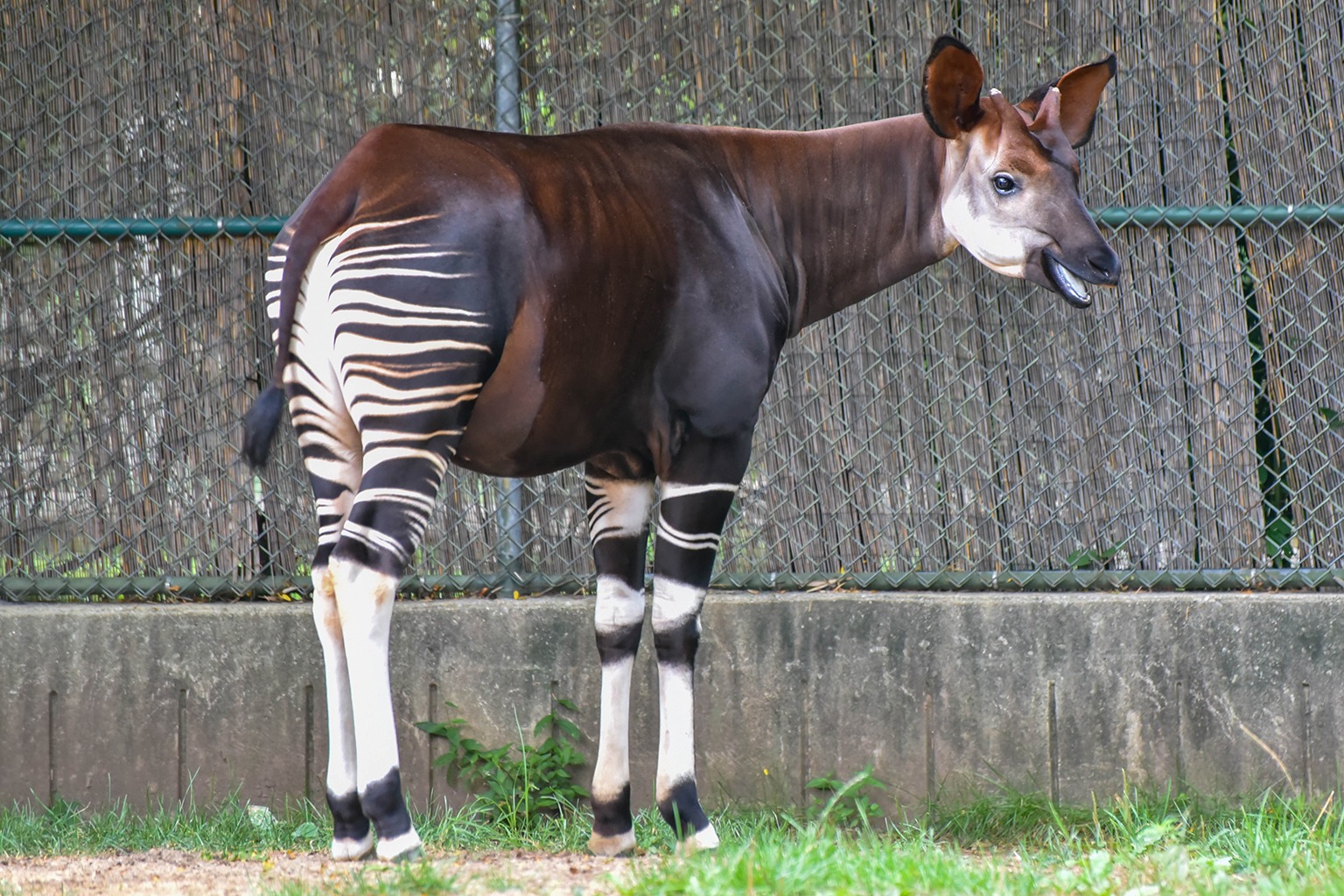
The okapi has a fascinating combination of features. Its body is dark brown with white horizontal stripes on its legs and rear, similar to a zebra. These stripes help young okapis follow their mothers through the forest and provide camouflage among sunlight and shadows.
Okapis have long necks, large ears, and a long, flexible tongue. Their tongue helps them pull leaves from branches and clean their eyes and ears.
The Relationship Between Okapis and Giraffes
Although the okapi does not look much like a giraffe, both animals belong to the same family called Giraffidae.
Like giraffes, okapis have long necks, and males have small horn-like structures called ossicones on their heads. Scientists discovered the relationship between okapis and giraffes in the early twentieth century. Before then, many people outside Congo did not know this hidden forest animal existed.
What Do Okapis Eat?
Okapis are herbivores that feed mainly on leaves, buds, fruits, grasses, and other plants found in the rainforest. Congo—Discover They use their long tongues to reach vegetation that other animals cannot easily access.
An okapi may eat hundreds of different plant species, helping spread seeds and support the health of the forest ecosystem.
Okapi Behavior and Lifestyle
Okapis are shy and mostly solitary animals. They spend much of their time moving quietly through the forest while searching for food. Their large ears help them detect sounds from other animals and potential dangers. Their excellent hearing is important because dense forests make it difficult to see predators approaching.
Male and female okapis usually live separately and only come together during breeding periods.
Okapi Reproduction and Young
Female okapis usually give birth to one calf after a long pregnancy period of about 14 to 16 months.
Newborn calves spend their first weeks hidden in the forest while their mothers remain nearby. This hiding behavior protects them from predators. Young okapis grow quickly and learn important survival skills by staying close to their mothers.
Threats Facing Okapis
Okapis face several conservation challenges. Habitat loss, illegal hunting, and human activities have affected their populations. The forests where okapis live are also important for many other species, making forest protection essential for the survival of the entire ecosystem.
Conservation teams work to protect okapis through habitat preservation, research, and cooperation with local communities.
Okapi Conservation in Congo
The Democratic Republic of Congo plays a vital role in protecting okapis because the species is found nowhere else in the world.
The Okapi Wildlife Reserve was created to protect the animal and its rainforest habitat. Conservation programs focus on wildlife monitoring, supporting communities, and reducing threats such as illegal activities.
Protecting okapis also helps preserve one of Africa’s most important rainforest ecosystems.
Interesting Okapi Facts
Okapis were unknown to the wider scientific world until they were officially described in the early 1900s. Their dark coloration helps them blend into the shadows of the rainforest.
Okapis communicate through low-frequency sounds that humans cannot easily hear. Their tongue can reach around 30 centimeters long, helping them collect leaves and maintain personal grooming.
Despite their close relationship with giraffes, okapis prefer forests instead of open grasslands.
Why Okapis Are Important
Okapis represent the incredible biodiversity of the Congo rainforest. Their existence shows the importance of protecting hidden ecosystems that contain species found nowhere else on Earth. Saving okapis also protects forests that provide homes for countless plants and animals.
Every okapi protected is a symbol of successful conservation and the value of Africa’s natural heritage.
Plan Your Congo Wildlife Experience
Discovering the okapi offers a rare glimpse into one of Africa’s most remarkable forest ecosystems. A journey into the Congo rainforest reveals unique wildlife, ancient forests, and conservation stories that cannot be found anywhere else.
The okapi remains one of Africa’s greatest wildlife treasures and a powerful reminder of why protecting nature matters.