Olive Baboon Uganda: The Most Visible Primate on Uganda Safaris
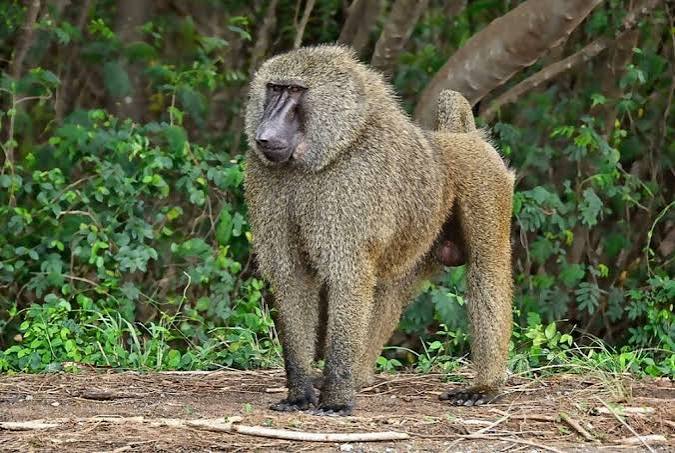
Olive baboon Uganda troops are the most widely distributed and most commonly encountered primates across Uganda’s national parks and forest edges. The olive baboon inhabits savanna, open woodland, forest edge, and highland farmland zones throughout Uganda from Kidepo to Lake Mburo. Olive baboon Uganda populations thrive wherever humans have created clearings and agricultural land alongside natural habitat. Large troops of 30 to 80 animals move through Murchison Falls, Queen Elizabeth, and Kibale National Park areas throughout the year. encounters on game drives and forest walks provide highly engaging wildlife observations of complex social behaviour. The intelligence, curiosity, and social dynamics of a large olive baboon Uganda troop make them compelling subjects for any visitor who moves beyond initial familiarity.
Olive baboons are Africa’s most widely distributed baboon species. Uganda sits within the eastern extension of their range and the country’s diverse habitats support large, healthy populations. The olive baboon Uganda troop structure is a matrilineal social group with a clear dominance hierarchy among both males and females. Adult males are significantly larger than females, with large canine teeth used in social display and predator defence. The olive baboon Uganda troop’s response to approaching lions or leopards is one of the most dramatic alarm sequences observable on any Uganda game drive. Understanding baboon alarm behaviour serves as an alert for predator presence elsewhere in the area.
Olive Baboon Uganda Behaviour and Ecology:Olive Baboon Uganda Social Behaviour
Olive baboon Uganda troops organise their daily activity around a cycle of foraging, resting, grooming, and moving between sleeping sites. Early morning foraging after descent from sleeping trees provides the most active observation period. Grooming sessions in the mid-morning represent the core social bonding activity of olive baboon Uganda group life. Dominant males patrol the troop edges and respond to threats while subordinate males forage in the troop interior. Female olive baboon Uganda individuals maintain consistent social bonds with their offspring and related females throughout their lives. Observing these relationships over an extended stop in the field reveals the social complexity that makes baboons among the most intelligent non-human primates in Africa.
Olive baboon Uganda troops demonstrate sophisticated communication through vocalisations, facial expressions, and body posture. A deep, two-phase bark from a sentinel individual signals aerial predator alarm and the entire troop responds instantly. The cough-bark alarm for terrestrial predators carries to a distance of several hundred metres through open savanna. Watching an olive baboon Uganda troop react to a predator alarm and then observing their systematic assessment of the threat is one of the most instructive wildlife observation sequences available. Their ability to identify false alarms and resume normal activity within minutes reveals an exceptional capacity for environmental assessment.
Where to See Olive Baboon Uganda
Murchison Falls National Park holds some of Uganda’s largest olive baboon Uganda troops along the Nile bank and the Top of Falls trail. The baboon troops at Murchison are thoroughly accustomed to vehicles and allow very close approach on the main road. Queen Elizabeth National Park baboon troops inhabit the Kasenyi plains and the Mweya Peninsula in large, visible groups. These olive baboon Uganda individuals move confidently through the lodge grounds and require careful management of food storage at all properties. Kibale National Park harbours olive baboon Uganda troops at the forest-farmland edge where they interact frequently with chimpanzee groups in the forest interior.
Lake Mburo National Park baboon troops are habituated to cyclists and walkers on the park’s internal tracks. Approaching on foot at Lake Mburo provides the closest ground-level observations available at any park. The troops at Lake Mburo are among the calmest and least reactive to human walkers of any site in the country. Walking safari guides at Lake Mburo consistently identify troops as the animal that surprises visitors most positively when encountered at ground level. The scale and social complexity of a troop observed at five to ten metres on foot exceeds any vehicle encounter of the same animals.
Olive Baboon Uganda and Ecosystem Ecology: Olive Baboon Uganda as Ecosystem Engineers
Olive baboon Uganda troops play a significant role in seed dispersal across the savanna and forest edge habitats they inhabit. They consume large quantities of fruit and defecate seeds throughout their daily range. This dispersal function contributes to forest regeneration at the forest edge zones where baboons move between forest and open land. The troop’s digging activity to extract roots, bulbs, and invertebrates aerates soil and creates micro-habitats for smaller animals. Dung beetles, hornbills, and various birds follow olive foraging groups to exploit the invertebrates disturbed by their digging.
Olive baboon Uganda troops are a primary prey species for leopard, lion, and large raptors. Martial eagle targets juvenile and subadult baboons throughout the range. The troop’s alarm system specifically identifies martial eagle approach as an aerial threat. Watching a martial eagle circle low over an olive baboon Uganda troop and observing the troop’s coordinated alarm response demonstrates the precision of their predator recognition. This predator-prey dynamic keeps groups vigilant throughout the day and drives the sentinel behaviour that makes their alarm systems so effective.
Photography of Olive Baboon Uganda
Olive baboon Uganda troops provide some of Uganda’s finest wildlife photography opportunities. The facial expressiveness of baboons captures emotion and personality more directly than almost any other African mammal. A close yawn by an adult male revealing the full canine length is one of Africa’s most dramatic primate photographs. Infant baboons riding on their mothers’ backs and playing in troop groups provide consistently compelling and technically accessible photography subjects. The predictable daily movement patterns of troops allow photographers to position in advance at productive foraging and water sites. Patience at a water point during midday produces bathing, drinking, and social interaction photographs that game drive speed misses entirely.
The morning light at Murchison Falls and Queen Elizabeth illuminates troop foraging activity with warm golden colour. Positioning a vehicle downlight of a foraging troop in the early morning provides ideal baboon portrait lighting. The open savanna habitat at these parks allows focal lengths from 200mm to 500mm to work effectively from normal vehicle stop distances. Forest edge baboon Uganda photography at Kibale suits longer telephoto work in lower light conditions. Visiting olive baboon Uganda troops across multiple parks over a ten-day itinerary builds a diverse and rich photographic study of the species at its most accessible.
Plan Your Safari
Olive baboon Uganda encounters occur without specific advance planning on game drives at all major Uganda national parks. Enhance the encounter quality by requesting that your driver stop at baboon troops for extended observation rather than moving on immediately. Walking safari visitors at Lake Mburo should specifically request a morning walk that includes time alongside a resident baboon troop for the most rewarding ground-level encounter.
African Wild Trekkers designs Uganda safari itineraries that include extended stops for wildlife behaviour observation at species including olive baboon Uganda troops. We brief clients on olive baboon social structure and ecology before each safari to maximise the quality of every primate encounter throughout the itinerary.
Contact African Wild Trekkers to plan your Uganda wildlife safari. We respond within 24 hours and design itineraries that combine great ape and baboon primate experiences with game drives at Uganda’s finest national parks.