Purple-crested Turaco: East Africa’s Jewel of the Forest Edge
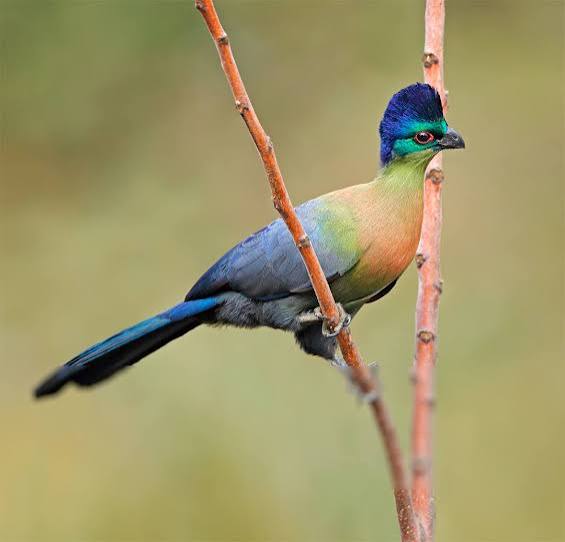
The purple-crested turaco is one of East Africa’s most colourful birds. Its plumage combines green, purple, blue, and the brilliant crimson red of the wing feathers that flash in flight. The species belongs to the turaco family, a group of birds unique to Africa. The vivid colours of turaco plumage come from two pigments found in no other bird family on earth: turacin, which produces the red colour, and turacoverdin, which produces the green.
The purple-crested turaco is a bird of the forest edge, riparian woodland, and coastal and riverine forest. It is more widely distributed in East Africa than the great blue turaco and can be encountered in a broader range of habitats including well-wooded gardens and forest patches near towns and agricultural land.
Identification
The purple-crested turaco shows a vivid green head with a purple gloss on the crown that gives the species its name. The neck and breast are green. The belly is dark blue-black. The wings appear dark green at rest but reveal brilliant crimson-red primary feathers when the bird opens its wings in flight.
The red wing patches are the most diagnostic feature of the species and of the turaco family as a whole. When a turaco flushes from cover and opens its wings, the sudden flash of crimson against the forest green is startling and instantly unmistakable. No other bird in East Africa shows this specific colour combination in flight.
The call is a series of loud, cooing notes delivered rapidly and with a rising energy that can be heard through dense vegetation. The call is one of East Africa’s most familiar forest sounds in areas where the species is common. Experienced guides use the call to locate birds that have moved into dense cover after initial disturbance.
Habitat and Distribution
The purple-crested turaco occurs from Tanzania northward through coastal Kenya and into Uganda and Rwanda. It inhabits riverine forest, forest edges, thicket, and dense woodland. The species tolerates some degree of habitat degradation and persists in fragmented forest patches and wooded gardens where many other forest species cannot survive.
In Tanzania, the species is common along the coastal forest strip and in the Eastern Arc mountain forests.Kenya, it occurs in coastal forest, in the Kakamega region, and along the forested river systems that drain the highlands. In Uganda, it is widespread in the southern and western forest zones.
Where to See Purple-crested Turacos
Tanzania’s Arusha National Park provides reliable purple-crested turaco sightings in its forest sections. The park’s montane forest and the fig-tree-lined Ngurdoto Crater rim both produce regular sightings. Arusha’s proximity to Kilimanjaro International Airport makes it a practical first stop on any Tanzania birding itinerary.
Kenya’s Lake Nakuru National Park, which carries yellow fever trees and acacia woodland alongside riparian forest, produces purple-crested turaco sightings regularly. The species is also common in the forested sections of Nairobi’s Karen and Langata suburbs, where it has adapted to garden environments with sufficient tree cover.
Furthermore, the forests of Uganda’s Entebbe Botanical Garden provide accessible purple-crested turaco sightings within easy reach of Entebbe Airport. An hour in the botanical garden on arrival or departure produces this species alongside several other forest birds without requiring any additional travel time.
Plan Your Birding Safari
Purple-crested turaco sightings are achievable on most East Africa safari circuits that include any forested habitat. The species requires no specialist access or dedicated birding detour in the right destinations.
Tanzania’s northern circuit passes through habitat suitable for the species at Arusha National Park. Kenya’s Rift Valley circuit passes through suitable habitat at Lake Nakuru. Uganda’s arrival at Entebbe provides the botanical garden option within the first hours of any Uganda trip.
African Wild Trekkers includes turaco species in East Africa birding safari target lists across Kenya, Tanzania, and Uganda. Contact us to plan a safari that captures the full spectrum of East Africa’s extraordinary turaco diversity.